Your Guide to Days Inventory Outstanding and Cash Flow

Your warehouse looks healthy. Shelves are full, purchase orders keep moving, and customers know you as a serious supplier. But your bank balance tells a different story.
That tension is common across MENA SMEs, especially in distribution, automotive, electronics, and wholesale. You can be profitable on paper and still feel cash-starved in practice. The reason is simple. A large share of your money is sitting inside stock that hasn't turned back into sales yet.
If you've ever asked, βHow can I be busy, selling, and still short on cash?β, you're already asking the right question. Days inventory outstanding gives that problem a name and a number. Beyond that, it helps you decide what to fix.
The Common Challenge Stock on Shelves but No Cash in Hand
A business owner in Dubai imports consumer goods for resale across the UAE and nearby markets. Containers arrive on time, the warehouse is active, and the sales team keeps sending updates about retailer interest. From the outside, the business seems organised and growing.
Inside the finance office, the story feels different. Cash is always tight. Supplier payments are due before enough stock has been sold. Some items move quickly, others stay parked in racks longer than expected. Every reorder decision feels risky.
This is the classic inventory trap. The business isn't short of value. It's short of usable cash.
Where the pressure builds
When inventory sits too long, several things happen at once:
- Cash stays trapped in stock instead of being available for payroll, rent, marketing, or fresh purchases.
- Storage costs rise because slow-moving items continue occupying warehouse space.
- Decision quality drops because the team starts buying based on habit rather than actual sell-through.
- Growth gets delayed because new opportunities appear before old stock has converted into cash.
For many MENA businesses, this gets sharper because supply chains are often import-dependent. Goods may travel across borders, clear customs, and then move through distributors, resellers, showrooms, or dealer networks before the final sale happens.
Practical rule: Inventory is not just stock. It's cash wearing a different uniform.
That's why finance managers pay close attention to how long inventory stays on hand. If you can measure that holding period clearly, you can make better purchasing, pricing, and liquidity decisions. That's the job of days inventory outstanding.
What Is Days Inventory Outstanding
Days inventory outstanding, or DIO, shows how many days stock stays in your business before it is sold.
For a distributor, that could mean goods sitting in a central warehouse, a showroom, a branch network, or with dealers waiting for sell-through. For a retail or automotive business in the GCC, that holding time matters because inventory often moves through several hands before revenue comes back as cash.
The formula in plain language
The standard formula is:
Average inventory Γ· cost of goods sold Γ 365
The wording can sound more technical than it is. A simple way to read it is this. DIO asks: based on how much stock you usually hold and how much product you sell over the year, how many days does inventory stay with you before it turns into sales?
Here is what each part means:
- Average inventory is the typical value of stock you held during the period.
- Cost of goods sold is the cost of the items you sold in that same period.
- 365 converts the result into days.
It works like a warehouse stopwatch. The higher the number, the longer cash sits on shelves, in bins, or in yards. The lower the number, the faster stock is moving.
A simple example
Say you import automotive spare parts into the UAE and supply workshops and retailers across the region. If your calculation gives you a DIO of 90 days, your stock is sitting for about three months on average before it is sold.
That does not mean every item takes 90 days. Fast-moving filters may leave in weeks, while slower body parts may sit much longer. DIO gives you the blended average, which is why finance teams use it to spot whether overall inventory is staying healthy or drifting upward.
You do not need advanced software to calculate the first version of it. If your inventory records and cost of goods sold are reasonably accurate, your accounts can usually produce a usable DIO figure. If you already monitor stock from an operations angle, it also helps to compare DIO with the inventory turnover ratio. They describe the same stock movement from two sides. Turnover shows how often inventory rotates. DIO shows how long it sits.
How to interpret the number properly
A common mistake is to treat DIO as a score where lower is always better. In practice, the right level depends on your model.
A higher DIO can point to:
- slower-moving stock
- overbuying ahead of demand
- a product mix with too many weak lines
- imported inventory arriving faster than customers are buying
A lower DIO can point to:
- faster sell-through
- quicker recovery of cash
- tighter purchasing discipline
- stock levels that are closer to real demand
But context matters. An automotive distributor in Saudi Arabia may need deeper stock on hand to avoid losing workshop demand when a part is needed urgently. A fashion retailer in the UAE may accept a lower DIO target because styles go stale faster. The number only becomes useful when you read it alongside your sector, product mix, supplier lead times, and sales pattern.
A practical way to read DIO is simple. It tells you how many days your cash is dressed up as inventory.
That is why DIO is more than a definition from a finance textbook. For MENA distributors, especially in automotive, electronics, and retail, it is a working measure of how long imported stock ties up liquidity before the business can use that cash again.
Why DIO Is a Critical Metric for Your Cash Flow
Many owners treat inventory as an operations issue and cash flow as a finance issue. In practice, they're tightly connected. DIO sits in the middle of that connection.
When you buy stock, cash leaves the business first. It doesn't come back when the goods arrive at your warehouse. It only returns after the goods are sold, and in many B2B models, after the customer pays. That delay is why DIO matters so much.
Where DIO fits in the operating cycle
Finance teams often look at the cash conversion cycle to understand how long money stays tied up in day-to-day operations.
That cycle combines three moving parts:
- DIO. How long stock sits before sale.
- DSO. How long customers take to pay.
- DPO. How long you take to pay suppliers.
This process resembles a relay. Purchasing starts the race, inventory carries the baton for a while, collections take the next leg, and supplier payment terms can either relieve pressure or add to it. If the inventory leg is slow, the whole cycle stretches.
Why this hits SMEs harder
Large businesses can sometimes absorb long inventory cycles more comfortably. SMEs usually can't. A few extra weeks of stock holding can affect payroll timing, supplier relationships, and the ability to reorder fast-moving lines.
In sectors common across MENA, that pressure builds quickly:
- Import-led wholesale often involves long lead times before inventory even reaches the shelf.
- Automotive distribution ties substantial capital into vehicles or parts that don't move at supermarket speed.
- Electronics and seasonal retail face the extra risk that inventory can lose appeal while still in storage.
If cash conversion is slow, growth can actually make pressure worse. More sales often require more inventory upfront.
That's why DIO isn't just a stockroom metric. It's an early warning signal for liquidity. If it starts rising, you should ask whether demand has softened, whether purchasing has drifted away from reality, or whether too much capital is parked in slower lines.
Understanding DIO Benchmarks in MENA
A spare-parts distributor in Dubai and a fashion retailer in Riyadh can both look "overstocked" on paper, yet one may be managing inventory sensibly while the other is tying up cash for too long. That is why a good DIO number always depends on the business model behind it.
Benchmarks are reference points, not targets you copy blindly. In MENA, that matters even more because many SMEs deal with imported stock, customs timing, port delays, and supplier minimum order quantities. A business may carry extra inventory for a sound reason. The problem starts when that buffer becomes habit and no one checks whether the cash tied up is still justified.
Retail and automotive follow different inventory rhythms
Analysts at Allianz Trade note that retail inventory is often considered healthy at roughly 30 to 60 days. They also explain that a UAE car dealer can operate with a much longer holding period, as outlined in Allianz Trade's DIO benchmark guide.
That gap is easy to understand. A supermarket or cosmetics distributor lives on fast repeat purchases. A vehicle dealer or automotive parts distributor holds higher-value items, broader model ranges, and slower buying cycles. The stock profile is different, so the benchmark has to be different too.
For many MENA distributors, inventory works like a parked fleet of cash. If the stock is turning at the right speed, it supports sales. If it sits too long, it still looks valuable on the balance sheet, but it stops helping the business breathe.
What a useful benchmark review should include
A practical benchmark starts with your own operating reality, not a headline number from another sector.
Review these factors:
- Product category. Fast-moving consumer goods should turn very differently from vehicles, white goods, or industrial spare parts.
- Lead times. Imports from Asia, Europe, or regional hubs often require more stock cover than locally replenished goods.
- Demand pattern. Ramadan, back-to-school periods, tourism peaks, and promotion seasons can distort monthly averages.
- Channel mix. Retail counters, wholesale accounts, dealer networks, and ecommerce all create different inventory speeds.
- SKU complexity. Automotive businesses often need depth across brands, trims, and part numbers, even if some lines move slowly.
One more point often gets missed. Company-level DIO can hide the underlying issue. A healthy average may conceal one brand, branch, or product family that is absorbing too much working capital. For mixed-category businesses, benchmark by product family or warehouse, not only at the group level.
That is also where systems matter. Better stock visibility and purchasing discipline can reduce carrying costs, improve reorder timing, and support the automated inventory control cost savings many distributors now pursue.
If your benchmark shows that inventory must stay higher because of import cycles or supplier terms, financing structure becomes part of the DIO discussion too. Many SMEs look at inventory financing options for UAE SMEs to keep stock available without squeezing day-to-day liquidity.
A strong benchmark helps you ask the right question: is this inventory protecting sales, or is it quietly trapping cash?
That question is especially important in MENA automotive and retail distribution, where long replenishment cycles can make excess stock look prudent long after demand has shifted.
Practical Tactics to Improve Your DIO
Improving DIO doesn't always require a dramatic overhaul. In many SMEs, the biggest gains come from fixing a few repeated habits. Buying too early, keeping weak SKUs for too long, and relying on instinct instead of actual movement are common examples.
The more important point is this. The goal isn't the lowest possible DIO. A lower number can help cash flow, but if you push too far, you create stockouts, missed sales, and frustrated customers.
Finale Inventory highlights a useful gap in many mainstream guides. They often explain the formula but don't spend enough time on the trade-off between lean stock and stockout risk, especially for imported retail, electronics, and automotive businesses in the region. That's why the better question is not just how to reduce DIO, but what range is healthy for your supply chain, as discussed in Finale Inventory's guide to days inventory outstanding.
Tactics that usually make the biggest difference
- Tighten demand forecasting
Start with your own sales history by SKU, channel, and season. Many businesses overbuy because they remember a busy month and treat it as the new normal. - Review slow movers with discipline
If an item repeatedly sits without clear strategic value, treat it as a cash issue, not just an inventory issue. The warehouse may be carrying dead weight that finance can already feel. - Order in smaller, more frequent batches where possible
This isn't always realistic for imported stock, but when suppliers allow it, smaller buys reduce the amount of money parked in inventory at any one time. - Shorten supplier lead times through negotiation and planning
Better ordering calendars, clearer forecasting, and stronger supplier communication can reduce the need for excess buffer stock. - Use promotions selectively
A controlled discount on ageing stock can free trapped cash and space. The goal is not to train customers to wait for markdowns. It's to keep inventory healthy. - Segment inventory by importance
High-value and slow-moving items need more attention than routine fast sellers. Treating every SKU the same usually leads to overstock in the wrong places.
The operational side matters too
Many DIO problems begin with weak stock visibility. If the team doesn't trust inventory records, they buy extra βjust in caseβ. That behaviour inflates holdings.
For a practical look at automated inventory control cost savings, Material Handling USA outlines how stronger control systems can reduce wasteful manual processes and improve decision-making around stock.
When cash is the constraint, not the plan
Sometimes your DIO is reasonable for your industry, but cash is still under pressure because inventory naturally takes time to convert. In those cases, the decision isn't only operational. It's also financial. Some businesses use tools such as inventory solutions for UAE SMEs to create more breathing room while inventory moves through the cycle.
How Comfi Helps You Manage Inventory and Liquidity
Some businesses don't have an inventory problem in the strict sense. They have a timing problem. Stock may be appropriate for the market, but cash is still tied up too long between purchase, sale, and collection.
That timing issue is especially familiar in automotive, electronics, and B2B distribution across MENA. A company can hold valuable stock, maintain demand, and still feel squeezed because money returns more slowly than obligations come due.
Matching the tool to the pressure point
If inventory is the main source of the squeeze, one option is Dealer Financing for automotive businesses that need to access capital from vehicles already in stock. That can help dealers keep inventory moving through the showroom without waiting for every unit to sell before regaining flexibility.
If supplier terms are slowing buyer decisions, Buy Now, Pay Later can support sales velocity by giving buyers more room on payment timing. Faster movement at the customer end can help inventory turn more smoothly upstream.
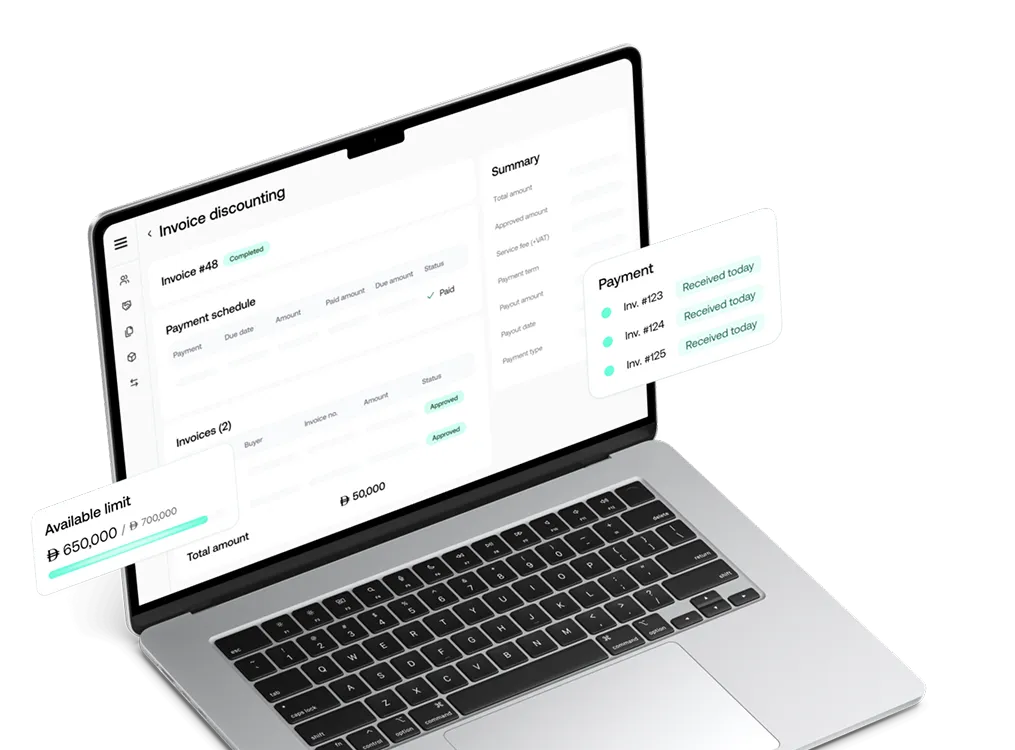
If the pressure comes after the sale, Invoice Discounting helps turn receivables into cash sooner. That doesn't directly reduce DIO, but it improves overall liquidity while inventory and collections work through the normal cycle.
Why this matters for DIO management
DIO should guide decisions, not create panic. Some sectors carry longer inventory by design. Automotive is the clearest example in the UAE, where stock may remain on hand for extended periods before sale. In those situations, the business often needs more flexibility around liquidity rather than an unrealistic target for inventory days.
One option in that mix is Comfi, which offers products including Invoice Discounting, Buy Now, Pay Later, and Dealer Financing across MENA. Used carefully, those tools can help businesses access working capital, stabilize day-to-day cash flow, and manage longer inventory cycles without forcing poor purchasing decisions.
Good inventory management is not only about lowering stock. It's about keeping the business liquid while stock moves at the right pace for the category.
How to Measure and Report DIO Effectively
A single DIO calculation is useful. A reporting habit is far more useful.
If you only check days inventory outstanding when cash gets tight, you'll spot the issue late. The better approach is to review it regularly and compare it with the operating realities around it.
A simple reporting rhythm
Use a monthly or quarterly view and keep it practical. Your reporting pack can include:
- DIO trend. Track whether inventory is sitting longer or moving faster over time.
- Inventory turnover view. Pair DIO with turnover so operational and finance teams can read the same story from both angles.
- Sales trend by category. This helps you see whether a DIO change came from weaker sales or heavier stock holding.
- Ageing review. Flag items that consistently sit beyond the normal rhythm of the category.
- Notes on seasonality and lead times. Record context so the team doesn't misread temporary spikes.
What good reporting changes
Regular reporting improves decisions in three places:
- Purchasing becomes more disciplined.
- Sales can focus on lines that need movement.
- Finance gets earlier visibility into liquidity pressure.
Keep the metric grounded in context. A rise in DIO isn't always bad, and a fall isn't always good. Seasonal buying, imports, and category mix can all affect the number. The value comes from spotting patterns early and acting before stock starts draining cash unnecessarily.
If your business is holding valuable stock but cash still feels tight, Comfi is one option to explore. It helps MENA SMEs gain access to working capital through Invoice Discounting, Buy Now, Pay Later, and Dealer Financing so they can manage inventory cycles with more flexibility and less cash flow strain.