Add or remove 5% UAE VAT instantly. Free, fast, and built for UAE businesses processing invoices and quotes.

Calculate UAE VAT
Add VAT
Remove VAT
Amount (Excluding VAT)
VAT Rate (%)
VAT rate
5% - Standard rate
0% - Zero rated
Currency
currency
AED
USD
SAR
Calculate VAT
Breakdown
Total (incl. VAT)
AED {amount}
VAT amount (5%)
AED {amount}
Total (incl. VAT)
AED {amount}

UAE VAT: A Complete Guide for Businesses

The UAE introduced Value Added Tax (VAT) at 5% on January 1, 2018, as part of a GCC-wide agreement. VAT applies to most goods and services supplied within the UAE, with specific categories of zero-rated and exempt supplies.

VAT Calculation Formula

Adding VAT: Total = Price Γ— (1 + VAT Rate)
Removing VAT: Price = Total Γ· (1 + VAT Rate)
VAT Amount = Total βˆ’ Price (excl. VAT)

UAE VAT Categories Explained

Category
Standard-rated
Zero-rated
Exempt
Out of scope
Rate
5%
0%
N/A
N/A
Examples
Most goods & services, electronics, F&B, office supplies
Exports, international transport, new residential buildings (first sale), crude oil & natural gas
Residential rent, public transport, certain financial services, life insurance, bare land
Government activities, salary payments, dividends

VAT Registration Requirements

Mandatory Registration
AED 375,000+
Annual taxable supplies or imports exceeding this threshold
Voluntary Registration
AED 187,500+
Optional if supplies/expenses exceed this threshold

All VAT-registered businesses must display their Tax Registration Number (TRN) on invoices. Late registration can result in penalties of AED 20,000.

VAT Filing Deadlines & Penalties

Filing frequency:
Quarterly (most businesses) or monthly (for large taxpayers)
Deadline:
28th day of the month following the end of the tax period
Late filing penalty:
AED 1,000 (first offence), AED 2,000 (repeat within 24 months)
Late payment penalty:
2% immediately, then 4% on the 7th day, plus 1% daily thereafter (max 300%)

Common VAT Mistakes UAE Businesses Make

Incorrect invoice formatting β€” tax invoices must include TRN, VAT amount, and rate
Not claiming input VAT β€” many SMEs forget to deduct VAT paid on business expenses
Mixing exempt and standard supplies β€” partial exemption rules require proportional input VAT recovery
Ignoring the Designated Zones (free zones) β€” not all free zone transactions are zero-rated
Missing the reverse charge mechanism β€” applies to imported services from outside the UAE

All VAT-registered businesses must display their Tax Registration Number (TRN) on invoices. Late registration can result in penalties of AED 20,000.

VAT and Cash Flow Impact

VAT creates a cash flow timing mismatch for many UAE businesses. You collect 5% VAT from customers but must remit it to the FTA quarterly β€” often before your customers have actually paid you. For businesses with 60–90 day payment terms, this means paying VAT on invoices your customers haven't settled yet.

Invoice discounting can help bridge this gap by unlocking cash from outstanding invoices, ensuring you have funds to cover VAT obligations on time.

πŸ“‹ Quick Reference

Standard rate: 5%

Zero-rated: Exports, international transport, first-sale residential

Exempt: Residential rent, public transport, certain financial services

Mandatory registration: AED 375,000+/year

Filing: Quarterly or monthly via FTA portal

VAT due but clients haven't paid?

Bridge the cash flow gap with Invoice Discounting. Get paid within hours, so you can cover VAT obligations on time.

Case Studies
See how businesses like yours are using Comfi to unlock growth.
Explore our 

case studies

See what Comfi can do for you

Learn how Comfi can help you unlock working capital so you can grow without delays.
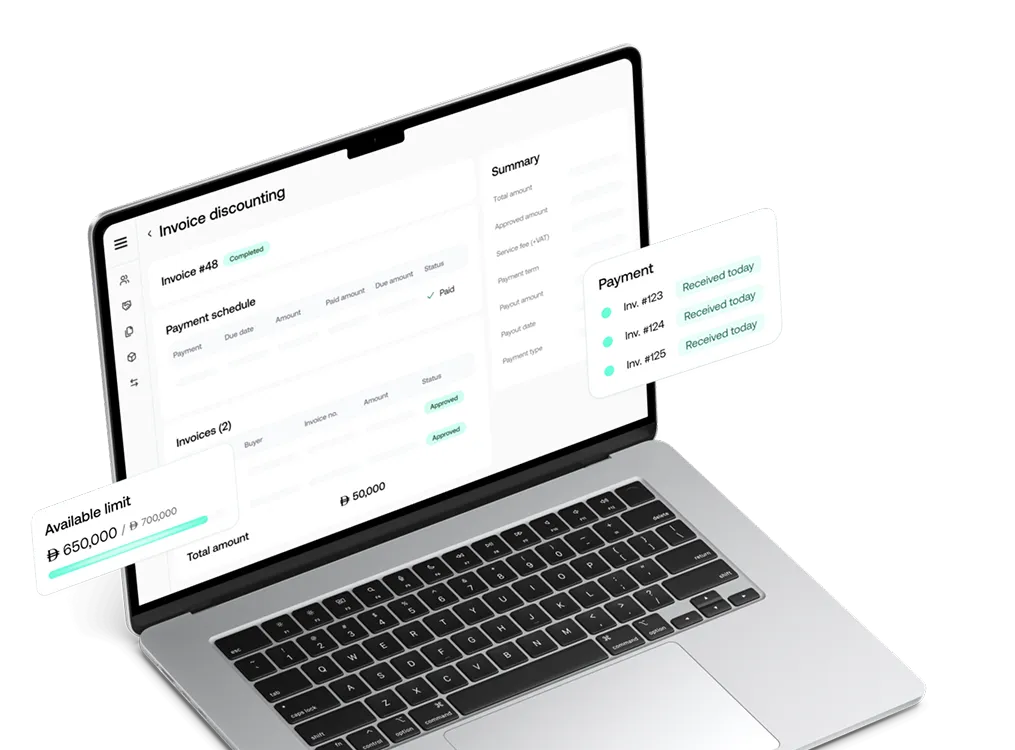
Comfi invoice discounting platform dashboard showing payment schedules, credit limit, and invoice status

Frequently asked questions about Comfi

Contact Us

What is the current UAE VAT rate?

The standard UAE VAT rate isΒ 5%, introduced on January 1, 2018. Some goods and services are zero-rated (0%) or exempt from VAT entirely.

Do I need to register for VAT in the UAE?

Yes, if your taxable supplies and imports exceed AED 375,000 annually, registration is mandatory. Voluntary registration is available at AED 187,500+. Check with the Federal Tax Authority (FTA) for your specific situation.

What's the difference between zero-rated and exempt?

Zero-rated supplies are taxable at 0% β€” you can still recover input VAT on related expenses. Exempt supplies have no VAT at all, and you generally cannot recover input VAT on expenses related to exempt supplies. This distinction matters significantly for your VAT returns.

How do I calculate VAT from a total (inclusive) amount?

To extract VAT from a VAT-inclusive amount: divide the total by 1.05 to get the base amount, then subtract from the total to find the VAT. For example: AED 10,500 Γ· 1.05 = AED 10,000 (base) β†’ VAT = AED 500. Use the "Remove VAT" toggle above for instant calculations.

Is VAT applicable in UAE free zones?

It depends on whether the free zone is a "Designated Zone" under VAT law. Goods transfers between Designated Zones are generally not subject to VAT, but services in free zones are typically standard-rated at 5%. Each free zone has specific rules with consult with a tax advisor for your situation.

What are the penalties for late VAT filing?

Late filing: AED 1,000 first offence, AED 2,000 for repeat within 24 months. Late payment: 2% immediately on the due date, 4% on the 7th day, plus 1% per day thereafter up to 300% of unpaid tax. These penalties make timely filing critical.