8 Best Accounts Receivable Software for SMEs in 2026

Manually tracking invoices is like being stuck in traffic on Sheikh Zayed Road at rush hour. Everything moves, but far too slowly, and everyone involved gets irritated. When your team is still sending reminder emails by hand, checking bank transfers line by line, and updating spreadsheets after each payment, receivables stop being a finance process and become a daily firefight.
That's risky for any business, but it hits SMEs harder. In the UAE, SMEs make up more than 94% of businesses, which is one reason cash collection discipline matters so much for day-to-day operations in the market (industry KPI guidance for AR teams). If you're trying to reduce late payments, the best accounts receivable software won't just send invoices. It should shorten the gap between billing and cash in the bank.
There are really two categories to think about. First, all-in-one accounting platforms like Zoho Books, Odoo, and Xero. These are best when you want invoicing, bookkeeping, and basic AR in one place. Second, specialist AR automation tools like Chargebee Receivables, Chaser, Upflow, Invoiced, and Versapay. These are better when your accounting system already works, but collections, cash application, reminders, and customer follow-up need serious help.
For most SMEs, that distinction matters more than giant feature lists. Some teams need one clean system to run the basics. Others need a sharper tool for the one area hurting cash flow most.
1. Zoho Books
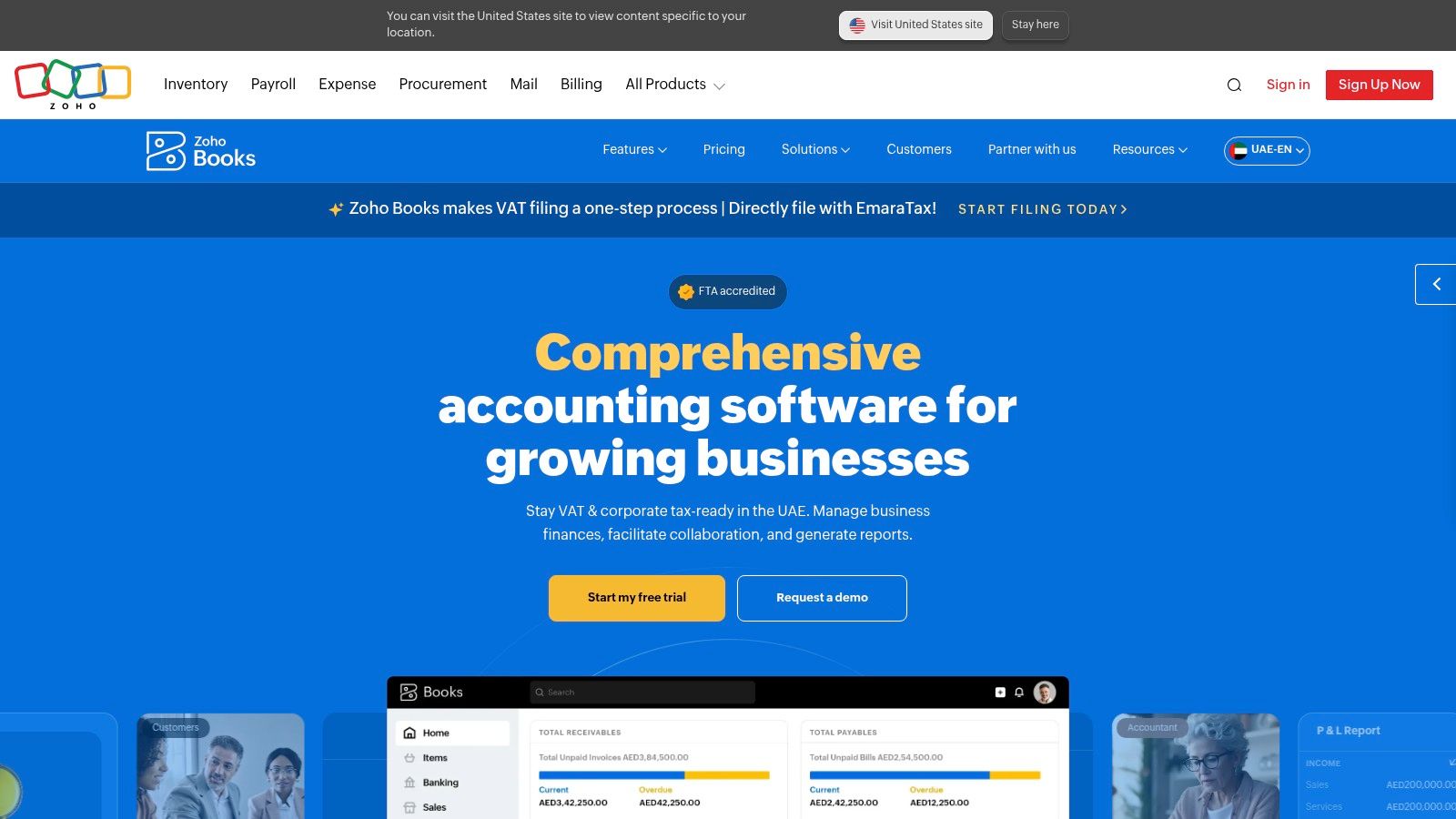
Zoho Books is one of the easiest places to start if you want accounting software that also handles receivables properly. It works well for smaller finance teams that don't have time for a heavy implementation and don't want AR spread across multiple tools.
Its strength is simplicity. You can create recurring or one-off invoices, send payment links, schedule reminders, and give customers a portal where they can view invoices and statements. For many SMEs, that's enough to replace the usual combination of spreadsheets, email follow-ups, and “I thought someone already chased that invoice.”
Where Zoho Books fits best
Zoho Books makes the most sense when your business needs a combined finance stack rather than a specialist collections engine. If your sales process is relatively straightforward, and your overdue accounts are caused more by inconsistency than complexity, this kind of setup is often enough.
A few practical strengths stand out:
- Unified finance workflow: Invoicing, accounting, customer balances, and reporting live in one system.
- Good SME usability: Teams can usually get comfortable with the interface quickly.
- Natural extension path: If you already use other Zoho products, linking CRM, inventory, and finance is much easier.
Practical rule: If your AR pain comes from disorganisation, start with an all-in-one platform before buying an advanced collections tool.
The trade-off is equally clear. Zoho Books handles lightweight AR automation well, but it isn't built for highly structured dunning, complex escalation paths, or advanced dispute workflows. Once your receivables process starts needing account segmentation, layered reminders, or collections playbooks by customer type, you'll begin to feel the ceiling.
For a small distributor, agency, or service business, though, Zoho Books often hits the sweet spot. It's practical, cloud-based, and easy to keep running without specialist admin support.
Use Zoho Books if you want a straightforward all-in-one option with invoicing and accounting in one place. You can explore it on Zoho Books UAE.
2. Odoo Accounting
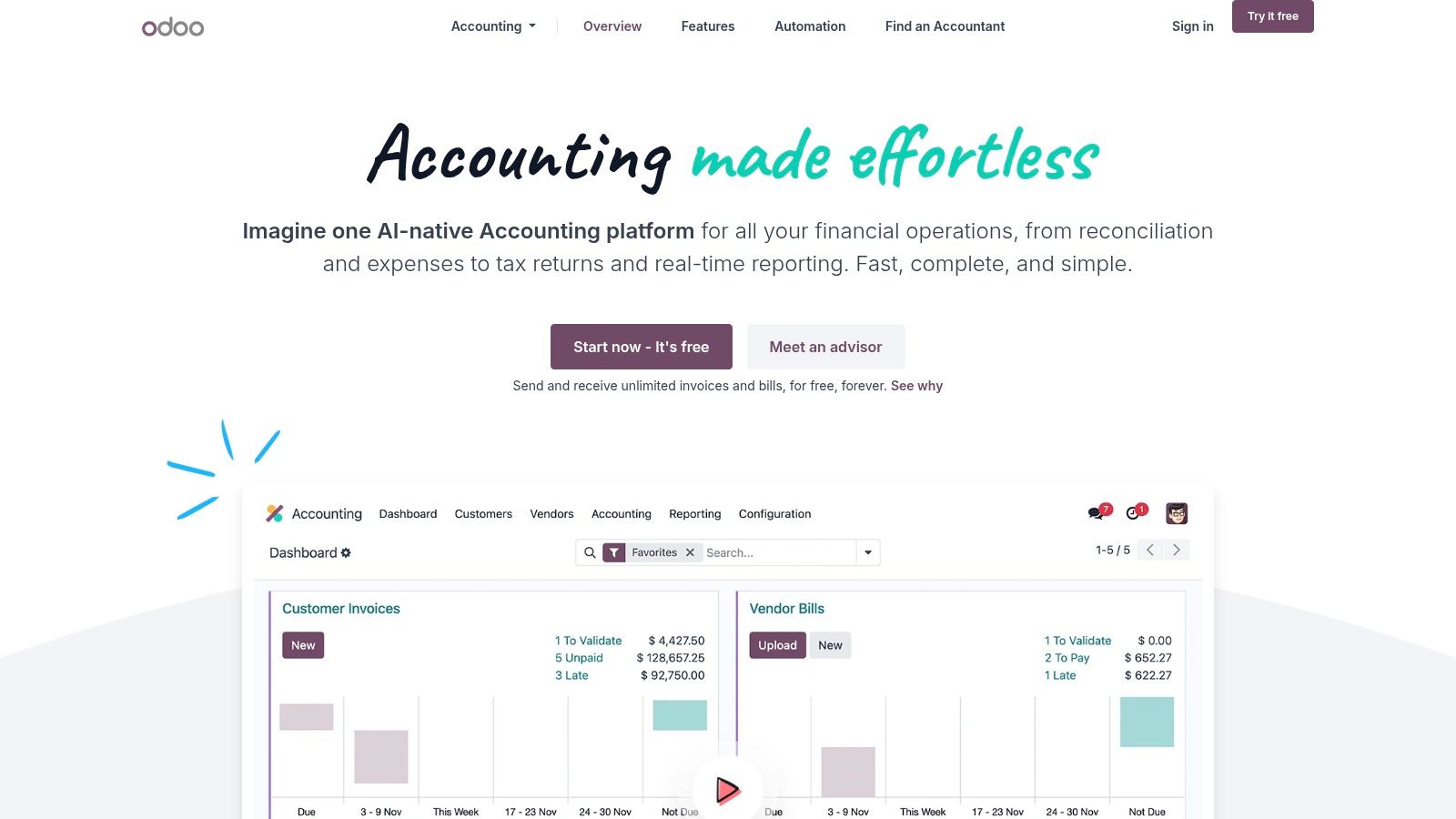
Odoo Accounting is different from Zoho Books in one important way. It behaves more like a modular operating system for the business than a simple accounting package. If receivables depend on stock movements, delivery status, subscriptions, CRM activity, or multi-company workflows, Odoo starts looking much stronger.
That matters for wholesalers, distributors, and product-led SMEs. In those businesses, AR problems usually start earlier than the invoice. A late payment often traces back to a delivery dispute, a stock mismatch, or an order that wasn't documented cleanly.
Why operations-heavy SMEs like Odoo
Odoo ties accounting to the rest of the process. Sales, inventory, subscriptions, and CRM can all feed into invoicing and collections. Instead of asking finance to chase money for an invoice operations accidentally complicated, you get a cleaner chain from order to cash.
It also has official UAE fiscal localisation for VAT setup, which is useful for businesses that want a system closer to local requirements without stitching together too many patches.
- Operational visibility: Finance can see more of the context behind the invoice.
- Custom workflow potential: Odoo can be shaped around how your business operates.
- Room to scale: It's suitable for firms that expect to outgrow entry-level software.
The trade-off is implementation effort. Odoo can do a lot, but that flexibility comes with setup work, training, and process decisions. Teams that buy it expecting “plug and play” often end up underusing it.
Odoo is strong when receivables are only one piece of a bigger operational puzzle.
For a trading business with inventory complexity, this is often the better choice than a lighter accounting app. For a lean services business that mostly needs invoices sent and chased on time, it may be more software than you need.
You can review the product on Odoo Accounting.
3. Xero
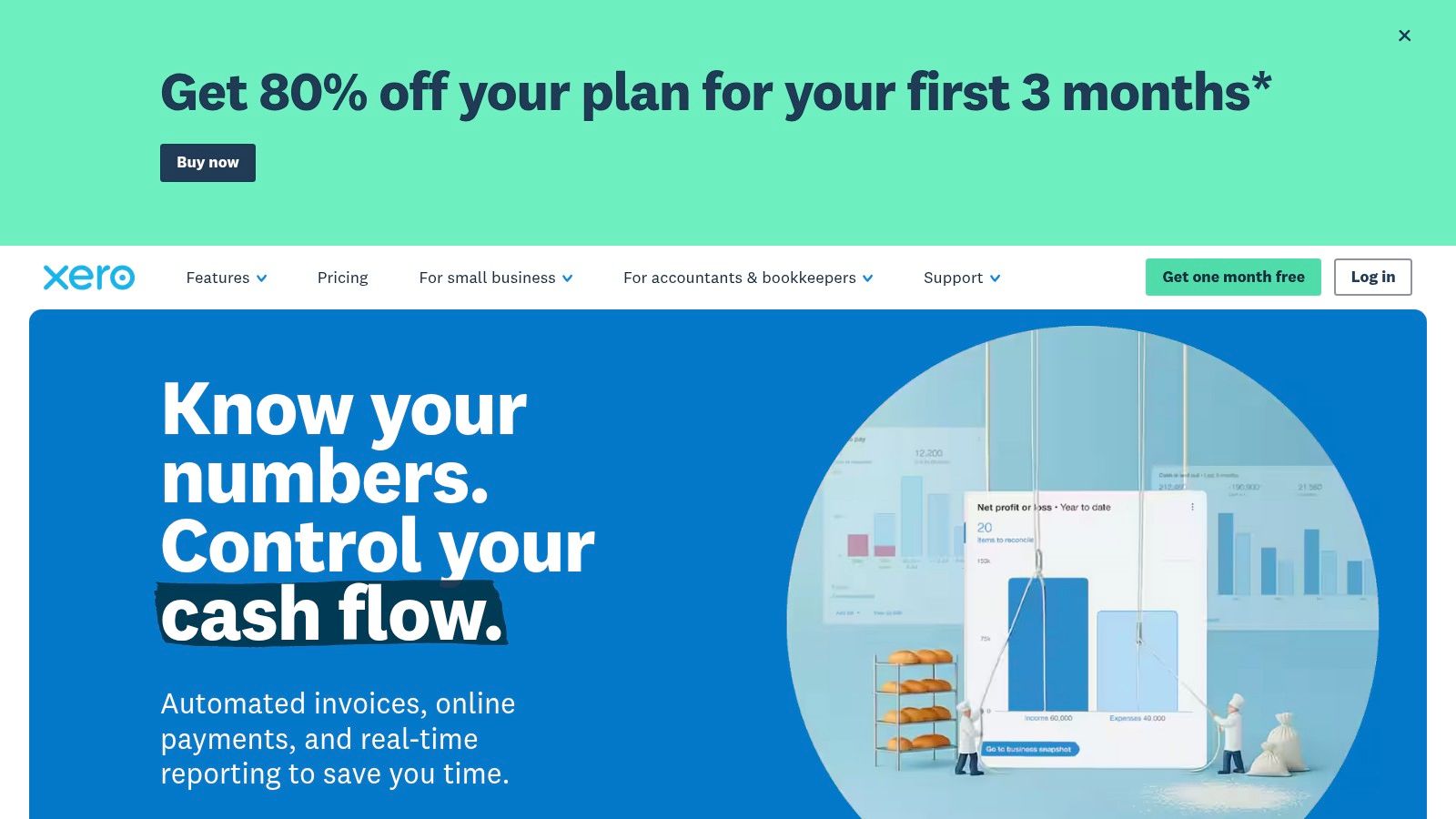
A common SME setup looks like this. Sales sends invoices from accounting, finance follows up with reminders, and the business adds extra AR tools only when overdue balances start eating into cash flow. Xero fits that model well.
It sits in the all-in-one accounting platform camp, not the specialist AR automation camp. That distinction matters in this article because Xero is usually the right choice when you want a clean finance core first and the option to layer on collections tools later. For many smaller firms, that is the sensible path. There is no point paying for a full collections engine if your real need is accurate invoicing, decent visibility, and a system your team will consistently keep up to date.
Xero covers the basics well: branded invoices, recurring invoices, automated reminders, statements, and online payment options in supported regions. The interface is easy to learn, which sounds like a minor point until month-end arrives and someone outside finance needs to check a customer balance without asking for help.
Best for SMEs building in stages
The main advantage is flexibility. A business can start with Xero's native receivables workflow, then connect specialist AR software later if collection volumes, dispute tracking, or credit control become more demanding. It works like building around a reliable ledger rather than replacing the whole finance stack every time requirements change.
That makes Xero a practical fit for service businesses, agencies, consultancies, and cross-border SMEs that bill in multiple currencies but do not yet need a dedicated collections team. If you are weighing regional setup questions alongside product choice, this guide to accounting software in the UAE is a useful companion.
- Easy to adopt: Teams usually get running quickly.
- Strong app ecosystem: You can add specialist AR tools as needs change.
- Helpful for international billing: Multi-currency support is useful for firms selling across markets.
The trade-off is localisation and control. Xero can work for MENA businesses, but it is not the product I would choose solely for local fit. VAT setup, invoice workflows, reporting expectations, and integration choices need closer review than they do with software built more directly around regional requirements. That is especially true if your finance process has to satisfy group reporting, local compliance, and bank reconciliation rules at the same time.
Another practical point. Xero helps you record and chase receivables, but it does not solve working capital pressure on its own. If customers pay on 45 or 60 day terms, you may still need a funding layer alongside your software. That is where the article's broader split becomes useful: use an all-in-one platform like Xero for the accounting foundation, then pair it with either a specialist AR tool for tighter collections or a solution like Comfi when the goal is to improve cash conversion more actively.
You can see the platform on Xero.
4. Chargebee Receivables
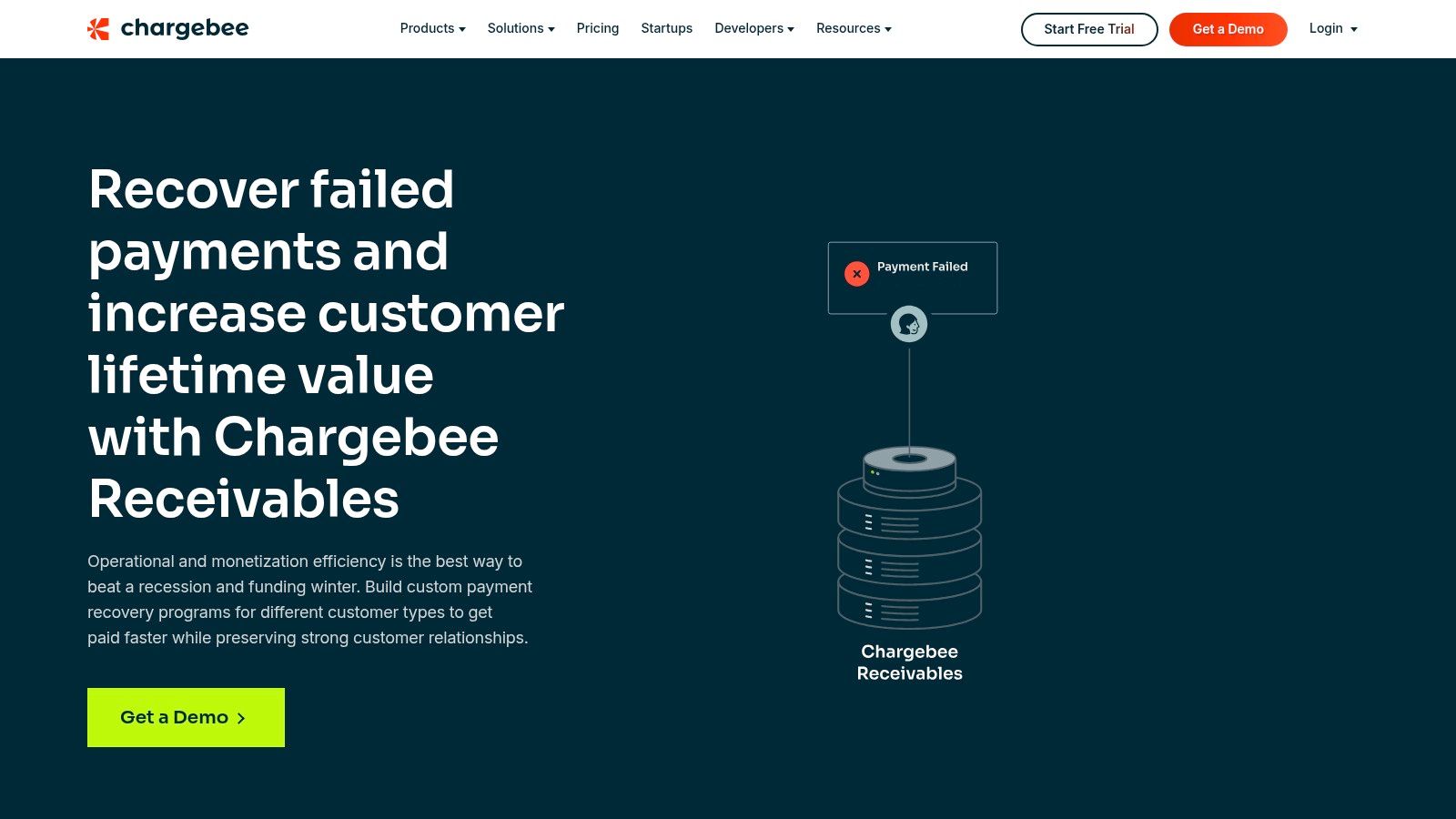
Chargebee Receivables is what I'd call a collections-first system. It's built for teams that have already outgrown basic invoice reminders and need structured follow-up, clearer visibility, and more discipline in how overdue accounts are handled.
This matters most for subscription businesses, recurring billing models, and firms with larger invoice volumes. Once finance is juggling multiple reminder cadences, exception handling, internal escalation, and payer communication, a basic accounting app starts to feel like using a pocket knife for warehouse work.
Where specialist AR software earns its keep
Chargebee Receivables gives you automated reminder sequences, escalation paths, a central dashboard for collection activity, and integrations across finance and revenue systems. That makes it useful when receivables need active management, not just invoice creation.
Value is consistency. Customers don't get chased only when someone remembers. They move through a defined process.
- Structured collections workflows: Better than ad hoc reminders from accounting software.
- Good visibility: Finance can see disputes, overdue status, and outreach activity in one place.
- Strong fit for billing-led businesses: Particularly useful if your revenue already runs through Chargebee or a connected system.
One trade-off is dependence on your broader billing setup. You'll get the best value when Chargebee is already part of your stack or when your ERP integration is clean. If your invoicing process is fragmented across several systems, implementation can feel heavier.
Another point worth noting for SMEs is that software alone doesn't solve every receivables problem. A reminder workflow can improve collections, but it doesn't remove the waiting period between invoice issue and payment.
That's why this category is best for companies trying to control AR operations more tightly, especially where recurring billing or customer lifecycle management already matters. You can review it on Chargebee Receivables.
5. Chaser
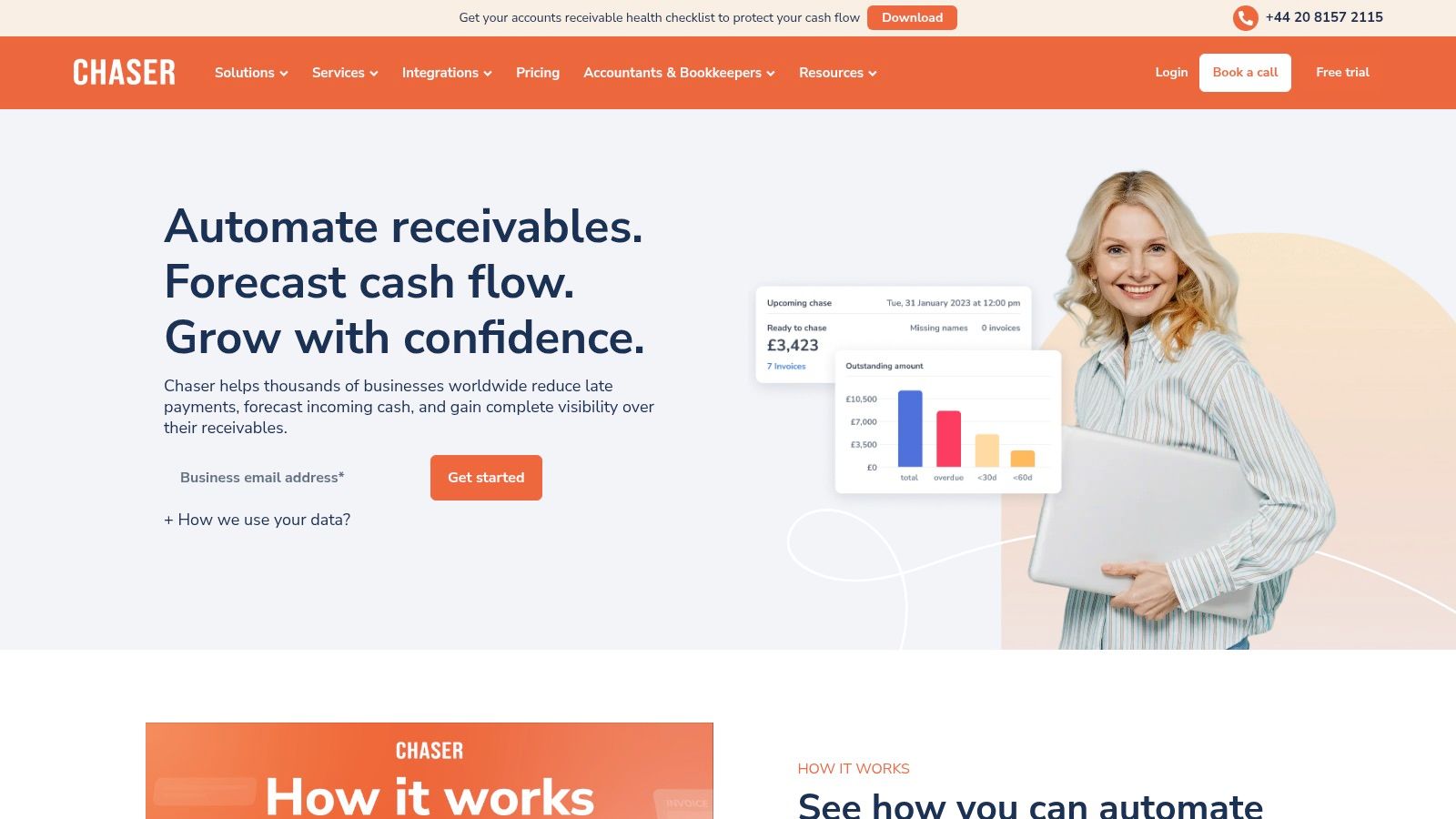
Chaser does one thing very well. It helps finance teams chase outstanding invoices consistently without turning every overdue account into a manual task.
That focus is why many SMEs like it. If you already use Xero, QuickBooks, or another accounting system and don't want to replace the core ledger, Chaser can sit on top and handle the uncomfortable middle ground between “invoice sent” and “cash received.”
Best when follow-up discipline is the real issue
A lot of AR problems aren't caused by bad invoicing. They're caused by uneven follow-up. One customer gets three reminders, another gets none, and finance only notices the gap when cash is late.
Chaser brings order to that. It supports sequenced reminders through email, SMS, and calls, plus a payment portal and promised-to-pay tracking. For lean teams, that's often enough to remove the repetitive admin that drains time every week.
The best collections process sounds calm to the customer and relentless behind the scenes.
Its biggest advantage is speed to value. Because it connects to existing accounting software, you don't need to rebuild your finance operation to improve chasing.
- Fast implementation: Good for SMEs that want improvement without a full system migration.
- Focused workflow design: Purpose-built for collections rather than general accounting.
- Useful forecasting support: Helps teams see likely collection patterns more clearly.
The limitation is scope. Chaser is strongest on reminders and collections. It's less suited to businesses that need deeper cash application automation, deductions handling, or broad AR standardisation across multiple entities.
If your bottleneck is overdue invoice follow-up rather than core accounting, Chaser is one of the cleaner specialist options. If debt collection becomes a larger operational concern, this article on debt recovery for businesses adds useful context around what software can and can't solve.
You can find the platform at Chaser.
6. Upflow
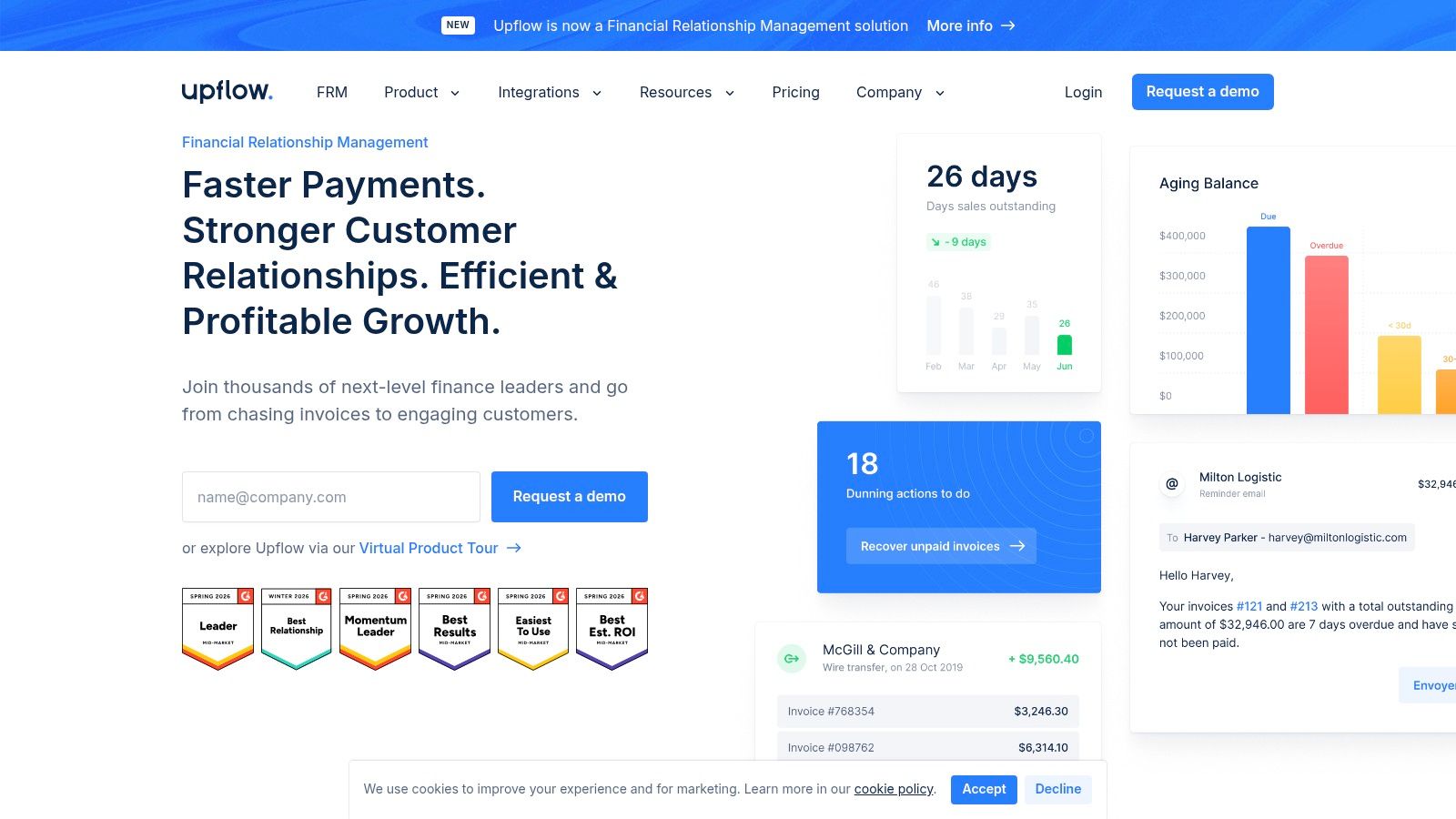
Upflow sits in a nice middle ground between lightweight chasing tools and heavier enterprise AR suites. It's built for teams that want automation, but still want enough control to shape customer communication and prioritise accounts intelligently.
That balance matters. Some AR software becomes so automated that finance loses feel for the customer relationship. Other tools are so manual that nothing happens unless someone pushes every step. Upflow tends to land between those extremes.
Good for growing teams that need better visibility
The platform gives you automated follow-up sequences, a customer portal, payment access, statements, and collection analytics. What I like most about this style of tool is that it helps teams decide where to spend attention.
Not every overdue account deserves the same effort. Some clients need a soft reminder. Others need a faster escalation because they're becoming a habit.
- Clear interface: Teams can see what's overdue and what action is next.
- Useful prioritisation: Analytics help separate noise from genuine collection risk.
- Works well with existing systems: A sensible add-on for businesses that don't want to change their accounting platform.
The trade-off is depth. Upflow is strong for collections automation and visibility, but it isn't trying to be the most complete enterprise receivables suite. If your process includes heavy dispute management or very complex deductions, you may need more specialised tooling.
For scale-ups and maturing SMEs, though, it often hits a practical sweet spot. It gives finance enough structure to tighten collections without adding a giant implementation project.
You can explore it on Upflow.
7. Invoiced
Invoiced is one of the stronger options for businesses that want broader AR coverage in a single dedicated platform. Instead of only improving reminders, it combines invoicing, collections, payment acceptance, customer self-service, reporting, and integrations in one AR-focused environment.
That's useful when finance has outgrown piecing together separate tools. One app sends invoices, another sends reminders, a third handles payments, and the accounting system tries to keep up. It works for a while, then someone spends half the week reconciling process gaps.
Strong when you want one AR platform, not several add-ons
Invoiced helps standardise receivables across teams and entities. Customers can access invoices and payments through a portal, while finance gets automated workflows and reporting around collection activity.
This kind of consolidation becomes more relevant in the UAE because structured invoice exchange and compliance readiness are moving up the priority list. The UAE Ministry of Finance announced a PEPPOL-based e-invoicing framework in 2024, with a 2025 pilot and rollout milestones across 2026 and 2027 for B2B and B2G invoicing, which raises the value of AR systems that can support structured invoice handling, integrations, and audit-ready records (regional e-invoicing overview).
- Broad AR coverage: Useful if you want invoicing, payments, and collections in one specialist tool.
- Better customer experience: Portals usually reduce back-and-forth over statements and payment status.
- API and ERP fit: Important for businesses standardising processes across systems.
The downside is that implementation can be more involved than a simple plug-in collections tool, especially if you want advanced modules or custom workflows. Still, for B2B firms trying to professionalise AR without jumping into a huge enterprise suite, Invoiced is a credible option.
You can review the product on Invoiced.
8. Versapay
Versapay is the most advanced option on this list for businesses that need more than chasing. It's particularly strong where the problem is not just getting customers to pay, but resolving the reasons they haven't paid.
That distinction matters in B2B. Many overdue invoices aren't ignored. They're blocked by remittance issues, short payments, disputes, approval delays, or missing backup documents. A basic reminder tool keeps asking for payment. A stronger AR platform helps clear the obstacle.
Best for higher-volume B2B receivables
Versapay combines collections automation, customer collaboration, payment workflows, and cash application support. For businesses with large invoice volumes or more complex customer accounts, that can take pressure off both finance and customer service teams.
Its collaboration layer is a genuine advantage. If your team spends half its time emailing customers to clarify invoice status, a portal-based workflow can reduce friction quickly.
When a customer says “we haven't paid because there's an issue,” the right AR platform should help your team find and fix the issue, not just send another reminder.
Versapay is also relevant for companies trying to understand the broader role of receivables in cash flow. If you need a practical primer alongside tool selection, this explainer on what accounts receivable means in practice is worth reading.
A few trade-offs are worth being honest about:
- More implementation effort: This isn't a lightweight SME plug-in.
- Best for complexity: Smaller firms may find the feature depth excessive.
- Custom pricing: You'll need a sales process to understand the total fit.
For distributors, larger B2B sellers, and multi-entity teams, Versapay is often the most capable specialist option in this list. You can explore it on Versapay.
Top 8 Accounts Receivable Software Comparison
| Product | Core capabilities | UX & implementation | Key benefits | Best for | Pricing |
|---|---|---|---|---|---|
| Zoho Books | Cloud accounting, invoicing, basic AR automation, multi‑currency, customer portal | Easy onboarding, mobile apps, integrates with Zoho suite | Affordable all‑in‑one AR + GL with UAE resources | Small UAE SMEs needing VAT handling | Affordable tiers; free tier for very small entities |
| Odoo Accounting | Modular ERP accounting, invoicing, stock & CRM integration, UAE fiscal localization | Highly customizable; longer setup, often partner‑led | End‑to‑end AR tied to fulfillment and inventory | SMEs → mid‑market with stock/fulfillment needs | Module‑based pricing; implementation costs vary |
| Xero | Cloud accounting, branded invoices, reminders, payments, large app marketplace | Intuitive UI, fast onboarding; UAE VAT needs config | Easy to use with extensible AR ecosystem | SMEs wanting simple accounting + add‑ons | Tiered subscription plans (moderate) |
| Chargebee Receivables | AR & collections automation for subscription/invoice billing, dunning, forecasting | Configurable workflows; best with Chargebee/ERP integration | Reduces DSO for recurring/usage billing businesses | Subscription businesses and billing‑centric firms | Quote‑based; depends on modules & usage |
| Chaser | Sequenced reminders (email/SMS/call), payer portal, promised‑to‑pay tracking | Fast to implement on top of existing accounting systems | Proven chasing workflows that cut manual follow‑ups | SMEs using Xero/QuickBooks needing collections automation | Transparent tiered plans; revenue‑based pricing |
| Upflow | Dunning campaigns, customer portal, cash collection analytics, integrations | Clean UI; easy setup with common SMB systems | Analytics to prioritize collections and improve cash flow | Scale‑ups and mid‑size firms focusing on receivables | Generally quote‑based (not always public) |
| Invoiced | End‑to‑end AR: invoicing, collections, payments, cash application, portals | Broad coverage; advanced modules may need implementation | Single platform for invoicing → collections → cash application | B2B firms standardizing AR across entities | Quote‑based pricing |
| Versapay | Collections automation, cash‑application matching, collaboration portal, ERP integrations | Scales to mid‑market/enterprise; higher implementation effort | Strong cash application and dispute resolution for high volumes | Distributors and high‑invoice B2B / enterprise | Custom pricing by modules & transaction volume |
Making Your Final Decision and Unlocking Growth
It is a familiar SME problem. Sales are healthy, invoices are going out on time, but cash still lands later than it should. At that point, the right AR software decision comes down to one practical question. Are you fixing the finance system, or are you fixing the collections process?
That distinction matters more than feature lists.
Choose an all-in-one accounting platform if the root issue is operational clutter. If invoicing, bookkeeping, tax records, and customer balances are spread across different tools or handled in spreadsheets, Zoho Books, Odoo Accounting, or Xero will usually deliver more value first. These systems give you one finance backbone. For a small team, that often matters more than advanced chasing workflows.
Choose a specialist AR automation tool if your accounting system is already doing its job and the bottleneck sits in collections. That usually shows up as late reminder emails, unclear ownership, slow dispute follow-up, or no reliable view of who has promised to pay and when. Chargebee Receivables, Chaser, Upflow, Invoiced, and Versapay are built for that part of the job. They turn collections from an ad hoc habit into a defined process.
For MENA businesses, there is a third filter that should sit alongside features and price. Regional fit. A tool that works well for a US company can create extra work in the UAE or wider GCC if it struggles with VAT treatment, invoice formatting, local payment expectations, Arabic-language communication, or integration with the systems your finance team already uses. Regional commentary from BILL also highlights the growing importance of digital payments, interoperability, and connected AR workflows when evaluating receivables tools (regional AR selection considerations).
A shortlist should be tested against five practical checks:
- Local compliance readiness: Support for VAT handling, clean audit trails, and invoicing processes your finance team can defend.
- Integration fit: Reliable connections to your accounting platform, ERP, CRM, bank feeds, and payment tools.
- Collections workflow quality: Reminder logic, escalation paths, customer portals, dispute handling, and reconciliation support.
- Customer payment experience: Clear invoices and easy payment options, because every extra step gives a customer another reason to delay.
- Capacity to scale: A setup that still works when invoice volume rises, subsidiaries are added, or approvals become more layered.
Software alone also has a hard limit. It can help you invoice faster, follow up earlier, and reduce avoidable delays. It does not remove the gap between sending an invoice and getting paid.
That is why many finance teams pair AR software with a broader receivables strategy. A platform manages billing, reminders, and visibility. A solution like Comfi helps businesses free up working capital from approved invoices already sitting on the balance sheet, instead of waiting through long customer payment terms. For SMEs in MENA, that combination is often more useful than chasing marginal gains from automation alone.
One final buying note. Vendors are building far more seriously for SME finance teams than they did a few years ago, which is good news if you want better usability without enterprise-level complexity. But more choice also makes it easier to buy the wrong category.
Match the tool to the bottleneck. If bookkeeping is the issue, start with an all-in-one platform. If collections discipline is the issue, add a specialist AR tool. If the primary issue is cash timing, use software to run AR properly and pair it with a funding option that helps you access cash tied up in invoices.
If your business has strong sales but cash still arrives too slowly, Comfi is worth a closer look. It helps SMEs across MENA access working capital from invoices through a fully digital experience that fits alongside the AR systems you already use. That means you can keep improving invoicing, collections, and reconciliation in your software stack while taking a more active approach to cash flow when payment terms stretch.
Related Reading
- A Practical Guide to Invoice Discounting in the UAE
- Inventory Financing vs Invoice Discounting for UAE SMEs
- Guide to Florist Invoice Financing UAE
- A Guide to Food and Beverage Invoice Financing in the Middle East for 2026
Looking to improve your cash flow? Explore Comfi's Invoice Discounting solutions. Get started today.