Cash Conversion Cycle
Calculator
Measure how long your cash is tied up in your business cycle, from paying suppliers to getting paid by customers. Benchmarked against UAE industries.


🔴 High DSO (58 days vs. 55 avg): You're waiting too long to collect. Invoice discounting through Comfi can cut this to near zero — get cash in hours, not months.
🟡 High DIO (46 days vs. 40 avg): Inventory sits too long. Consider JIT ordering, clearing slow-moving stock, or demand-based purchasing to speed up turnover.
🟡 Low DPO (30 days vs. 35 avg): You're paying suppliers faster than needed. Negotiate longer terms or use B2B BNPL to extend payment cycles without hurting relationships.
What Is the Cash Conversion Cycle?
The Cash Conversion Cycle (CCC) — also called the net operating cycle or cash-to-cash cycle — measures how many days it takes for your business to convert its investments in inventory and other resources into actual cash from sales.
Think of it as the time between spending money on stock or materials and receiving payment from your customer. The shorter your CCC, the less working capital you need to run your business.
The Three Components of CCC
The Cash Conversion Cycle has three building blocks, each representing a stage in your business cycle:
Days Inventory Outstanding (DIO): How long inventory sits in your warehouse before being sold. Calculated as (Average Inventory ÷ Cost of Goods Sold) × 365. Lower is better — it means you're selling faster.
Days Sales Outstanding (DSO): How long it takes to collect payment after a sale. Calculated as (Accounts Receivable ÷ Revenue) × 365. This is where most UAE SMEs struggle — with average DSO of 60–90 days in the region.
Days Payable Outstanding (DPO): How long you take to pay your own suppliers. Calculated as (Accounts Payable ÷ COGS) × 365. Higher is better (you're holding onto cash longer), but stretching too far damages supplier relationships.
CCC Benchmarks by Industry (UAE/MENA)
Why CCC Matters for UAE SMEs
In the UAE, 49% of B2B invoices are paid late and the average collection period is 67 days. This means many SMEs are sitting on a CCC of 60–90+ days, trapping enormous amounts of working capital in their business cycle.
A high CCC means you need more working capital (often from expensive credit lines) to keep operating. Every day you shave off your CCC frees up cash that can be reinvested in growth, used to negotiate supplier discounts, or simply reduce your reliance on external financing.
How to Improve Your Cash Conversion Cycle
There are three levers to shorten your CCC:
.svg)
.svg)
.svg)
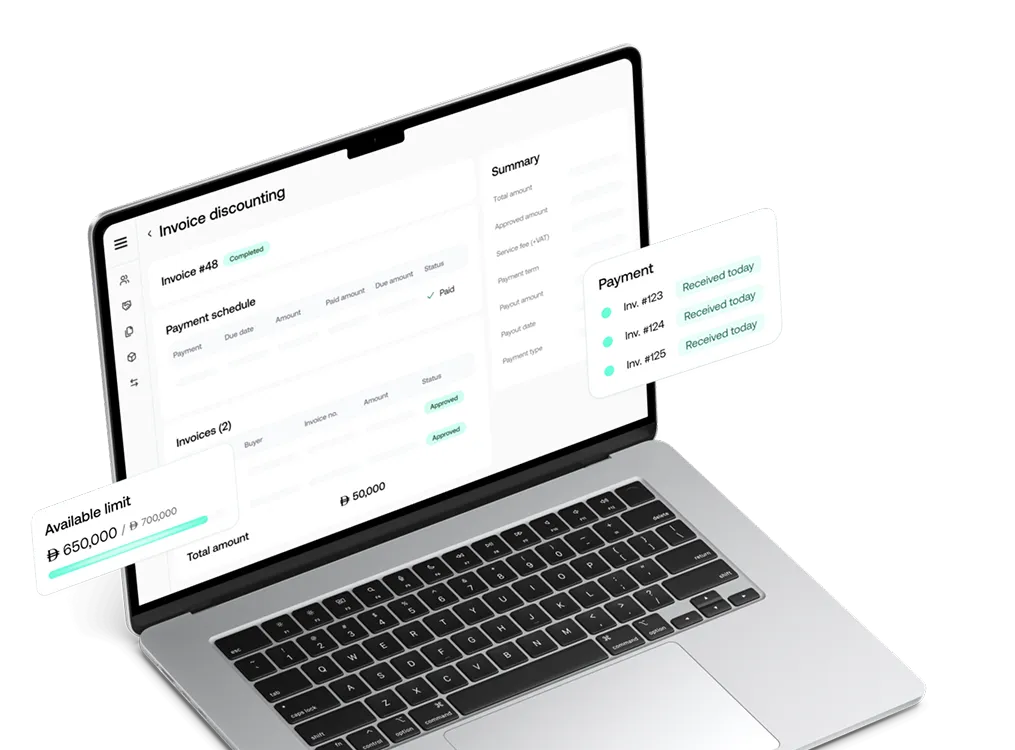
The fastest fix? Invoice discounting. Rather than waiting 60–90 days for customers to pay, you sell your invoices and get cash within hours. Your DSO effectively drops to 0–2 days, and your CCC shrinks dramatically — without changing anything else in your operations.
Comfi's invoice discounting converts your receivables to cash in hours, cutting your DSO from 60+ days to near zero.
CCC = DIO + DSO − DPO
DIO = (Inventory ÷ COGS) × 365
DSO = (Receivables ÷ Revenue) × 365
DPO = (Payables ÷ COGS) × 365