Used Car Dealer Financing UAE A Complete Guide for 2026


Cash gets trapped in a used car dealership long before profit shows up in your account. You buy well, recondition quickly, price correctly, and still end up saying no to the next good unit because too much money is parked in stock already sitting on the lot.
That's why used car dealer financing UAE isn't just a funding topic. It's an operating topic. The financing choice you make affects what you can buy this week, how long weak stock lingers, how aggressively you can restock, and whether your dealership grows through discipline or gets stuck reacting to cash pressure.
New dealers often focus on sourcing and sales first. In practice, cash flow discipline usually decides who scales and who stalls.
The Hidden Cost of a Full Showroom
A full showroom looks healthy from the street. Operationally, it can be the opposite.
If most of your money is tied up in stock, every ageing unit becomes expensive twice. First, it consumes capital. Second, it blocks your ability to buy the next vehicle that could turn faster and deliver a better margin. In the UAE, that problem matters because the used car market is already large and still expanding. It was valued at USD 22.92 billion in 2026 and is projected to reach USD 39.58 billion by 2031 at a 11.52% CAGR, while inventory can still take up to 180 days to sell according to Mordor Intelligence's UAE used car market analysis.
What tied-up inventory really costs
A dealer usually feels the pain in four places:
- Missed buying opportunities: A strong car appears at auction or through a trade-in contact, but you can't move quickly.
- Slower stock rotation: Older units keep occupying yard and showroom space that should go to fresher, easier-to-sell inventory.
- Compressed negotiating power: When cash is tight, dealers accept weaker deals just to keep sales moving.
- Operational drag: Reconditioning, advertising, and storage continue while the unit waits.
Practical rule: Don't judge your stock by how good it looks lined up. Judge it by how quickly it converts back into cash.
When considering dealer finance, many owners think only in terms of “getting a loan”. That's too narrow. The better way to think about dealer finance is as a tool for turning static stock into usable liquidity so you can keep buying, pricing, and rotating inventory with intention.
Your showroom is part display, part balance sheet
A disciplined dealer manages appearance and cash at the same time. Clean presentation helps sales, especially in walk-in-heavy environments, so it's worth reviewing practical showroom upkeep resources such as explore our window cleaning solutions if your frontage and glass presentation need attention. But presentation alone won't solve a capital bottleneck.
If your lot is full and your account is thin, you need a stock strategy linked to funding speed. That's the real lever behind growth. A useful example of that thinking is this guide on unlocking capital from vehicle stock in Dubai, which addresses the daily issue most dealers face: vehicles on hand, but not enough free cash to move on the next opportunity.
Decoding Your Dealer Financing Options
Not all funding solves the same problem. Some options help you acquire inventory. Others help you release cash after a sale. Others support the retail transaction with your end customer. If you treat them as interchangeable, you'll build friction into your business.
The UAE auto finance market was valued at AED 55 billion in 2023, and dealer-focused funding has become more important because used car margins of 20% to 30% rely on keeping stock moving. Dealers can also earn 1% to 3% commissions on arranged customer auto loans, according to Trace Data Research's UAE auto finance market report.
Floor financing
This is the option most dealers mean when they talk about used car dealer financing UAE.
You use it to access cash against vehicles already in stock or to support the acquisition of fresh inventory. Operationally, this is the most relevant tool when your issue isn't lack of profit potential but lack of timing.
Use it when:
- Your stock turn is uneven: Some units sell quickly, others sit longer than expected.
- You buy from auctions, wholesalers, or direct sellers: Speed matters more than perfect pricing if the unit is in demand.
- You want to hold a broader mix: Sedans, SUVs, and commercial units don't all move on the same cycle.
What it improves day to day:
- Buying flexibility: You can say yes to the right car when it appears.
- Restocking speed: Strong sellers get replaced faster.
- Margin protection: You don't need to dump good units early just to free cash.
What to watch:
- Valuation discipline matters. If your stock is overvalued internally, the funding line won't rescue the mistake.
- Ageing stock still hurts. Funding helps liquidity, but it doesn't make a poor buying decision disappear.
Invoice discounting for cash released after a sale
Some dealers overlook this because they associate it with general trade businesses. In practice, it can fit dealerships that sell into business buyers, fleets, trade channels, or any arrangement where payment doesn't land immediately.
This option works best when your sale is done but your cash is delayed.
A few practical fits:
- You've invoiced a corporate buyer and payment terms create a gap.
- You handle B2B volumes where waiting for settlement slows the next round of purchases.
- You want to avoid cash flow strain from successful sales.
Good sales can still create cash problems if payment arrives after the next buying opportunity has passed.
This option solves a different bottleneck from inventory funding. It doesn't help you buy the first car. It helps you keep momentum after the sale has happened but before the buyer's payment clears.
Customer-arranged dealer finance for retail conversion
This is the model many newer dealers understand first because it sits at the point of sale. You help the customer obtain vehicle finance, often through bank or finance partners, and the dealership benefits from easier conversion and commission income.
Where it helps most:
- Mid-market retail stock: Buyers often need monthly payment options.
- Sales teams that need fewer objections: Finance turns “too expensive” into “manageable monthly payment”.
- Dealers building ancillary income: Loan arrangement can supplement gross profit per unit.
Where people get it wrong:
- They assume customer finance solves dealer liquidity.
- It doesn't. It supports conversion on the retail side, but it won't automatically solve a stock-heavy balance sheet.
The right mix depends on your pressure point. If your issue is buying power, focus on inventory-linked liquidity. If your issue is delayed receivables, look at invoice-based structures. If your issue is retail conversion, customer finance matters more.
Preparing Your Dealership for Approval
Approval usually goes to the dealer who looks organised, not the dealer who sounds ambitious.
Most applications slow down because the business presents information in fragments. One missing document leads to a follow-up. One mismatch in vehicle details creates another check. By the time everything is corrected, the buying window has moved.
The baseline documents in the UAE financing process typically include Emirates ID, salary certificate, and 3 to 6 months of bank statements. Vehicle checks are commonly RTA-verified, and a credit score above 650 can support an 85% to 90% approval rate, while incomplete documentation remains a leading reason for rejection, according to Automall's UAE car loan requirements guide.
Build an approval file before you need it
If you wait until the application starts, you're already late. Keep a live approval file ready.
That file should include:
- Trade licence and company documents: Your financier wants to confirm the business is active, properly registered, and operating in the correct category.
- Owner identification records: Emirates ID and any related KYC documents should be current and easy to retrieve.
- Bank statements: Clean statements matter because they show how cash moves, not just what your management accounts say.
- Inventory list: Include vehicle make, model, year, VIN or chassis reference where relevant, purchase status, and internal valuation method.
- Supporting vehicle records: RTA-related verification, inspection notes, and any material condition details that could affect valuation.
What financiers are really checking
They aren't just checking whether your dealership exists. They're checking whether your business can be trusted to turn vehicles into cash without operational chaos.
A strong file signals:
- Consistency: Your documents say the same thing across systems.
- Control: You know what stock you hold and what it's worth.
- Traceability: Vehicle ownership and condition can be verified.
- Cash discipline: Your statements don't suggest erratic stress around every transaction.
If a financier has to reconstruct your business from screenshots, voice notes, and partial spreadsheets, approval usually slows or weakens.
What new dealers should tighten first
Early-stage dealerships often don't have long operating histories, so they need to compensate with cleaner process.
Start here:
- Standardise inventory records: Use one format for every vehicle.
- Separate personal and business cash flow: Mixing them makes risk review harder.
- Document reconditioning spend clearly: Hidden costs distort stock value.
- Keep owner documents current: Expired IDs and licence issues create avoidable delays.
- Prepare for questions on sourcing: If you buy from auctions, traders, or direct sellers, be ready to explain your normal process.
If you're still setting up the business itself, Solana EV's guide on dealerships is a practical reference for the foundational business side before you push into financing.
A simple internal check before you apply
Run this short review with your team:
- Can we list every unit currently in stock with matching records?
- Can we explain our asking price and our cost basis for each vehicle?
- Are our bank statements likely to support the story we tell about the business?
- Can we respond to document requests on the same day?
If the answer is no to any of those, fix that first. Approval starts long before submission.
Navigating the Application and Approval Journey
Once your file is ready, the process becomes less mysterious and more procedural. Most delays happen in ordinary places, not dramatic ones.
The main operational risk is simple. A dealer submits quickly, assumes the file is fine, then discovers missing documents, unclear debt position, or disputed vehicle information halfway through review. That's where time disappears.
What usually happens after submission
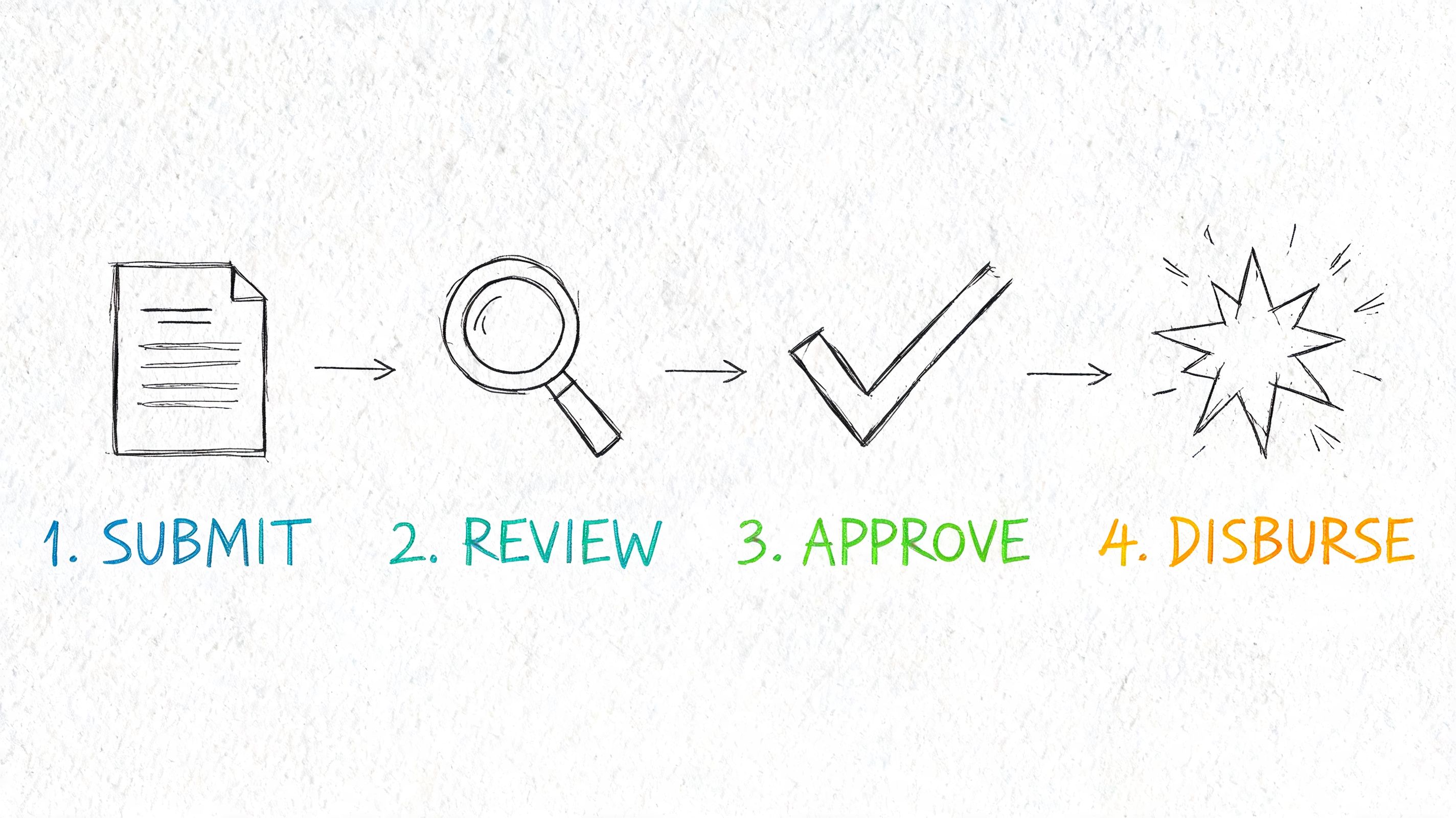
A typical application journey moves in four practical stages.
- Initial submission
You provide company documents, owner identification, bank records, and vehicle details. If the package is clean, the reviewer can move straight into assessment. If not, the file stalls in back-and-forth requests. - Review and risk checks
This stage is where the funder checks document consistency, debt exposure, vehicle quality, and basic business reliability. If your inventory list and supporting records don't line up, expect questions. - Offer stage
If the file passes review, you receive terms for the relevant structure. Careful reading is essential, especially around fees, settlement conditions, valuation treatment, and operational obligations tied to the stock. - Disbursement and operational use
Once documents are executed, funds are released according to the approved structure. Good dealers already know which units they'll buy or which pressure points they'll relieve with that liquidity.
Where applications fail
The biggest errors are rarely strategic. They're administrative.
According to Moatamad Cars' guide to financing used cars in the UAE, 30% of application failures come from documentation gaps and 22% of rejections come from high debt-to-income ratios. The same source notes that pre-validating documents and managing credit can lead to approvals that are up to 75% faster than traditional banks.
Here's what that looks like in practice:
- Documentation gaps: Missing records, inconsistent names, old certificates, or incomplete vehicle details.
- Debt pressure: Existing obligations make the business or owner profile look stretched.
- Weak response times: The funder asks a question on Tuesday and gets a reply on Thursday. Momentum dies there.
- Unclear stock quality: If valuation depends on assumptions rather than evidence, expect friction.
Send a complete file once. Don't send six partial files over four days.
How to keep the process moving
Dealers who move through approval smoothly usually do three things well:
- Nominate one internal owner: One person should control document collection and responses.
- Pre-check every uploaded item: Dates, names, licence details, and account history should all align.
- Decide your stock plan before approval lands: Don't secure liquidity and then start wondering what to do with it.
If you want to see how this looks in a practical automotive context, this dealer case study in the UAE is useful because it shows how funding workflow and dealership operations connect in practical settings.
Alternatives to Traditional Banks Featuring Comfi
Traditional banks still matter. They can suit established dealers with strong records, patience for process, and enough cash cushion to tolerate slower movement. But that model often clashes with how used car operations work.
A dealership doesn't buy opportunities on a fixed calendar. Good stock appears unexpectedly. Sellers want quick answers. Auctions don't wait. Trade-ins need prompt decisions. That's why time-to-funding changes the business outcome, not just the application experience.
A key difference in the market is funding speed. Traditional banks can take 2 to 5 days for approval, while fintech options such as Comfi can provide funding in 24 hours, according to ArabWheels' guide to financing a used car in the UAE for 2025. For dealers managing stock cycles of 90 to 180 days, that timing matters directly to restocking.
Where banks still fit
Banks can make sense when:
- Your dealership has mature records: Clean financial history, stable turnover, and strong documentation.
- You don't need same-day flexibility: You can wait through review cycles without losing key inventory.
- Your funding need is less frequent: You're not relying on constant stock rotation to stay competitive.
The trade-off is rigidity. Bank process often suits stable businesses better than fast-moving ones.
Where fintech-style dealer solutions fit better
A modern platform is usually a better fit when operational speed is the problem you're trying to solve.
That tends to apply if:
- You buy opportunistically: Auctions, trader networks, direct sellers, and trade-ins.
- You need digital execution: Less paper, fewer hand-offs, quicker response.
- You want funding tied to stock reality: Existing vehicles become the basis for freeing up cash rather than sitting idle on the balance sheet.
One example is Comfi's dealer financing product. In this context, it's best understood as a stock-linked liquidity tool for dealers who need to free up cash from in-stock vehicles, operate through a digital process, and move faster on restocking decisions. Based on the verified market data provided for this article, Comfi can offer funding within 24 hours, with 30 to 90 day terms, and clients report larger order sizes and sales uplift in practice.
The decision is operational, not ideological
This isn't a bank-versus-fintech debate. It's a fit question.
Choose the route that matches your actual dealership rhythm:
- If your stock plan is steady and your timing pressure is low, traditional structures may be fine.
- If your buying edge depends on speed and flexibility, a faster digital option like Comfi will usually fit better.
- If your issue is repeated cash lock-up in ageing inventory, you need a structure built around stock turnover, not generic business finance.
The mistake we see most often is dealers choosing the cheapest-looking option on paper, then losing margin because they couldn't move quickly when a profitable unit became available.
Financing as a Growth Engine Not a Crutch
Used properly, finance doesn't cover weakness. It supports control.
A healthy dealership uses funding to sharpen its operating cycle. Buy the right cars. Turn them faster. Reinvest with discipline. Repeat. That's very different from using finance to paper over poor buying, vague pricing, or slow collections.
What strong dealers do with liquidity
They don't just add more stock. They add better stock.
That usually means:
- Doubling down on proven segments: Buy what your buyers already respond to.
- Cutting slow-moving categories sooner: Don't use fresh liquidity to defend old mistakes.
- Tracking ageing stock weekly: Capital should follow movement, not hope.
- Negotiating from strength: Cash access improves sourcing decisions when sellers want speed and certainty.
Financing should make your stock mix sharper. If it only makes your lot fuller, you're using it badly.
Build a repeatable cash cycle
The dealers who scale in the UAE market usually build habits around funding, not one-off transactions.
Keep these principles in place:
- Treat every facility as operational infrastructure: It should support procurement rhythm.
- Maintain an approval-ready file at all times: Don't rebuild your records from scratch each time.
- Review stock turn continuously: The right facility can't rescue the wrong buying pattern.
- Protect lender confidence: Fast reporting and clean records usually improve future access.
Used car retail rewards dealers who can act quickly without becoming sloppy. That balance matters more than showroom size, ad spend, or bold pricing claims.
If you master that, financing becomes part of your growth engine. Not because debt is the goal, but because controlled liquidity lets you buy better, rotate faster, and build a dealership that isn't constantly waiting for yesterday's inventory to fund tomorrow's opportunity.
If your dealership has solid stock but too much cash tied up in it, Comfi is worth evaluating as a practical way to release liquidity from in-stock vehicles and restock faster through a digital process built for SME dealers in the UAE.