Software Reseller Payment Terms UAE: A Practical Guide


Growth can make a software reseller feel poorer before it makes the business stronger. That's the part most legal templates never show.
A reseller closes a good SaaS deal, issues the invoice, books the revenue, and then spends the next few weeks juggling supplier payments, VAT paperwork, collection calls, and a finance team asking the same uncomfortable question: if sales are up, why is cash tighter?
That's why software reseller payment terms UAE matters more than is generally understood. In practice, payment terms aren't a legal footnote. They decide whether a growing reseller can keep taking orders without choking its own cash position.
The Reseller's Paradox Growing Sales But Shrinking Cash
The pattern is familiar in UAE distribution and software channels. Sales teams celebrate a signed order. Operations provisions licences or support. Finance pays the supplier on time. Then everyone waits for the customer to pay.

For many resellers, significant pressure starts after the deal closes. The core challenge is the gap between supplier invoices due in 30 days and end customers paying in 60 to 90 days, a mismatch highlighted in UAE reseller terms guidance from MRI Software. On paper, the business is growing. In the bank account, it feels like the opposite.
Where the pressure shows up first
This gap doesn't stay neatly inside accounts receivable. It spills into daily operations:
- Supplier settlement pressure: The supplier wants clean, on-time payment because licence delivery, renewals, and partner status depend on it.
- Sales hesitation: Commercial teams start avoiding larger deals because each one creates another cash squeeze.
- Collections friction: Finance spends more time chasing payment status than managing margin and planning.
- False profitability signals: Management sees booked revenue and assumes the month was strong, while liquidity gets tighter.
A reseller can be profitable and still feel starved of cash. That's the paradox.
Practical rule: If your customer term is longer than your supplier term, growth increases pressure unless the payment structure is designed for the gap.
Why standard templates don't help much
Most reseller agreements are written to document rights, obligations, and broad payment mechanics. They rarely deal with what happens in the middle of the operating cycle, when the supplier has been paid and the customer still hasn't.
That missing middle is where finance teams live. You're not arguing over abstract legal language. You're deciding whether payroll, VAT, supplier remittance, and the next stock or licence commitment can all be covered without scrambling.
In UAE software distribution, weak terms become expensive. A deal that looks healthy at signature can become a drain if the reseller carries the full timing burden.
The real metric isn't just sales
Most resellers initially focus on margin percentage. Margin matters, but timing often matters first. A lower-margin deal that pays quickly can be healthier than a high-margin deal tied up in slow approvals and extended customer terms.
That's why strong payment terms deserve board-level attention. They affect:
- How fast cash returns after a sale
- How many new deals the reseller can absorb at once
- How much risk sits with the reseller instead of the supplier or buyer
- How stable operations feel month to month
When people talk about “cash flow issues”, they often make it sound like poor planning. In software resale, it's usually a structural timing problem. If you don't address that structure, selling more won't solve it.
Choosing Your Foundational Payment Model
A reseller closes a strong quarter, signs several annual licences, and books healthy margin on paper. Then the supplier invoice falls due in 30 days, the customer pays in 75, and finance spends the month covering the gap instead of funding growth. That is the ultimate test of a payment model in the UAE software channel.
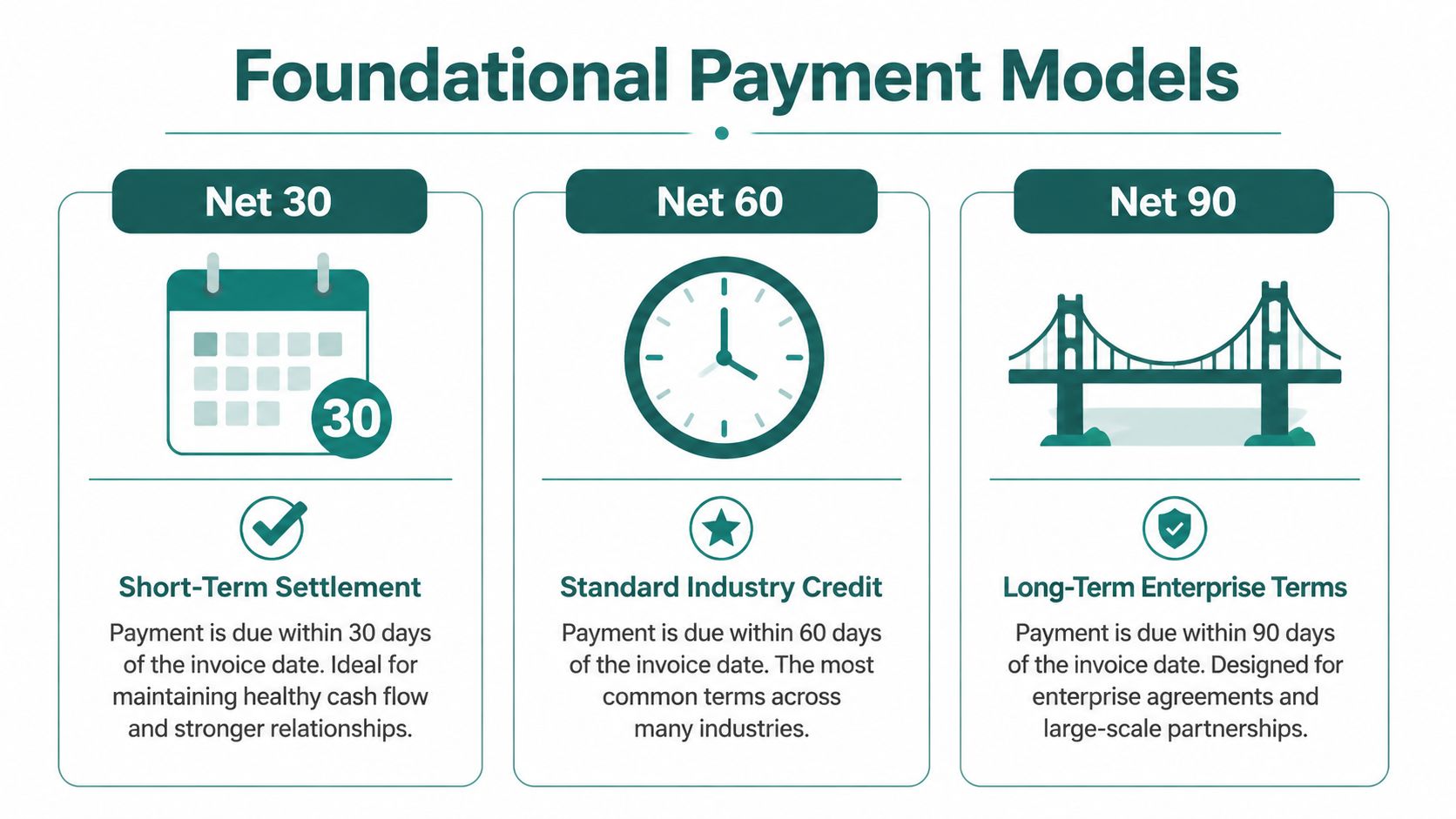
Net terms and who actually funds the deal
Net 30, Net 60, and Net 90 look straightforward in a contract. Operationally, they decide who bankrolls the sales cycle.
The key question is not the label. It is the gap between outgoing cash and incoming cash. If the vendor starts your payment clock on licence issuance but your customer only pays after internal approval, implementation sign-off, or a month-end batch run, the reseller carries the financing burden. Margin can stay positive while cash turns ugly.
I look at two dates before I look at discount level:
- The date the supplier expects settlement
- The date customer cash usually reaches the bank
That second point matters more than the invoice due date. In enterprise sales, “due” and “paid” are often weeks apart.
Net terms still work when the cycle is tight, customer behaviour is predictable, and the reseller has enough working capital to absorb timing swings. They work badly when large public sector or enterprise accounts insist on extended terms and the supplier will not flex.
Tiered discounts improve margin only if volume forecasting is honest
Tiered discount models are common in software distribution because they reward commitment. On paper, they can look better than fixed-margin resale. In practice, they punish weak forecasting.
Genie AI's UAE software reseller agreement guidance notes that reseller commission structures often use tiered discounts of 15% to 40% off list price based on volume thresholds, often with 30 to 60 day payment terms, according to Genie AI's UAE software reseller agreement guidance. That can work well if pipeline conversion is reliable and supplier reporting is clean.
The problem shows up near the end of a quarter. Sales teams discount hard to hit a threshold. One delayed customer PO drops the reseller into a lower band. Margin shrinks, but the supplier payment timetable usually stays the same. Finance then has two problems at once. Lower profit and the same cash pressure.
Tiered pricing is usually workable when:
- Forecast accuracy is strong enough to price with discipline
- The agreement states exactly when volume is measured
- Credit notes and reversals are handled on a fixed schedule
- Both sides use the same sales and renewal data
If any of those are vague, the model creates monthly reconciliation fights.
A useful reference point outside software is this freelancer guide to professional service agreements. The commercial context is different, but the lesson is the same. Payment structure only works when triggers, timing, and adjustments are defined clearly.
Revenue share reduces upfront strain, but only with clean reporting
Revenue share often suits SaaS resale because it lowers the upfront cash hit. Instead of buying at a discount and waiting to collect, the reseller earns a share as subscription revenue is billed or received.
That sounds safer, and sometimes it is. Cash pressure can be lower at the start of the customer relationship. But control shifts toward the supplier's reporting system. If the vendor handles billing, refunds, downgrades, credits, and churn calculations, the reseller needs clear visibility or it will spend months disputing statements it cannot independently verify.
Revenue share is usually a better fit when the reseller is focused on account growth, renewals, and long-term customer retention rather than quick upfront margin. It is weaker when reporting arrives late or the agreement is unclear on how upgrades, partial terms, and cancellations affect payout.
For customer-side structures that reduce the timing gap, it helps to review flexible payment plans for B2B transactions. That approach can help resellers shorten collection friction without forcing every deal into blunt Net 30 versus Net 60 trade-offs.
What holds up in practice
No model is automatically good. The right model is the one that your cash position can survive during a slow quarter, your team can reconcile without argument, and your supplier can administer without constant exceptions.
In UAE software resale, I would rather run a slightly lower-margin structure with predictable collections than chase a richer model that leaves finance covering payroll, VAT, and supplier remittance from an overdraft. Sales growth helps. Cash timing decides whether that growth is usable.
Crafting Bulletproof Agreement Clauses
A reseller agreement shouldn't just say how money is earned. It should say exactly how money moves, when it moves, and what happens when reality gets messy.
That's where many contracts fail. The wording looks complete until the first renewal, add-on sale, disputed invoice, or territory overlap.
Clauses that protect cash rather than just describe it
The first thing I look for is whether the agreement turns finance operations into a routine or into a monthly argument. Good clauses remove interpretation.
Focus on these points:
- Payment trigger: State what event creates the right to payment. Is it customer signature, supplier invoice, end-customer payment, activation, or month-end reporting?
- Currency and tax treatment: If the deal is cross-border within a regional group, spell out settlement currency and who handles the tax mechanics.
- Reconciliation cycle: Monthly is usually easier to control than ad hoc adjustments. The schedule should name the report, owner, deadline, and dispute window.
- Audit trail: If a supplier can adjust commissions, the reseller should have access to enough detail to verify those adjustments.
- Territory definition: If territories are vague, commissions become vague too.
The most expensive clause is often the one that isn't there.
Renewals and add-ons need their own language
A major weakness in many UAE reseller templates is the lack of clarity around renewals and add-on services, as noted in Zegal's software reseller agreement guidance. That sounds like a legal drafting issue. It is a revenue leakage issue.
If a reseller brings in the customer, supports adoption, manages the relationship, and then sees no clear renewal compensation, the agreement pushes the wrong behaviour. Teams start chasing first-year bookings and underinvesting in retention.
Write these points explicitly:
- Renewal commission entitlement: Say whether the reseller is paid on Year 2 and beyond.
- Add-on module treatment: Confirm whether upsells, seat expansions, and feature bundles count toward commission.
- Downgrade and churn rules: Define what happens if the customer reduces scope or cancels.
- Clawback boundaries: If clawbacks apply, limit them clearly and tie them to identifiable events.
If renewal economics are vague, account managers stop treating retention as part of the sale. The contract ends up weakening the business model.
Borrow useful habits from service contracts
Even though software resale is different from service delivery, some drafting discipline carries over well. A solid freelancer guide to professional service agreements is useful because it shows how clear acceptance criteria, scope boundaries, and payment triggers prevent disputes before they start.
That same mindset helps reseller contracts. Don't rely on “commercial understanding”. Write the trigger, the timeline, the exception, and the evidence required.
A practical contract review lens
When reviewing software reseller payment terms UAE, ask your team three blunt questions:
- If the supplier's report is late, do we still know when payment is due?
- If the customer renews with extra modules, can we prove what we're owed?
- If there's a dispute, does the agreement show how reconciliation gets resolved?
If the answer to any of those is unclear, the agreement isn't finished. It's only signed.
Navigating UAE VAT and Payment Processing Rules
A reseller closes a deal on the 28th, books the revenue, and expects cash inside 30 days. Then the invoice gets kicked back for a VAT detail, the payment link sits unpaid, and month-end arrives before the money does. That gap between booked sales and usable cash is where UAE payment terms often fail in practice.
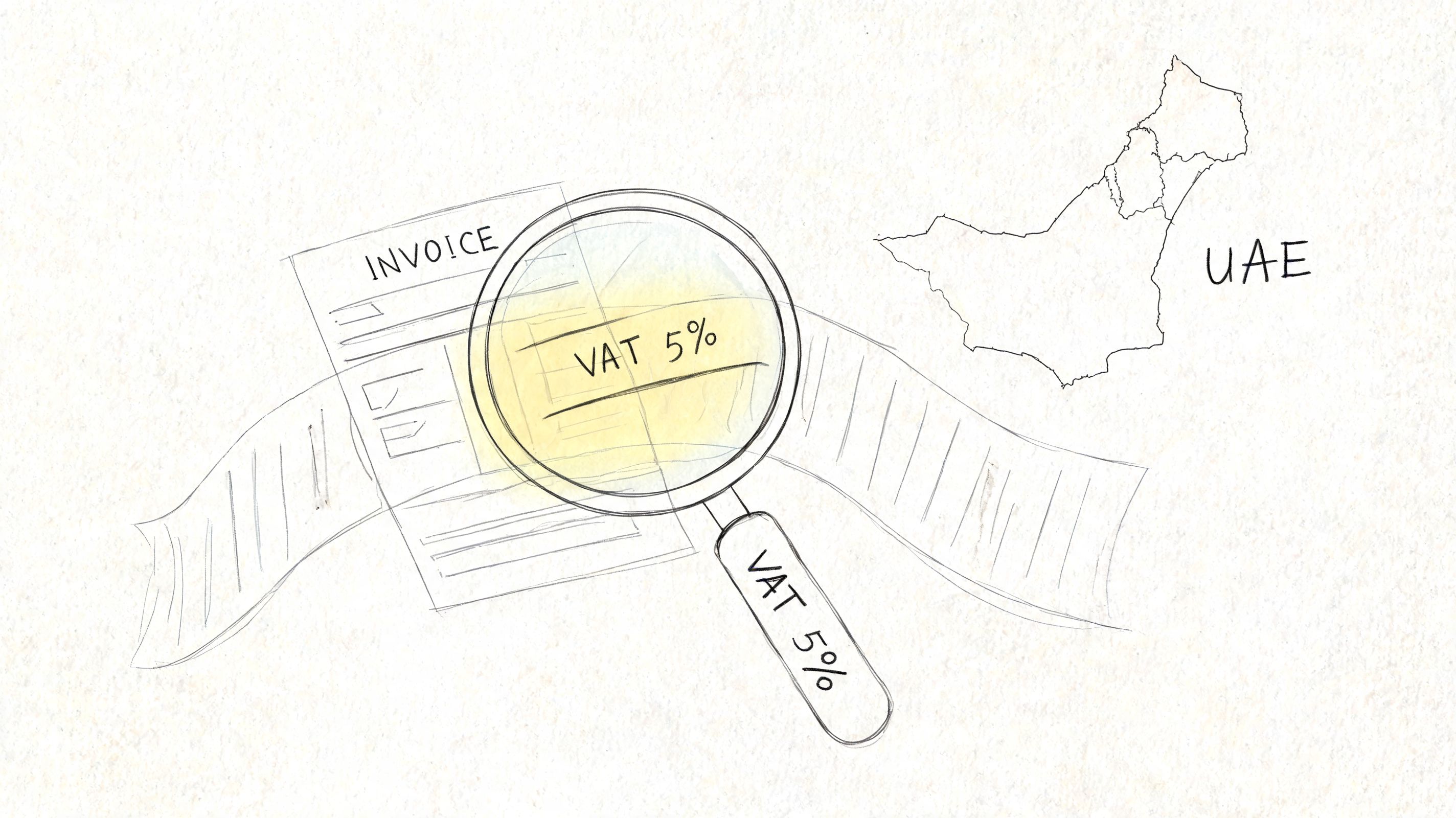
Small VAT mistakes slow cash collection
In UAE software resale, payment delays often start in operations, not in the commercial discussion. The customer may be ready to pay. Their finance team or payment provider still will not release funds if the invoice trail is incomplete or inconsistent.
The usual failures are routine:
- Missing VAT fields: The invoice is issued, but the tax information is incomplete.
- Document mismatch: The PO, invoice, and approval record do not line up cleanly.
- Payment evidence gaps: The receipt, settlement record, and tax document cannot be reconciled.
- Manual correction loops: Finance has to revise, resend, and reapprove paperwork.
None of this changes the underlying sale. It still delays cash.
That is why disciplined invoicing matters more than many sales teams expect. A contract can say net 30, but one rejected invoice can turn that into a much longer collection cycle and leave the reseller carrying supplier obligations in the meantime.
Processing fees need to match how you collect
Digital collection tools are useful, especially when customers want a fast card payment path instead of a bank transfer. But the processing model has to fit the ticket size and buyer mix. If a reseller is collecting many low-value monthly charges, per-transaction fees can erode margin quickly. If invoices are larger and less frequent, the convenience may justify the cost.
The finance question is simple. Does the collection method bring cash in fast enough to offset the fee and reduce DSO, or does it just add cost to a process that already works?
That is also where operations and compliance meet. Teams tightening controls should review practical e-invoicing workflow guidance for finance teams so invoices are created correctly the first time instead of being fixed after rejection.
What disciplined finance teams do differently
Teams that collect faster usually remove avoidable variation from the process. They do not leave invoice quality to individual sales reps or rely on someone spotting errors at month-end.
They usually:
- Lock invoice templates early: Billing format stays consistent across deals.
- Validate VAT fields before issue: Errors are caught before the customer receives the invoice.
- Tie approvals to contract rules: Internal sign-off follows the commercial structure already agreed.
- Reconcile settlements quickly: Exceptions are found while the payment trail is still easy to trace.
I have seen the same pattern repeatedly. Resellers blame slow-paying customers, but the bigger issue is often a preventable admin break between invoicing, tax compliance, and payment collection. In a business already squeezed between supplier due dates and customer remittance cycles, that admin break becomes a cash flow problem fast.
Strategies for Negotiating Favourable Terms
A lot of resellers accept supplier terms as if they're fixed policy. They usually aren't. They're a starting position.
Negotiation gets easier when you stop asking for “better terms” in general and start asking for specific changes tied to operational logic. Suppliers respond better when the request sounds like process design, not pressure.
Ask for payout timing that matches your sales cycle
Typical UAE reseller arrangements can include commission rates of 2.5% to 3.5% for credit card transactions, with payout frequencies ranging from daily to weekly to on-demand, often subject to minimum thresholds of AED 500 to AED 1,000, according to PayAtlas coverage of the UAE payments environment. Those mechanics matter more than many resellers think.
If your agreement defaults to infrequent settlement, cash piles up in the wrong place. The commission may be earned, but the business can't use it yet.
A better negotiation approach is to frame payout frequency as an operating requirement:
- Weekly payout suits resellers with regular supplier obligations.
- On-demand payout helps when deal size is lumpy and large invoices create spikes.
- Lower payout thresholds reduce the amount of trapped cash sitting below the release point.
Don't ask for faster payouts because “cash flow is tight”. Ask for them because the current cycle doesn't match your supplier settlement obligations and creates avoidable friction.
Bring evidence from your own process
Suppliers are more flexible when the reseller demonstrates control. If you want improved terms, show that your business is organised.
Useful evidence includes:
- Clean reporting discipline: Demonstrate that your sales and billing data are accurate and timely.
- Low dispute history: Show that reconciliations are resolved quickly.
- Predictable order pattern: Suppliers are more comfortable easing terms when they can see consistency.
- Customer payment behaviour: If your buyers are reliable but slow by policy, explain the difference.
A finance-led negotiation is often stronger than a sales-led one. Sales can ask for support. Finance can prove why the structure works.
The best term request is the one the supplier can operationalise without extra ambiguity.
Protect margin while improving payment timing
A common mistake is chasing better payment timing while giving away margin elsewhere. If you negotiate extended supplier support but discount too aggressively on the customer side, you solve one problem and create another.
Keep these trade-offs in view:
- Faster payout with lower margin may help temporarily but weaken the account long term.
- Higher commission with delayed settlement looks attractive until liquidity tightens.
- Flexible customer terms can win deals, but only if the reseller isn't carrying all the strain alone.
The strongest position is balanced. You want terms that let you close business, collect predictably, and preserve enough margin to absorb the inevitable exceptions.
Don't leave exceptions undocumented
If a supplier verbally agrees to accelerated settlement, special treatment for a large account, or a different payout trigger for a strategic product, get it into the agreement or an accepted schedule. Otherwise, it disappears when account ownership changes or a finance review starts.
Resellers lose money in the gap between “commercially understood” and “contractually documented”. In the UAE channel, that gap is where avoidable disputes tend to start.
Close the Cash Flow Gap with Modern Payment Solutions
A UAE reseller closes a strong quarter on paper, then spends the next month juggling supplier due dates, customer approval delays, and payroll. That is the gap standard payment terms leave behind. Sales grow first. Cash arrives later.

Embedded payment terms change the operating model
Traditional reseller structures assume the reseller will carry the delay between invoicing the customer and settling the supplier. That may work on a small book. It breaks once deal size grows, renewals stack up, or one large customer starts paying on its own internal timetable.
Embedded payment terms fix that operating problem at the transaction level. The supplier gets paid promptly. The customer still gets commercial terms that fit procurement and sign-off cycles. The reseller avoids using its own cash position to support every deal.
In practice, that means:
- suppliers are not waiting on the end customer's payment cycle
- buyers can still take agreed terms such as 30, 60, or 90 days
- finance teams stop patching shortfalls with overdrafts or owner cash
- sales can close larger opportunities without creating a collection problem on day one
That's why embedded payment terms are operational tools, not just checkout features, and are central to how you can improve working capital for your UAE IT services business.
Why this matters beyond one invoice
The benefit is not limited to a single transaction. It changes how the business behaves week to week.
A reseller with reliable payment support can plan purchasing with more confidence, protect supplier relationships, and stop treating every slow-paying customer as a threat to liquidity. Finance gets clearer visibility. Sales gets room to sell. Management gets fewer surprises.
The impact shows up in routine decisions:
- Sales confidence: Teams can pursue larger contracts without asking whether cash will hold until collection.
- Supplier credibility: Prompt settlement makes allocation, support, and renewal discussions easier.
- Forecasting quality: Finance can model expected inflows and outflows around known payment mechanics, not optimistic collection assumptions.
- Customer flexibility: Buyers get terms that match their internal process without forcing the reseller to absorb all the strain.
For a broader finance perspective, this piece on strategies for forecasting and sustainable growth is useful because it connects cash discipline to growth decisions, not just cost control.
The most significant shift is strategic
Once payment timing is handled properly, the reseller stops acting as the unofficial bank for the deal.
That changes the quality of growth. The business can add revenue without adding the same level of cash stress. It can support procurement-driven customers without weakening its own position every time terms are extended. In practical terms, fewer deals need manual intervention, fewer supplier payments become urgent exceptions, and fewer management meetings are spent discussing who needs to be chased this week.
The strongest resellers are usually not the ones shouting about top-line growth. They are the ones converting booked revenue into usable cash with less firefighting.
If your team is stuck between supplier deadlines and slow customer payments, Comfi can help you access working capital with Invoice Discounting and Buy Now, Pay Later terms for B2B transactions. That gives suppliers prompt payment while buyers get flexible terms, so your reseller business can keep growing without the same cash flow bottlenecks.
Related Reading
- How Comfi’s B2B Buy Now Pay Later Solution Enhances Cash Flow for Businesses in the UAE
- Deferred Payment for Business Purchases UAE: A Guide 2026
- Optimize Your Hospital Suppliers Payment Terms UAE
- Unlock Cash Flow: How to Get Extended Payment Terms From Suppliers in the UAE
Looking to improve your cash flow? Explore Comfi's Buy Now Pay Later solutions. Get started today.