How to Increase Average Order Value: Top Strategies 2026

Most SME owners don't have an AOV problem. They have an offer design problem.
Orders stay small for predictable reasons. Buyers hesitate at the last step. They pick the lowest pack, skip the add-on, or cut quantity because paying everything now feels risky. In MENA wholesale and B2B trade, that hesitation is even sharper because cash flow discipline matters on both sides of the deal.
So if you're looking up how to increase average order value, start with the right question. Don't ask, “How do I get customers to spend more?” Ask, “How do I make the larger order easier to justify, easier to afford, and still worth it for my margin?”
That shift changes everything.
Why Chasing a Higher AOV Can Hurt Your Business
A bigger order isn't automatically a better order.
Many guides treat AOV like a scoreboard. If the number goes up, they assume the business is healthier. That's not how it works in practice. A higher basket value can still leave you worse off if you got there by discounting heavily, adding expensive fulfilment, or stretching terms in a way that slows your cash conversion.
One analysis on AOV strategy makes that point directly. It warns that a larger order value doesn't help if the extra item is heavily discounted or costly to fulfil, and recommends tracking contribution margin per order instead of AOV alone. It also notes that for UAE and MENA operators, cash-flow pressure is structural because smaller firms face persistent financing gaps and working-capital constraints, so basket growth that doesn't improve liquidity can create strain rather than growth, as discussed in this breakdown of profitable order growth.
That's the trap. Revenue looks better on paper, while cash gets tighter in real life.
The vanity metric problem
If you offer broad discounts too early, buyers learn to wait. If you push bundles that don't fit the buying need, sales teams spend time explaining offers no one asked for. If you encourage larger orders without thinking about collections, your warehouse looks busy while your finance team chases payments.
Practical rule: Don't celebrate a higher AOV until you've checked what happened to margin, fulfilment cost, payment timing, and repeat buying behaviour.
What a better order looks like
A better order usually has three traits:
- Higher relevance: The customer bought extra items that belong together.
- Protected margin: The extra value didn't come from unnecessary discounting.
- Cleaner cash flow: The sale didn't create payment stress that cancels out the gain.
If you remember one thing, make it this. Profitable AOV growth is about order quality, not just order size.
Build Smart Product Bundles and Pricing Tiers
Your AOV usually rises or falls before checkout. It happens in how you package the offer.
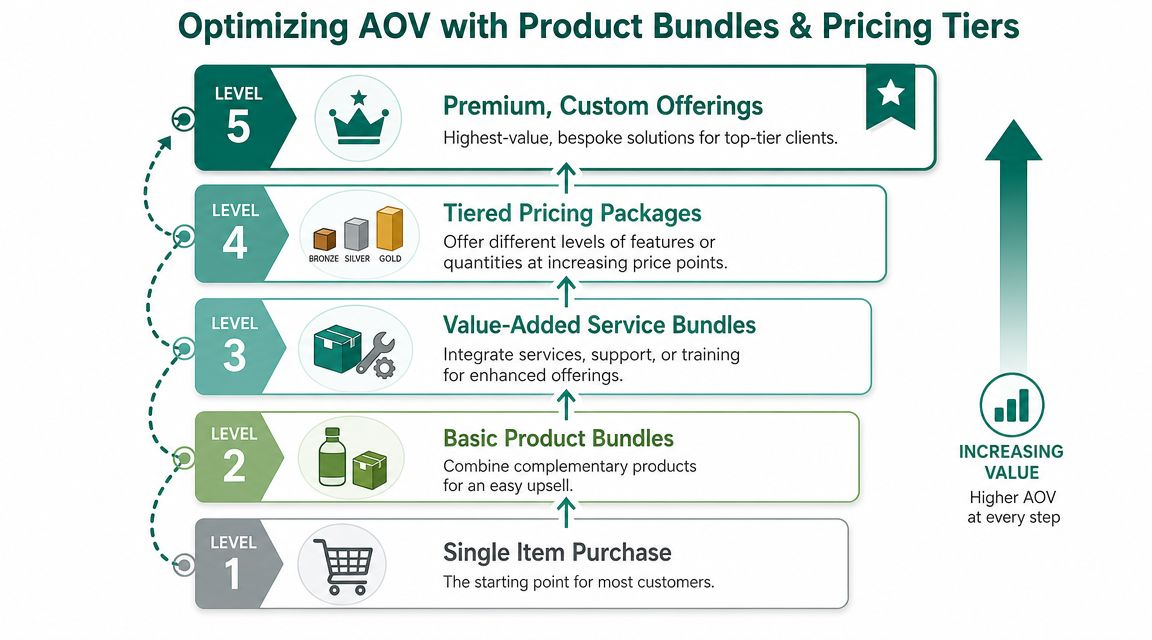
If the buyer sees one standalone SKU, they compare one price. If they see a structured path from basic to premium, they compare levels of value. That's when you start shaping larger orders without sounding pushy.
A simple way to think about it is a value ladder. Don't ask the customer to jump from one item to a very large purchase. Build natural steps.
Bundle around a job, not around stock
The strongest bundles solve a fuller problem.
A wholesaler selling commercial kitchen equipment, for example, shouldn't just group random items that need clearing. A smarter bundle combines the main unit with the accessories, setup items, or support services that help the buyer put it into use quickly. The bundle feels helpful, not promotional.
Three bundle styles work well:
- Pure bundles: Products are only sold together. This works when the items are functionally inseparable.
- Mixed bundles: Buyers can purchase items separately, but the grouped offer makes the decision easier.
- Solution packages: Better suited to B2B. These combine products with services, onboarding, installation, or support.
The mistake is obvious once you see it. Businesses often build bundles around internal inventory logic instead of customer outcomes. That lowers attach rate and can even hurt conversion.
Use tiers to make the middle and upper option easier to accept
Tiered pricing works because it changes the buyer's frame of reference.
Instead of asking, “Do I want this item?”, the buyer starts asking, “Which level makes the most sense for what I need?” That's a better buying conversation. It shifts attention from price alone to completeness, speed, and suitability.
A practical tier structure might look like this:
- Entry tier: Covers the core need.
- Growth tier: Adds the extras most serious buyers would eventually need anyway.
- Premium tier: Includes more customisation, support, or larger volume for top-value accounts.
Buyers rarely need more options. They need clearer trade-offs.
Set thresholds with margin discipline
Industry guidance on AOV optimisation recommends setting a free-shipping or reward threshold above current AOV, then layering post-purchase upsells and one-click add-ons after the initial payment. It also stresses margin-safe threshold design, based on current AOV, gross margin, and shipping cost, so the incentive doesn't wipe out profit. It specifically warns against discounting too early and against bundles that aren't complementary, as outlined in Replo's AOV playbook.
That matters because thresholds can either nudge smarter baskets or erode margin.
Use this checklist before launching one:
- Check current basket behaviour: Look at what customers already buy together.
- Set the threshold just above normal spend: The goal is one more useful item, not a forced leap.
- Protect profitability: Include shipping, handling, and support cost in the maths.
- Match the reward to the audience: Wholesale buyers may care more about service value or terms than generic discounts.
If you want a practical reference for structuring offer-based promotions, SmashPops' discount setup guide is useful because it shows how promotional mechanics need clean rules, not vague incentives.
Master the Art of Upselling and Cross-Selling
Most upselling fails because it arrives like an interruption.
A buyer adds an item to cart, and a generic pop-up appears with something unrelated. That isn't upselling. It's distraction. In B2B and wholesale, bad timing is even more damaging because buyers are usually trying to complete a task quickly.
Good upselling feels like sales assistance. Good cross-selling feels like operational common sense.
What useful upselling looks like
Take an equipment distributor. A customer selects the standard version of a machine. A useful upsell doesn't scream “upgrade now”. It shows the premium version with the practical reason it exists. Longer duty cycle. Better warranty handling. Lower maintenance burden. Faster setup. The offer works because it helps the buyer avoid future friction.
Now take software. A buyer chooses a base subscription for a small team. A smart upsell highlights what changes at the next tier. More users, better controls, support, or reporting. Again, the sale works when the difference is concrete.
The underlying rule is simple. Upsell the next logical decision, not the most expensive one.
What useful cross-selling looks like
Cross-selling is strongest when the add-on protects the value of the main purchase.
A buyer orders printers for a branch rollout. Offering consumables, maintenance coverage, or installation support is sensible. Offering an unrelated office product just because it's in stock isn't.
Here are a few B2B examples that usually make sense:
- Equipment plus consumables: The buyer leaves with what they need to start using the product immediately.
- Core system plus onboarding: Especially relevant where usage failure leads to returns, support burden, or churn.
- Bulk order plus replenishment item: Useful when the main purchase creates an obvious next need.
Timing matters more than creativity
Different offers belong in different parts of the buying journey.
- Product page: Best for upgrades and compatibility guidance.
- Cart: Best for practical add-ons that complete the order.
- Post-purchase: Best for one-click extras that don't risk the base sale.
If you place every offer before payment, you create drag. If you wait too long, the buying momentum disappears.
Cross-sells should answer one question: “What will this customer wish they had added after delivery?”
A lot of teams overcomplicate this with recommendation engines before they've handled the basics. Start by asking your sales and support teams what customers most often realise they forgot, what they regret not buying sooner, and what they typically add in the second conversation. That's often enough to build a much stronger cross-sell flow than any generic “customers also bought” widget.
Boost Order Size with Flexible Payment Terms
For many B2B buyers, the obstacle isn't intent. It's timing.
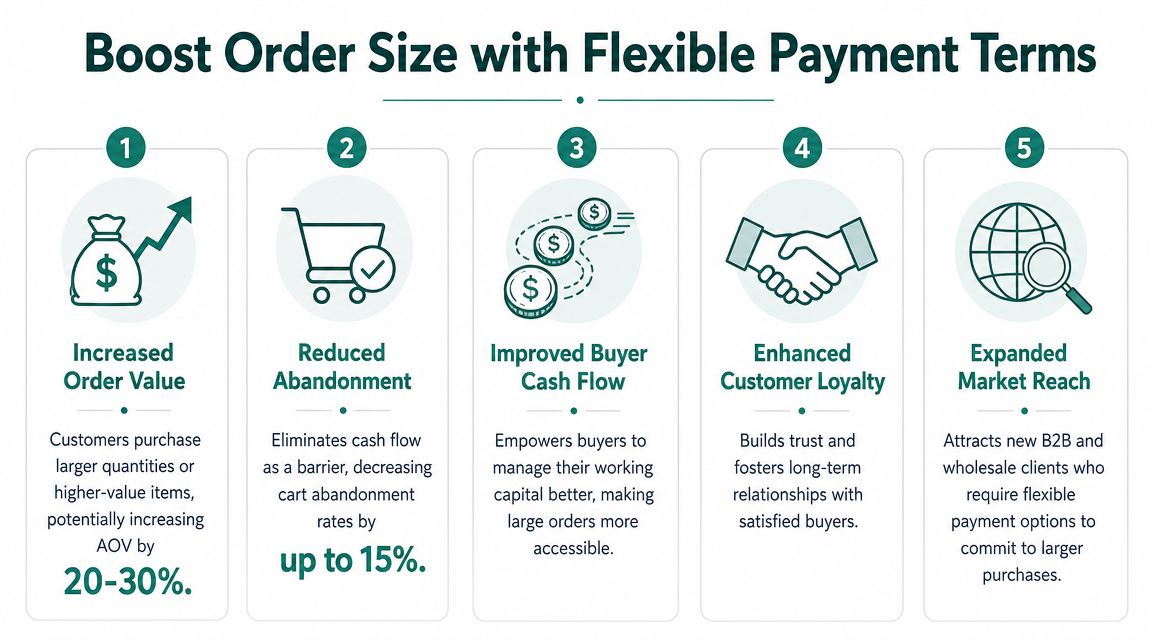
They want the larger order. They may even need it. But paying the full amount immediately puts pressure on stock planning, payroll, receivables, or seasonal cash management. That's why flexible payment terms are often the missing link in conversations about how to increase average order value.
Why payment timing changes basket behaviour
In the UAE and wider MENA context, industry guidance notes that offering BNPL can increase AOV by “45% or more” because it reduces the perceived immediate cost of a larger basket and makes premium or add-on SKUs easier to accept, according to Daasity's analysis of AOV strategy.
That insight matches what many wholesalers already see in practice. When you remove the pressure of full upfront payment, buyers stop trimming orders so aggressively. They're more open to larger quantities, premium options, and fuller bundles.
This isn't about making buyers reckless. It's about aligning payment with commercial reality.
Where most businesses get it wrong
The usual mistake is applying one offer to every customer.
The same guidance recommends segmenting high-value customers using RFM scoring and then targeting those segments with larger basket incentives, premium bundles, or instalment offers at the point of highest purchase intent. It also warns against using the same threshold or terms for all buyers. The better approach is to compare AOV by segment and only optimise where the margin uplift is stronger than the cost of the offer.
That matters because not every customer deserves the same structure.
Try this instead:
- For repeat, reliable buyers: Offer premium bundles or deferred-payment options on larger carts.
- For price-sensitive buyers: Use narrower add-ons instead of broad order expansion.
- For infrequent buyers: Focus on trust and fit before pushing basket growth.
The practical MENA advantage
This approach is especially useful in markets where invoice-based trade is already familiar. Deferred-payment workflows can be embedded without forcing your sales team to rebuild the whole process. In many cases, the larger order happens because the commercial conversation stays familiar while the payment experience becomes more flexible.
If you're evaluating this route, Comfi's guide to flexible payment plans is relevant because it explains how extended terms fit into B2B buying behaviour in this region.
The key commercial point is straightforward. Flexible payment terms don't just help buyers say yes. They help them say yes to the fuller order.
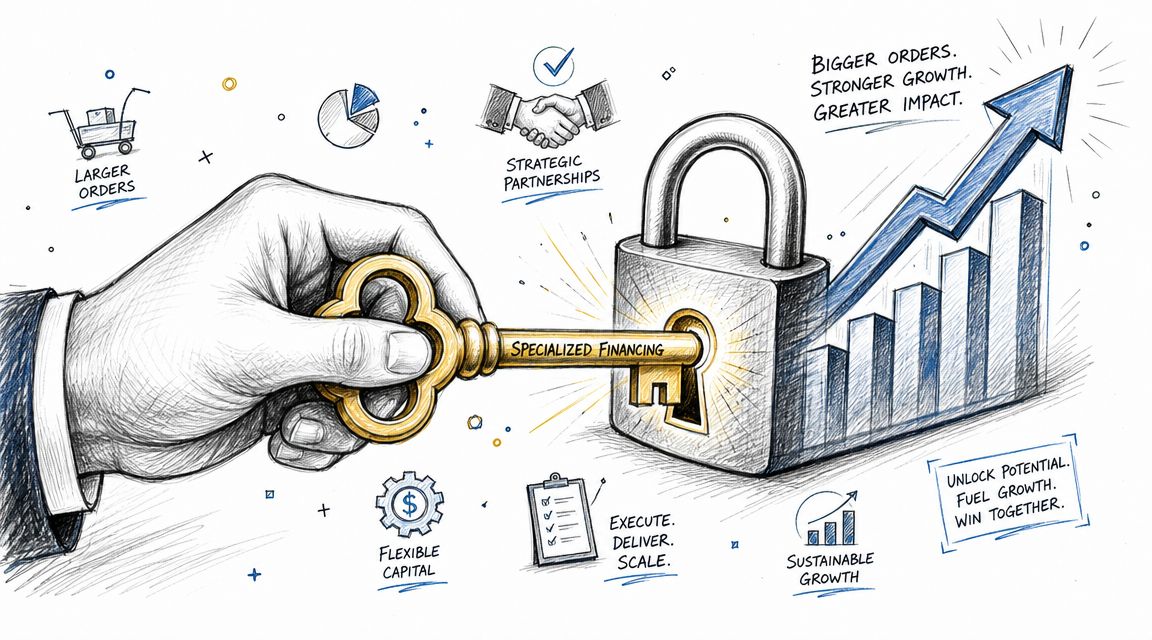
Unlock Growth with Specialized Order Financing
Some AOV ceilings have nothing to do with merchandising.
You can build better bundles, cleaner upsells, and sharper pricing tiers, and still hit a wall if your business or your buyers don't have enough room in the cash cycle to support larger deals. That's where specialised order tools become useful. Not because they magically increase demand, but because they remove the bottlenecks that stop demand from becoming revenue.
When invoice discounting changes the sales conversation
A supplier often wants to offer better terms to strong customers but hesitates for a sensible reason. Cash gets tied up after invoicing. That creates caution. The result is smaller approved orders, tighter limits, and missed expansion opportunities.
Invoice discounting can change that dynamic by helping businesses release cash tied up in issued invoices. That doesn't increase AOV by itself. What it does is give suppliers more confidence to support larger transactions without waiting for the full collection cycle to play out.
That's an important distinction. Better liquidity gives commercial teams room to structure better deals.
Dealer financing and stock-led growth
Automotive is a good example because inventory absorbs capital quickly.
A dealer may have demand in the market but still hold back on restocking because too much cash is tied up in existing vehicles. That slows turnover and reduces purchasing power with distributors. Once that pressure eases, the dealer can act faster on stock opportunities and place stronger orders.
This is why dealer financing matters operationally. It helps dealers free up capital from in-stock vehicles so they can restock sooner and keep inventory moving rather than waiting passively for cash to recycle.
The real connection to AOV
Specialized order tools help AOV when they remove one of these constraints:
- Supplier caution: You want to support a larger order but don't want the collection delay.
- Buyer cash timing: The customer needs the stock now but can't absorb the full cash outlay immediately.
- Inventory lock-up: Capital is sitting in goods that are moving, but not fast enough to support the next opportunity.
AOV rises more easily when both sides of the transaction have room to breathe.
For businesses exploring embedded payment terms and distributor workflows in the UAE, this overview of wholesale distributor BNPL in the UAE is a useful reference point. It shows how payment structure, supplier liquidity, and order expansion connect in real B2B operations.
Measure, Test, and Optimize for Profit
If you only track AOV, you'll eventually misread what's happening.
A business can push order value up while hurting conversion, eroding margin, or stretching collections. The fix isn't more dashboards. It's a smaller set of better questions.
Track the metrics that keep AOV honest
Start with AOV, but don't stop there.
Look at these alongside it:
- Contribution margin per order: Did the larger order leave more money behind after direct costs?
- Cash conversion impact: Did the tactic improve payment flow, or did it create more delay?
- Customer lifetime value direction: Are larger first orders producing stronger account value over time, or just one-off spikes?
For margin-sensitive SMEs, this matters more than cosmetic growth. AOV should support resilience, not hide pressure.
If you want a practical grounding in margin thinking, Comfi's article on profit margin is worth reading alongside your order-value analysis.
Run smaller tests with clearer intent
Most AOV experiments fail because too many variables change at once.
Keep your tests narrow. Change one thing, then read the outcome against profit and cash impact. Useful test ideas include:
- Bundle composition: Swap one low-fit bundle item for a more complementary one.
- Threshold design: Raise or lower the reward threshold slightly and check whether the added basket value still protects margin.
- Offer timing: Move an add-on from cart to post-purchase and watch whether base conversion improves.
- Payment structure by segment: Test flexible terms only for stronger customer groups, then compare order quality.
Build a review rhythm your team can actually keep
You don't need a complex revenue operations setup to do this well. You need consistency.
A workable monthly review often includes:
- Commercial review: Which offers increased order completeness?
- Finance review: Which offers improved contribution, not just revenue?
- Operations review: Which offers created fulfilment or collection friction?
- Customer review: Which bundles or add-ons felt useful rather than forced?
The best AOV strategy is rarely the most aggressive one. It's the one your margin, operations, and customers can all support.
That's the discipline behind sustainable growth. Test. Measure. Keep what improves both order value and business quality. Remove what only makes the headline number look good.
If you want to increase average order value without putting extra pressure on your cash cycle, Comfi helps businesses in MENA embed deferred-payment workflows, release cash from invoices, and support larger orders with less operational friction.