How MENA SMEs Can Navigate Payment Defaults

.webp)
When a customer fails to pay you on time, it's more than just an inconvenience. It's a payment default—a formal breach of your agreement that kicks off a cascade of financial and legal headaches that can seriously threaten the health of your business.
The Real-World Impact of a Payment Default
For small and medium-sized businesses (SMEs) across the MENA region, a single payment default is never just a line item on a spreadsheet. Think of it as the first domino to fall in your financial operations. That one missed payment creates a chain reaction that can destabilize your entire business, damaging everything from supplier trust to your ability to land future deals.
This initial failure to get paid can escalate fast. One missed payment strains your cash flow, which might force you to delay paying your own suppliers, employees, or other creditors. This ripple effect doesn’t just hurt your bank account; it chips away at the trust and reputation you’ve worked so hard to build.
Immediate Headaches and Long-Term Damage
A payment default creates immediate, tangible problems. Your suppliers might get nervous and stop offering you favorable credit terms, demanding cash on delivery or shortening your payment windows. This puts even more pressure on your already squeezed working capital.
Internally, the focus shifts. Instead of dedicating your team's energy to innovation and growth, you're stuck diverting precious resources to chasing down overdue payments and managing the financial fallout.
The consequences stretch far beyond these initial struggles. A history of defaults can negatively impact your company’s credit reputation, making it much harder to get support from financial partners down the road. It signals risk to everyone you do business with and can slam the door shut on valuable growth opportunities.
A single payment default can disrupt operations, but a pattern of them can erode the very foundation of your business’s credibility and access to capital.
Why Proactive Management Is Crucial
Understanding the true cost of a payment default is the first step toward preventing one. It’s about shifting from a reactive "firefighting" mentality to a proactive financial strategy. For finance leaders, this means building solid systems for managing what you owe and what you’re owed. To dig deeper into this, you can learn more about optimizing your payments and receivables management in our detailed guide.
Effective management isn't just about sending reminders; it's about creating a predictable and stable financial environment. The key pillars include:
- Clear Payment Terms: Make sure every contract and invoice spells out due dates, payment methods, and the consequences of paying late. No ambiguity.
- Regular Cash Flow Forecasting: Keep a close eye on your cash inflows and outflows. This helps you spot potential shortfalls long before they become a crisis.
- Strong Customer Vetting: Before offering generous credit terms, do your homework. Assess the creditworthiness of new clients to minimize your risk from day one.
- Open Communication: Build transparent relationships with your buyers and suppliers. If a payment issue is on the horizon, talking about it early can often lead to a simple resolution.
By treating payment management as a core business function—not just an administrative chore—you can protect your cash flow, keep your business relationships strong, and build a more resilient company.
The Real Reasons Payments Go Missing in the MENA Region
A payment default rarely comes out of the blue. For small and medium-sized businesses across the MENA region, a missed payment is usually the final domino to fall in a chain of predictable financial pressures. If you can spot these triggers, you can start building a much more resilient business, turning abstract risks into concrete problems you can actually solve.
These aren't just textbook theories; they're the daily reality for countless businesses. Think of a construction company in Dubai waiting 90 days for a project payment to clear, or a retailer in Riyadh getting blindsided by unexpected import duties. The causes are different, but they all lead to the same cash flow crisis. By getting to the root of these issues, you can start reinforcing your finances from the ground up.
The Never-Ending Wait: Long and Unpredictable Payment Cycles
One of the biggest hurdles for any SME in the region is dealing with ridiculously long and unreliable payment cycles. It’s almost standard practice for large corporate buyers to demand payment terms of 60, 90, or even 120 days. You’ve done the work, delivered the goods, and now your money is just sitting in someone else’s accounts receivable ledger for months.
This delay creates a massive cash flow gap. You’ve already paid your own suppliers, covered payroll, and handled all your other operating costs, but the revenue you’ve earned is completely out of reach. All it takes is one unexpected expense during that waiting period to push an otherwise healthy business into defaulting on its own bills.
Let’s say a catering company just pulled off a huge corporate event. They’re owed a lot of money, but they won’t see a dirham of it for three months. In the meantime, they still have to pay for food, staff, and rent. If a critical oven breaks down, they might not have the cash on hand to fix it, forcing them to default on their payment to the repair company.
The "Sign Now, Worry Later" Approach to Customer Credit
In the race to close a deal, it’s tempting to extend credit terms without doing any real homework on the new customer. This is a huge mistake. Offering credit is a risk. Failing to properly vet a buyer’s financial health and payment history is a direct path to a payment default.
A weak credit check process is like leaving your front door wide open. You’re inviting in risks that a few simple checks could have easily prevented.
A solid credit assessment doesn’t have to be complicated. It can be as simple as:
- Asking for Trade References: Call a few of their other suppliers. A quick chat can tell you everything you need to know about their payment habits.
- Setting Smart Initial Limits: Start new customers off with a modest credit limit. You can always increase it once they've proven they can pay on time.
- Doing a Quick Public Search: Look for any public records or news about the company’s financial standing or legal issues.
Without these basic guardrails, you could easily end up giving generous terms to a customer who is already sinking financially, making a default almost a sure thing.
When the Whole Economy Sneezes
Sometimes, the trigger for a default has nothing to do with you or your customer. The economies across the MENA region are strong, but they aren't immune to global shocks and local turbulence, and SMEs are often the first to feel the impact.
Take a small electronics retailer who imports their products. A sudden currency fluctuation or a new tariff can jack up their costs overnight. That single, unforeseen expense can drain their cash reserves, making it impossible to pay their local suppliers on time. In the same way, a slowdown in a major sector like tourism or real estate can set off a chain reaction of defaults that ripples through the entire supply chain. These external shocks are a powerful reminder of why having a financial safety net is non-negotiable.
The Ripple Effect of a Single Default
A payment default is never a self-contained problem. It’s less like a single transaction failing and more like the first domino tipping over in a long line, sending shockwaves through your entire business network. What begins as one late payment from a customer can rapidly escalate, hammering your own financial stability, straining relationships with your suppliers, and shaking the entire supply chain you rely on.
This deep interconnectedness means your success is tied to the financial health of your partners, and theirs is tied to yours. When one link in that chain snaps, the instability spreads fast. The consequences stretch far beyond a single overdue invoice, creating serious risks and pressure for everyone involved.
How a Default Hits Your Supplier
When a buyer defaults on a payment to you, one of the first and most immediate victims is your own supplier. They shipped you the raw materials or goods you needed, trusting you would pay them on time—a promise that’s now broken.
For your supplier, this isn't just a minor headache; it's a direct threat to their operations. Your delayed payment could force them to:
- Struggle to Make Payroll: They might have to delay paying their own team, creating huge morale and retention problems.
- Pay Their Own Vendors Late: This damages their supply chain relationships and could even grind their production to a halt.
- Face a Cash Flow Crisis: Just like you, they have bills to pay. Your late payment rips a hole in their budget, forcing them to burn through cash reserves or scramble for other funds.
This single event can poison the trust you’ve worked hard to build. A once-reliable supplier might be forced to tighten your payment terms, demand cash upfront, or even cut ties with you completely, leaving you scrambling to find a new partner.
The Consequences for Your Business
While the impact on your supplier is bad, the fallout for your own business—the one stuck in the middle—is just as damaging. A payment default from your customer puts a chokehold on your ability to operate and grow, trapping you in a cycle of financial stress.
You’ll quickly find yourself staring down several challenges:
- Crippled Cash Flow: With less money coming in, you’ll struggle to cover your own essential expenses, from rent and utilities to marketing and inventory.
- A Damaged Reputation: Word gets around. If you become known as a business that can't collect its payments, other potential partners will think twice before working with you.
- Missed Opportunities: You might have to turn down new orders or shelve growth plans simply because you don’t have the working capital to fund them.
A payment default doesn’t just cost you the amount on the invoice. It costs you trust, stability, and future growth by crippling the cash flow that fuels your entire business.
Weakening the Entire Supply Chain
Beyond the buyer, your business, and your supplier, a single default weakens the whole commercial ecosystem. A healthy supply chain is built on a foundation of trust and predictable cash flow. When payments become unreliable, that foundation cracks.
This instability creates friction at every single level. Suppliers become more cautious and risk-averse, buyers face potential disruptions when their partners can no longer afford to supply them, and the overall efficiency of the market drops. It’s a stark reminder of why timely payments are crucial not just for your own company, but for the health of the entire network you operate in.
Proactive Strategies to Minimize Default Risk
Reacting to a payment default is stressful, expensive, and a massive drain on your time. The smartest move isn't to get better at chasing late payments, but to stop them from happening in the first place. By building a strong, proactive financial framework, you can shift from a defensive, reactive position to one of control, protecting your cash flow and securing your business's future.
Putting a few key strategies in place can dramatically lower your exposure to risk. These aren't complex financial maneuvers; they're practical, common-sense steps that create a more resilient payment culture for your company. It all starts with knowing exactly who you're doing business with before you offer them generous terms.
Strengthen Your Due Diligence Process
One of the most powerful ways to head off a payment default is to thoroughly vet new clients before a single contract is signed. In the excitement of closing a new deal, it’s all too easy to skip over crucial credit checks, but this is a costly mistake that can come back to bite you.
Think of it as looking both ways before crossing the street. A few moments of caution can prevent a disaster. Your due diligence process should include:
- Asking for Trade References: Actually call a potential client's other suppliers. Ask them blunt questions about their payment habits—are they consistently on time, or are they a constant headache?
- Setting Smart Initial Credit Limits: Don't roll out the red carpet right away. Start new customers with a lower, more cautious credit limit. You can always increase it as they build a track record of reliable, on-time payments with you. This builds trust without exposing you to unnecessary risk.
- Reviewing Financial Health: Whenever possible, ask to see their financial statements or use a local credit reporting agency to get an objective view of their stability.
This upfront work is an investment. It lays the groundwork for a healthy, long-term business relationship and filters out the riskiest clients before they can ever impact your bottom line.
Establish Crystal-Clear Payment Terms
Ambiguity is the enemy of timely payments. Your contracts and invoices must leave zero room for interpretation. Every expectation needs to be spelled out so clearly that both parties are on the same page from day one.
Vague payment terms are an open invitation for delays and disputes. Clarity is your best defense against a future payment default.
To get ahead of default risk, establishing a clear schedule of payments with every client is non-negotiable. This document should detail every critical piece of information, from exact due dates and accepted payment methods to any penalties for late payments. When expectations are set in stone, there's far less room for "misunderstandings" later on.
Maintain a Consistent and Professional Collections Process
Even with the best clients, occasional delays can happen. How you handle them makes all the difference. A chaotic or overly aggressive collections process will only damage client relationships, while a passive, hands-off approach sends the signal that your due dates are merely suggestions.
The key is to be both consistent and professional. Create a standardized follow-up schedule that kicks in automatically. It could start with a polite reminder a few days before an invoice is due and then escalate methodically from there. This shows you're serious about getting paid without being confrontational. A consistent approach also does wonders for reducing your Days Sales Outstanding (DSO), a critical metric for cash flow health.
It's helpful to understand the regional financial landscape. In the UAE, for instance, there is strong institutional oversight to maintain financial stability. Here's a quick look at the environment:
- Al Etihad Credit Bureau (AECB): Since 2014, the AECB has been recording defaults, which heavily influences credit decisions across the country.
- Strong Economic Indicators: A healthy current account balance helps create a stable environment that naturally discourages high default rates. For example, in recent years, the UAE's current account balance has been a significant percentage of its GDP.
By combining strong internal processes with an understanding of the broader economic landscape, you can build a formidable defense against payment default.
How Fintech Solutions Bring Predictability to Your Cash Flow
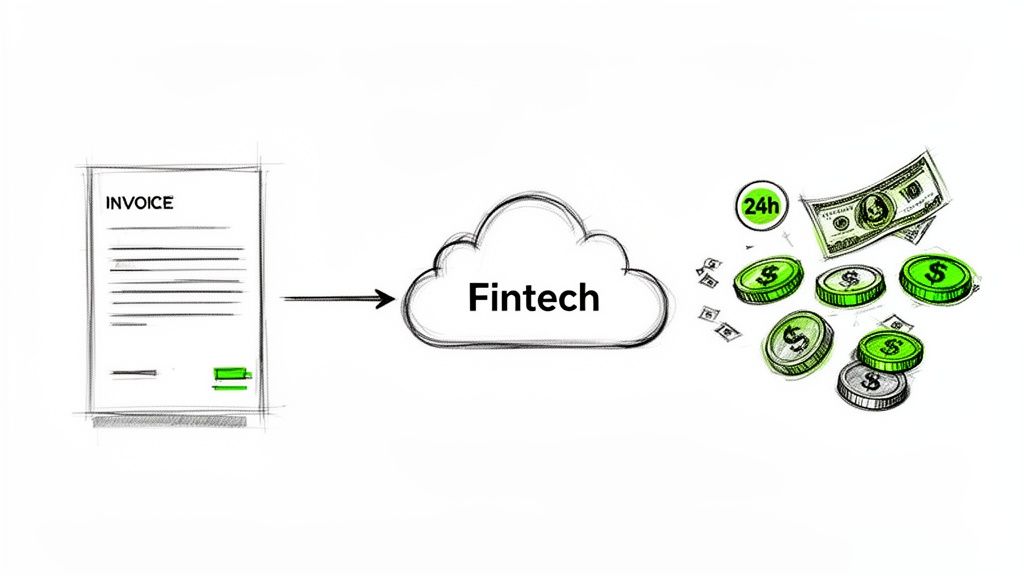
For most SMEs, traditional payment cycles are a constant source of stress. Waiting 30, 60, or even 90 days for an invoice to get paid isn't just an inconvenience; it creates dangerous cash flow gaps that can easily push a healthy business toward a payment default. This forces you into a reactive mode, where you're always chasing money instead of chasing growth.
Modern fintech platforms can flip this broken model on its head. They offer a direct path to predictable cash flow by giving you immediate access to the revenue you’ve already earned. Instead of waiting for months on end, your clients are able to tap into the funds locked up in your accounts receivable almost instantly.
Imagine you’ve just sent a major invoice. What if your clients could get access to cash to pay that invoice in as little as 24 hours? This isn’t just a nice idea—it’s the reality of solutions like invoice discounting, built specifically to close the gap between when you do the work and when you actually get paid.
Unlocking Your Earned Revenue, Almost Instantly
Think of invoice discounting platforms as a bridge over the turbulent waters of long payment cycles. The process is remarkably simple: you upload an approved invoice from your buyer onto a digital platform. The platform verifies it and can advance a huge chunk of its value—often on the same day.
This immediate cash injection can transform a company's entire financial outlook. It turns unpredictable future income into real, usable funds today. With that stability, clients were able to unlock their working capital to cover payroll, invest in inventory, or fund an expansion project without the constant fear of a cash shortfall hanging over their head.
By converting unpaid invoices into immediate cash, fintech solutions eliminate the primary trigger for many payment defaults—the long and uncertain wait for customer payments.
This modern approach puts you, the supplier, back in control of your cash flow. You're no longer at the mercy of your buyer's payment schedule. That stability is everything when it comes to planning, growing, and building a more resilient business.
How Comfi Creates Financial Stability
Platforms like Comfi were designed from the ground up to solve this exact cash flow puzzle for SMEs in the MENA region. The entire system is built for speed and simplicity, cutting out the friction that bogs down typical B2B payments.
Here’s how it creates a more predictable financial environment:
- Rapid Fund Access: Just upload your invoices to the Comfi dashboard. After a quick digital check, funds can be made available to pay your invoices, often within 24 hours.
- Reduced Administrative Burden: The platform can handle collections. This frees up your team from the thankless, time-sucking task of chasing late payments so they can focus on what they do best.
- Improved Buyer Relationships: You can offer buyers the flexible payment terms they want while still getting paid immediately. This strengthens your commercial ties and can lead to bigger, more frequent orders.
A huge advantage for businesses in the UAE is the country's world-class financial infrastructure. Systems like the UAE Image Cheque Clearing System (ICCS) and the UAE Direct Debit System (UAEDDS), both overseen by the Central Bank of the UAE (CBUAE), ensure that default rates on fund transfers are incredibly low. This secure environment makes it the perfect place for fintech platforms like Comfi to offer paperless, rapid payment solutions, bypassing old-school risks.
The Broader Impact on Business Growth
The benefits go way beyond just preventing a default. When your cash flow is predictable, strategic planning actually becomes possible. You can seize opportunities as they pop up, whether it’s buying inventory in bulk at a discount or launching a new marketing campaign. This kind of agility is a massive competitive advantage.
Plus, the automation built into these platforms just makes everything more efficient. Advanced AI finance invoice processors can automate the entire invoice handling workflow, ensuring payments are processed on time, every time. For a closer look at how this works on the ground, our guide on invoice discounting in the UAE breaks down the impact on local businesses.
By using these tools, your clients can unlock their working capital, you can reduce risk, and together build a much stronger financial foundation for genuine, sustained growth.
Got Questions About Payment Default? We've Got Answers.
As we wrap up, it's totally normal to have a few more specific questions floating around. Think of this as a quick-reference guide to tackle some of the most common worries SME owners have about payment defaults, reinforcing what we've covered and giving you some practical advice you can put to work right away.
What’s the Very First Thing I Should Do if a Client Defaults?
Before you do anything else, open a line of professional, non-confrontational communication. It’s tempting to assume the worst, but more often than not, a simple oversight is the real culprit.
Send a polite but formal reminder. Make sure it clearly states the invoice number, the amount due, and the original payment date. You'd be surprised how often a courteous follow-up resolves the issue in a snap, all without damaging a valuable business relationship. The key is to keep it professional.
How Can I Check the Credit Risk of a New Customer?
Doing your homework on a new customer is the single best way to prevent a payment default before it even has a chance to happen. And it doesn't need to be a huge, complicated investigation.
Here are a few practical steps you can take immediately:
- Ask for Trade References: Simply ask for the contact details of a few of their other suppliers. A quick call can give you priceless insight into how they actually pay their bills.
- Use Regional Credit Services: For a more formal check, use one of the credit reporting services available in the MENA region. This gives you an objective snapshot of their financial health.
- Start with Smart Limits: Don't go all-in right away. Begin with a smaller credit limit. As they build a solid track record of paying you on time, you can gradually increase it.
This proactive approach helps you filter out high-risk accounts from day one, building a foundation for a secure partnership.
The best way to handle a payment default is to stop it from happening in the first place. Solid due diligence on new customers is your first and most powerful line of defense.
Are Fintech Invoice Solutions Just another Type of Business Loan?
That’s a common misconception, but the answer is a firm no—they're two completely different things. A business loan creates new debt. You borrow money and add a liability to your balance sheet that you have to pay back.
Invoice solutions, like invoice discounting, don't create any new debt for your business. Instead, they unlock the cash that is already yours but is currently tied up in unpaid invoices. It’s a way to get your hands on your own earned revenue much, much faster. For any business focused on boosting cash flow without taking on more debt, that's a critical difference.
If All Else Fails, What Are My Legal Options?
When polite reminders and follow-ups don't work, you might need to take more formal steps. The exact legal options available will depend on where you are in the MENA region and what your contract says.
Generally, the process looks something like this:
- Send a Final Demand Letter: This is a formal letter, often from a lawyer, that clearly states the overdue amount and warns that legal action is next.
- Try Mediation or Arbitration: In some situations, a neutral third party can help you and your client reach an agreement without a messy court battle.
- File a Claim in Court: This is the last resort. You can file a claim in a commercial court to legally force the debtor to pay up.
Before you go down any of these paths, it’s always smart to talk to a legal professional who specializes in commercial law in your country.
In the UAE, the system is built to protect financial integrity. That's why the Al Etihad Credit Bureau (AECB), established in 2014, meticulously tracks credit activities—from loans and credit cards to even utility payments. A defaulted payment can stain a company's record for years, making it harder to get credit in the future. This robust tracking is a powerful deterrent and helps keep the UAE’s business environment stable and reliable. You can find more details on credit default management in the UAE at chambers.com.
Ready to make cash flow gaps and payment defaults a thing of the past? With Comfi, you can get your invoices paid in as little as 24 hours. That means predictable working capital and the confidence to grow your business. Learn more about how Comfi can help you.
Related Reading
- B2B Payments
- Solve Creative Agency Late Payment UAE Issues
- How Payment Default Dents Small Business Growth and Survival
- A Guide to B2B Payment Solutions for MENA Businesses
Looking to improve your cash flow? Explore Comfi's Buy Now Pay Later solutions. Get started today.