A Practical Guide to Invoice Discounting in the UAE

Picture this: you send out an invoice, and instead of drumming your fingers on the desk for the next 30, 60, or even 90 days, you receive the payment almost immediately. That’s the core idea behind invoice discounting in the UAE, a smart financial tool that’s become a lifeline for many small and medium-sized enterprises (SMEs). It’s a mechanism that allows you to turn your unpaid invoices into ready cash.
Unlock Your Business's Hidden Capital
Every business owner knows the strain of waiting for payments. It creates a frustrating gap between making a sale and actually having the cash in hand. This delay, a key part of the cash conversion cycle, can stall your momentum. It might stop you from grabbing a good deal on inventory, launching a new marketing campaign, or just covering payroll. Invoice discounting tackles this problem head-on.
Think of it as unlocking the money you’ve already earned, just much faster. It's a method to improve cash flow, not a traditional loan, so you're not adding debt to your balance sheet. You’re simply getting an advance on your own revenue, giving you the agility to run your business smoothly and jump on opportunities as they pop up in the competitive UAE market.
To get the most out of this, it also pays to tighten up your internal processes. For instance, figuring out how to automate invoice processing can speed up the entire cycle, from the moment you create an invoice to getting the funds.
Here’s what makes this approach so powerful:
- Improved Cash Flow: You get immediate access to the money locked away in your accounts receivable.
- Maintained Customer Relationships: You still manage your own sales ledger and customer collections, so the entire arrangement stays confidential.
- Fueled Business Growth: With cash readily available, you can confidently invest in stock, marketing, or expansion plans.
How Invoice Discounting Actually Works
So, what’s really going on with invoice discounting? Think of it as a way to unlock the cash that's already yours but is currently tied up in your unpaid B2B invoices. Instead of waiting for 30, 60, or even 90 days for a client to pay, you can get a large portion of that money almost immediately—often within 24 hours.
It’s a simple, powerful idea. You partner with a provider who gives you an advance against those outstanding invoices. This completely closes the gap between doing the work and getting paid, so you can cover payroll, buy new stock, or jump on a new opportunity without delay.
The Confidential Process Step-by-Step
One of the best parts about invoice discounting is that it’s completely confidential. Your customer doesn't even need to know. You're still in the driver's seat, managing your sales ledger and talking to your clients just as you always have. Nothing changes from their perspective.
The whole process is designed to be smooth and discreet.
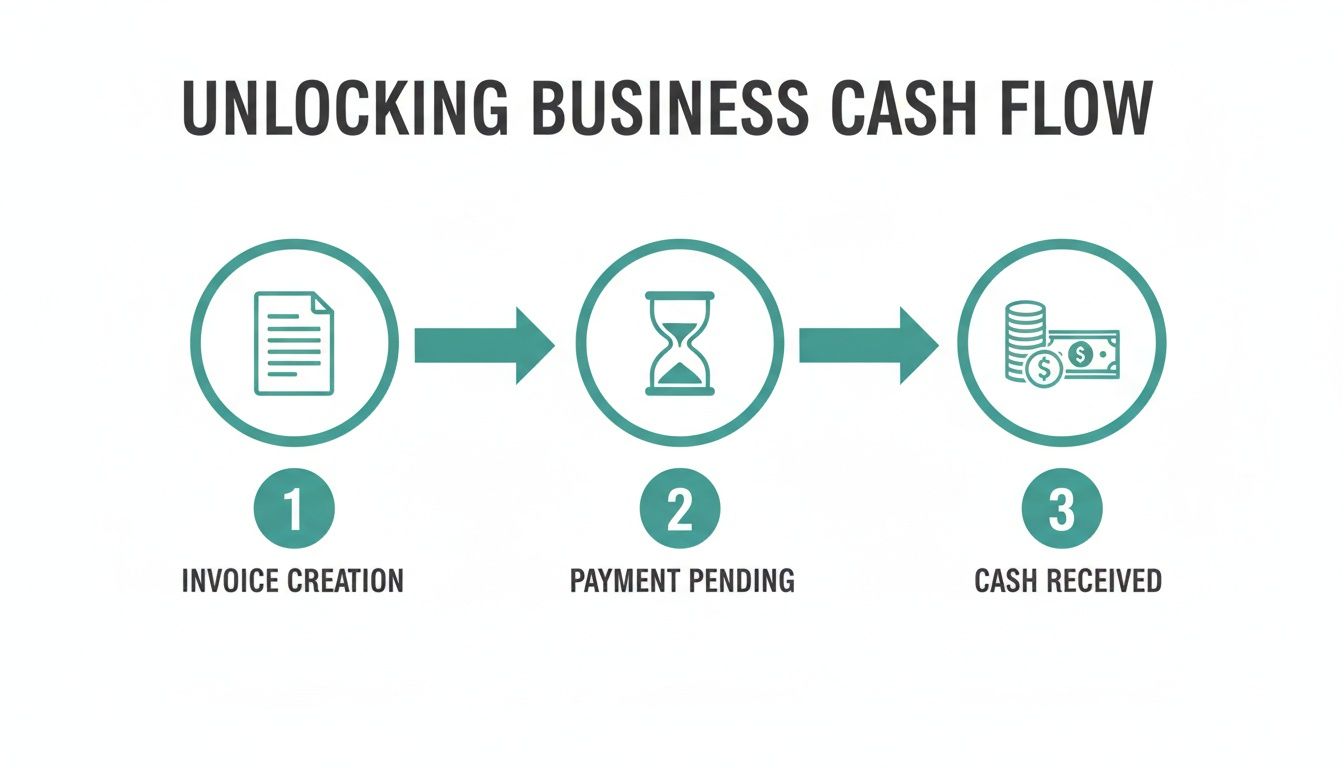
As you can see, it's about turning that "payment pending" phase into "cash received," fast.
This isn't about taking on new debt. It’s a strategic service that lets you unlock the working capital you have already earned, giving you the freedom to reinvest in your company’s growth sooner.
Let's walk through a typical scenario:
- You Send Your Invoices: First, you upload your approved B2B invoices to your provider's online platform.
- You Get Paid (Mostly): The provider then advances you a big chunk of the invoice value, usually somewhere between 80-90%.
- Your Customer Pays: Down the line, your customer pays the full invoice amount directly to you, following the original terms.
- You Settle Up: Finally, you pay back the advanced amount to the provider. The remaining 10-20% is yours to keep, minus a small, agreed-upon fee.
You can make this even more efficient by linking it with the right tech. For many business owners here in the UAE, using an automated invoice system helps get everything organised and submitted in a fraction of the time, speeding up the entire process.
Why Invoice Discounting Is a Lifeline in the UAE Market
The UAE’s fast-paced economy is full of opportunity, but it also presents a very real challenge for small and medium-sized businesses: managing cash flow. It’s a common story—you deliver a great product or service, but then you’re stuck waiting weeks, sometimes months, for your customers to pay.
This waiting game isn't just an inconvenience; it can stall your entire operation. When your cash is locked up in unpaid invoices, you can't use it for the things that matter most, like buying new inventory, launching a marketing push, or simply covering your daily running costs. For businesses in sectors like automotive or electronics, where suppliers often deal with long payment terms from big buyers, this cash flow squeeze can be especially tough.
The Problem with Traditional Options
You might think that with all the capital flowing through the UAE, securing funds would be simple. But that's not always the case. While the big picture looks healthy, a lot of that money doesn't actually reach smaller businesses that don't tick all the boxes for traditional banks. This leaves a massive gap between the capital available in the market and what SMEs can actually get their hands on.
Just look at the numbers. In March 2025, gross credit in the UAE hit a staggering AED 2.24 trillion, which was a 9.4% jump from the previous year. That shows plenty of lending is happening, but many SMEs still find themselves struggling because of those long payment cycles and not having the right collateral for a standard loan. You can read more about the UAE's credit growth and its impact on businesses to get a better sense of the landscape.
Invoice discounting cuts through all that red tape. It’s a direct solution that lets businesses unlock the value of the money they’ve already earned, without having to jump through the hoops of traditional financial institutions.
By tapping into a modern digital platform, suppliers and wholesalers can finally solve these persistent cash flow headaches. They get immediate access to the funds tied up in their outstanding invoices, giving them the breathing room they need to compete and grow.
In this market, invoice discounting in the UAE isn’t just another financial product. It’s a vital tool for survival and success.
Invoice Discounting vs Invoice Factoring: What’s the Real Difference?
It's easy to get invoice discounting and invoice factoring mixed up—they both help you get cash from your unpaid invoices. But for SMEs here in the UAE, the way they work is fundamentally different. It really all comes down to one critical question: who's in charge of collecting the money from your customers?
Getting this right is crucial for picking the solution that fits your business.
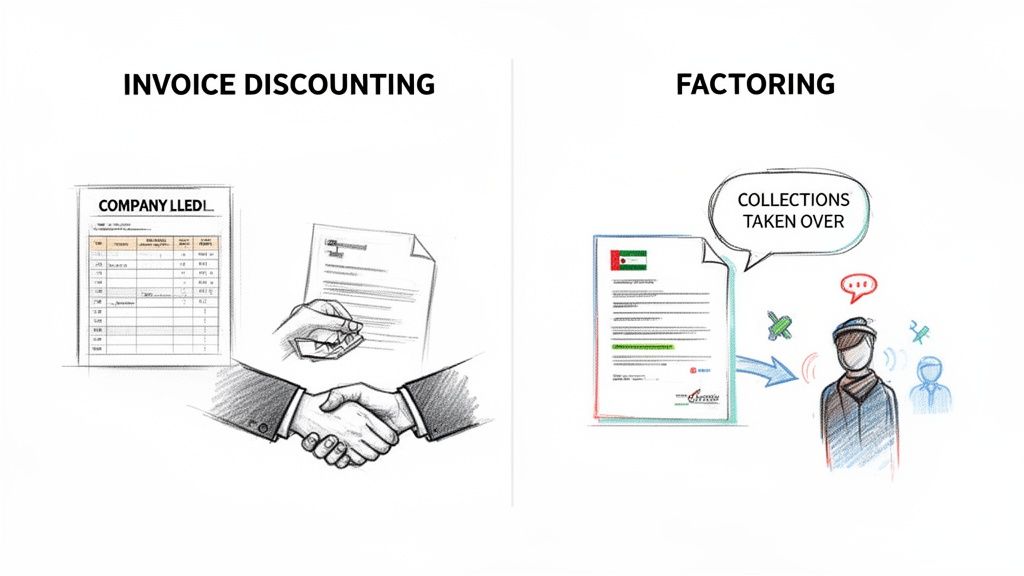
With invoice discounting, you stay in the driver's seat. You get the cash advance, but your customer relationship remains untouched. They still pay you directly, and they never even know a provider is involved. This confidentiality is a huge plus for businesses that value the strong, personal connections they’ve built with their clients.
Invoice factoring, on the other hand, is a completely different ball game. Here, you're essentially selling your invoices to a third-party company (the "factor"). That company then takes over your sales ledger and chases the payments directly from your customers. It can definitely save you some admin headaches, but it means handing over control of a very sensitive part of your business.
It's All About Control and Confidentiality
So, how do you choose? It really depends on what matters most to you. If keeping your client relationships private and under your direct control is a top priority, then invoice discounting is almost always the better option. You unlock cash without changing a single thing about how you interact with your customers.
This idea of maintaining direct financial relationships is a core part of B2B commerce. In many ways, it's an extension of the trust you build when offering payment terms. Learning more about what is trade credit can give you a deeper appreciation for why keeping these interactions in-house is so important.
For a lot of UAE SMEs, invoice discounting hits the sweet spot. It delivers that vital injection of cash flow, but you—not some outside company—remain the face of the business to your customers.
In the end, invoice discounting helps you get paid today while keeping your business relationships exactly as they are.
Key Differences at a Glance
For a quick side-by-side comparison, here’s a simple breakdown of how the two services stack up for UAE businesses.
- Customer Relationship
- Invoice Discounting: You manage the relationship. Your customer doesn't know a third party is involved (Confidential).
- Invoice Factoring: The provider takes over. They contact your customer for payment (Disclosed).
- Collecting Payments
- Invoice Discounting: You collect the payment from your customer as usual.
- Invoice Factoring: The factor collects the payment directly from your customer.
- Sales Ledger Control
- Invoice Discounting: You keep 100% control over your sales ledger and client interactions.
- Invoice Factoring: You hand over control of the sales ledger and collections to the factor.
- Business Type
- Invoice Discounting: Established businesses with strong customer relationships and in-house credit control.
- Invoice Factoring: Start-ups or businesses that want to outsource their collections process.
This makes it clear: your choice depends entirely on how much control you want to maintain over your customer-facing processes.
How UAE Businesses Use Invoice Discounting for Growth
Let's get practical. The real test of any financial tool isn't the theory behind it, but the impact it has on your business's bottom line. All across the UAE, smart SMEs are using invoice discounting to sidestep cash flow bottlenecks and fuel genuine, measurable growth. These aren't just abstract ideas; they're success stories playing out every single day.
Take an electronics distributor we know. They had a golden opportunity to fill a massive order from a major retailer, but their working capital was tied up. In the past, they would have had to say no. Instead, they got an immediate advance on their invoice, bought the stock without a second thought, and saw a huge jump in sales.
Here’s another great example: an automotive parts supplier. They used the instant cash from an invoice to launch a new marketing campaign right when their competitors were quiet. That quick move allowed them to grab a bigger piece of the market and bring in a wave of new customers.
Turning Receivables into Opportunities
These stories all point to a simple but powerful truth: the money locked away in your accounts receivable is a launchpad for expansion. Of course, making these financial tools work seamlessly depends on the right technology, often built with expert fintech software development services that create smooth, easy-to-use platforms.
This is a particularly big deal here in the local market. A staggering 58% of B2B sales in the UAE are affected by overdue invoices, mostly because of administrative hold-ups on the customer’s end. When you consider that average payment terms are around 50 days, you can see the relentless pressure it puts on suppliers who are forced to wait almost two months to get paid.
By converting unpaid invoices into immediate working capital, UAE businesses can seize growth opportunities, from securing bulk inventory discounts to launching timely marketing efforts, ensuring stability in a dynamic economy.
Your Invoice Discounting Questions, Answered
If you're exploring invoice discounting for your business in the UAE, you probably have a few questions. That's a good thing. Getting the right answers is key to figuring out if this is the right move for your cash flow. Let’s tackle some of the most common ones we hear.
Will My Customers Know?
This is often the first question people ask, and it's a great one. The entire process is completely confidential. Your customers won't have any idea you're working with a third party because they continue to pay you directly, just as they always have. You stay in full control of your customer relationships, with no awkward conversations needed.
How Fast Can I Get My Money?
In business, speed is everything. Once you're set up on a modern platform, you can expect to see the funds from your approved invoices hit your account within 24 hours. This isn't a long, drawn-out bank process; it's a quick, efficient way to get the cash you need to keep things moving.
What Does It Actually Cost?
The cost is straightforward. You'll pay a small percentage of the invoice value, which is agreed upon upfront. It's a single, transparent discount fee with no hidden charges or surprises.
It’s crucial to remember that this isn't a loan. You're not taking on new debt. Instead, you're simply accessing the money you've already earned, just much, much sooner.
This simple difference is what makes invoice discounting in the UAE such a smart way to fuel your growth without the headache of traditional borrowing.
Ready to unlock your business's potential? See how Comfi can provide the immediate cash flow you need to grow. Learn more about our solutions.
Related Reading
- 8 Best Accounts Receivable Software for SMEs in 2026
- Inventory Financing vs Invoice Discounting for UAE SMEs
- What Is Accounts Receivable: Your 2026 Guide for UAE SMEs
Looking to improve your cash flow? Explore Comfi's Invoice Discounting solutions. Get started today.