Financing
May 6, 2026

Unlock Car Dealer Working Capital UAE: Expert Guide 2026

Amal Abdullaev
Co-founder | Chief Revenue Officer
Listed in Forbes Middle East 30 under 30 list, Amal’s mission is to support the growth of SMEs in MENA region with fast and accessible SME capital solutions.
Unlock Car Dealer Working Capital UAE: Expert Guide 2026

Your showroom may look healthy, but your cash position tells a different story. You’ve got vehicles on display, vehicles in transit, vehicles waiting on the right buyer, and staff expecting salaries and commissions on time. Then a clean batch of in-demand stock appears in the market and you can’t move fast enough to buy it.

This represents the actual working capital problem for UAE dealers. The money isn’t gone. It’s trapped.

A lot of advice on car dealer working capital UAE is too generic to be useful. It explains balance-sheet terms, mentions floorplan structures, and stops there. That’s not enough for a dealer in Dubai, Abu Dhabi, or Sharjah trying to keep stock fresh, payroll covered, and deals moving. What matters is how quickly you can turn inventory back into usable cash, and how to stop unsold stock from dictating every business decision you make.

The UAE Car Dealer's Paradox Cash-Rich Assets and Cash-Poor Operations

A dealer can be sitting on a yard full of value and still struggle to fund next week’s purchases. That sounds irrational until you live it. A showroom packed with saleable vehicles looks strong from the outside, but if those units haven’t turned into cash yet, they can’t pay your suppliers, your rent, or your sales team.

The pressure gets worse when the market expands. Passenger car sales in the UAE totaled 268,876 units in 2024, up from 225,386 in 2023, a 19.3% year-on-year increase, according to UAE passenger car sales data from TheGlobalEconomy. More volume sounds positive, but for dealers it also means more capital tied up in stock, often for 90 to 180 days before sale.

More stock doesn't always mean more freedom

When the market grows, customers expect more choice. They want the right trim, the right mileage profile, the right colour, the right price point, and increasingly the right segment. That pushes dealers to hold broader inventory.

The result is a nasty contradiction:

  • Your assets rise: Your forecourt value looks stronger.
  • Your liquidity weakens: Cash gets tied to units that haven't sold yet.
  • Your risk spreads: Slower models drag on the entire operation.

Your problem usually isn't lack of demand. It's the timing gap between owning stock and monetising it.

Many dealers often confuse profitability with liquidity. You can be margin-positive on paper and still be cash-starved in practice.

If you also manage fleet buyers, used stock, or operational vehicles, discipline matters beyond pure finance. Good operational controls reduce avoidable cash leaks, and T1A Auto insights on fleet safety are a useful reminder that weak fleet processes often become hidden cost centres.

Why Your Capital is Stuck and The Problems It Creates

The issue starts with cycle time. You buy or import a vehicle, clear it, prepare it, market it, negotiate it, sell it, and then wait for full clean cash to land. Until that cycle ends, your money stays locked.

For many dealers, this lock-up is longer than they admit. According to PwC’s 2025 Middle East Working Capital Study, net working capital days in the region stand at 101.7 days. The same study notes improvements driven by lower receivables and inventory days, while in the UAE auto dealer context inventory held for 120 to 150 days can push the combined cycle beyond 160 days.

What traps the cash

A dealer’s cash usually gets pinned down in three places at once:

  • Inventory ageing: Units sit longer than planned because pricing shifts, customer preferences change, or slower models stall.
  • Receivables drag: Fleet buyers, finance-linked sales, auction settlements, and channel partners rarely pay as fast as you want.
  • Restocking pressure: You need fresh stock before old stock has fully converted into cash.

That creates a compounding effect. The longer one group of vehicles sits, the fewer moves you can make elsewhere.

What this looks like in the real business

This isn’t an abstract treasury problem. It shows up in daily pain:

  • You miss in-demand stock: A sharp buying opportunity appears, but your cash is tied up in older units.
  • You lose negotiating power: Sellers favour buyers who can move immediately.
  • You stretch operations: Salaries, commissions, rent, transport, and reconditioning costs start competing with inventory needs.
  • You get forced into weak decisions: Discounting too early, overpaying for urgent replacement stock, or delaying supplier payments.

Practical rule: If one stale section of inventory is stopping you from buying fast-moving stock, the problem isn't sales. It's capital allocation.

A lot of dealers also underestimate the receivables side. If you’re waiting on payment after the vehicle is already delivered, your sales success can deepen the cash squeeze. If that’s happening, it helps to study how receivables timing affects liquidity. This piece on how to reduce DSO is worth reading because dealer cash flow often breaks on collection timing, not just inventory turns.

A Modern Approach to Unlocking Trapped Capital

The old mindset is simple. Buy stock, wait for sale, collect cash, then buy again. That model is too slow for a market where timing decides margin.

The smarter mindset is to treat inventory as an asset that should support liquidity before the final retail sale. If your business waits passively for each unit to convert, you will always be one step behind faster operators.

A four-step infographic illustrating how businesses can unlock trapped capital from inventory to improve cash flow.

Why speed matters more than comfort

J.P. Morgan’s 2024 index estimates that about $707 billion of liquidity is tied up in working capital globally, as shown in the J.P. Morgan Working Capital Index. In practical terms for dealers, each extra day of inventory holding eats into profitability and shrinks cash-flow headroom.

That’s why the goal isn’t just to sell more cars. It’s to shorten the period in which your capital does nothing useful.

The shift that changes the business

Think about your inventory in two categories:

  1. Stock that is selling
  2. Stock that is blocking your next purchase

The second category is where dealers lose momentum. You don’t need every unit to sell first. You need a structure that lets the value in your current stock support your next move.

Dealers grow faster when they restock faster. Sales follow availability.

This is the practical core of car dealer working capital UAE strategy. Stop measuring success only by gross stock value. Start measuring how much of that stock can be turned into usable operating flexibility now.

Exploring Your Options for Working Capital

Not every source of liquidity works equally well for a UAE dealer. The right choice depends on your stock profile, speed requirements, reporting tolerance, and whether you’re a franchise operator, a parallel importer, or active in auction channels.

Traditional bank facilities

Banks can work if you’ve got time, documentation discipline, and the balance sheet to support a conventional facility. The problem is speed and fit.

For a dealer facing a sudden buying opportunity, a slow approval process is a strategic handicap. Bank structures also tend to look at your business through broad corporate-lending rules, not the day-to-day reality of vehicle rotation.

Floor plan structures

Floor plan arrangements are familiar in automotive. They can help, especially for dealers with predictable stock patterns and established reporting systems.

But many dealers find them restrictive in practice. Some structures fit franchise environments better than fragmented independent models. If your buying behaviour is opportunistic, multi-channel, or mixed across imports and auctions, rigidity becomes a problem.

Invoice-based options

If a large share of your liquidity strain comes from receivables rather than inventory, invoice-based structures may be more relevant. They’re useful when the issue is delayed payment after sale rather than unsold stock before sale.

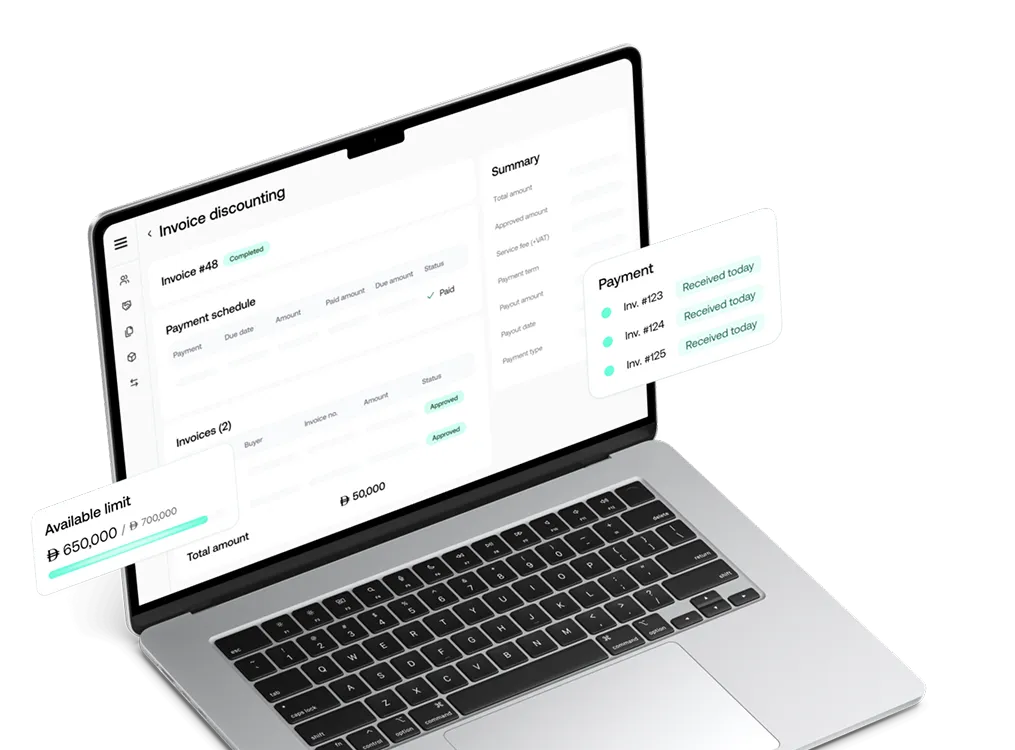
For that side of the equation, invoice discounting options can make sense when you’ve already completed the sale but cash is still delayed in the collection cycle.

Why generic solutions often miss the UAE reality

The UAE market isn’t uniform. According to Mercer Capital’s dealership working capital perspective, the market is fragmented, and parallel and auction-channel dealers often operate with tighter working capital buffers than franchise dealers. Generic guidance tends to ignore that difference.

That matters because these dealers often face:

  • Mixed payment currencies: Supplier payments may land in USD or EUR.
  • Different stock profiles: Some units move quickly, others need longer holding periods.
  • Less tolerance for delay: Small operators can't sit through long approval cycles.

If your funding option assumes your business behaves like a single-brand franchise, and you don't, you've already got a mismatch.

How Comfi's Dealer Financing Puts You in Control

A common UAE dealer problem looks like this. The yard is full, the pipeline is active, and the bank balance is still too tight to buy the next batch of vehicles with confidence.

That is a working capital trap, not a sales problem.

Comfi’s dealer financing is built for that exact pressure point. It turns part of the value tied up in your existing stock into usable cash, so you can keep buying, selling, and operating without waiting for each unit to convert at retail pace.

How the model works in practice

The structure is simple and tied directly to the asset that is causing the bottleneck.

  1. You already hold vehicles in stock
    Those cars have value today, but that value is unusable while it sits inside inventory.
  2. The program assesses eligible inventory
    The focus stays on stock you already own, not a broad facility that ignores how your business runs.
  3. You receive cash against that stock
    That gives you room to act before the retail sale happens.
  4. You put that cash back into the business
    You can replace slower stock with better-moving units, cover operating needs, and buy on time when opportunities appear.

Margin in this market often comes from speed and timing. If your money is trapped in metal, you hesitate. When you hesitate, someone else buys the unit, wins the customer, or secures the better spread.

What changes for the dealer

The main gain is control over your buying cycle.

You can:

  • Move faster on good inventory: Act when the right car appears, instead of waiting for another sale to clear.
  • Separate stock decisions from daily expenses: Payroll, commissions, and overhead stop competing with purchasing.
  • Improve your mix: Replace aged units with stock that matches current demand.
  • Reduce pressure on operations: The business stops depending on perfect timing across every sale.

For a practical example of how this works with a UAE dealer, the Instacar and Comfi case study on helping car dealers in the UAE shows what happens when inventory starts funding growth instead of blocking it.

Strong dealers do not just turn cars. They turn stock into buying power.

The key point is simple. Comfi helps dealers access cash from in-stock vehicles so they can restock and grow without waiting for every unit to sell first.

Navigating UAE-Specific Market and Regulatory Factors

Plenty of working capital advice ignores the local friction that UAE dealers face. That’s a mistake. Your cash cycle isn’t shaped only by sales speed. It’s shaped by how fast the wider system lets cash become usable.

Digital customs processes have improved movement, but they don’t eliminate the funding gap. According to Kruse Control’s discussion of dealership working capital, VAT input-credit recovery and cross-border payment settlements can still create a 30 to 60 day lag between selling a vehicle and receiving clean cash.

Where the local drag appears

For UAE dealers, the pressure often comes from a combination of small delays that stack together:

  • VAT timing: The sale may be complete, but your cash position still isn't clean.
  • Cross-border settlement friction: Imported stock often brings payment timing complications.
  • Onboarding and compliance checks: Accessing new financial tools can take longer than dealers expect.

These delays are easy to underestimate because each one seems manageable on its own. Together, they can stretch the operating gap far beyond what your spreadsheet first suggests.

Share it