10 Key Factors That Determine Bank Loan Eligibility for SMEs

For Small and Medium-sized Enterprises (SMEs) in the UAE and MENA region, securing a bank loan is often a critical step towards growth. However, navigating the complex web of bank loan eligibility criteria can feel overwhelming. Banks meticulously assess various factors to minimise their risk, often leaving SMEs with unclear paths to approval and lengthy waiting periods for a decision.
This guide breaks down the 10 essential eligibility criteria that traditional lenders scrutinise, from annual revenue to your debt-to-income ratio. We will provide practical, educational insights and actionable steps to strengthen your application and improve your chances of success.
More importantly, we’ll explore how innovative fintech solutions offer a more accessible and flexible route for businesses to unlock the working capital they need to thrive. Understanding these factors is the first step in positioning your business for financial approval, whether from a traditional bank or a modern financial partner.
1. Minimum Annual Revenue Threshold
A key factor in determining your bank loan eligibility is your business’s annual revenue. Most banks in the UAE and wider MENA region set a minimum turnover requirement, typically ranging from AED 500,000 to AED 2 million. This signals to lenders that your company operates at a stable scale and can consistently manage repayments. Without meeting this baseline, traditional loan applications are often filtered out early.
This is where alternative platforms like Comfi offer a more flexible path. Instead of focusing on yearly turnover, Comfi looks at your real business activity through outstanding invoices and recent cash flow performance. Businesses only need an average monthly revenue of around AED 300,000 over the past 6 months, making funding accessible to growing companies with strong sales momentum even if annual figures fluctuate.
Practical Tips for Meeting Revenue Criteria:
- Maintain Impeccable Records: Keep your financial statements clean, audited, and updated. Lenders value organised and transparent financial data.
- Document All Income: Showcase revenue through multiple official channels, including bank statements, invoices, and Value Added Tax (VAT) returns.
- Highlight Growth: If your annual revenue is just below the threshold but shows a strong upward trend, be sure to highlight this growth trajectory in your application.
2. Credit Score and Payment History
Your credit score and historical payment behaviour are critical indicators of your financial reliability. Lenders in the MENA region, guided by organisations like the Al Etihad Credit Bureau (AECB) in the UAE, closely examine this history to assess default risk. A strong credit score, typically 600 or higher, signals to banks that your business is responsible and capable of managing debt, significantly improving your bank loan eligibility. A history of late payments or defaults is a major red flag for traditional lenders.
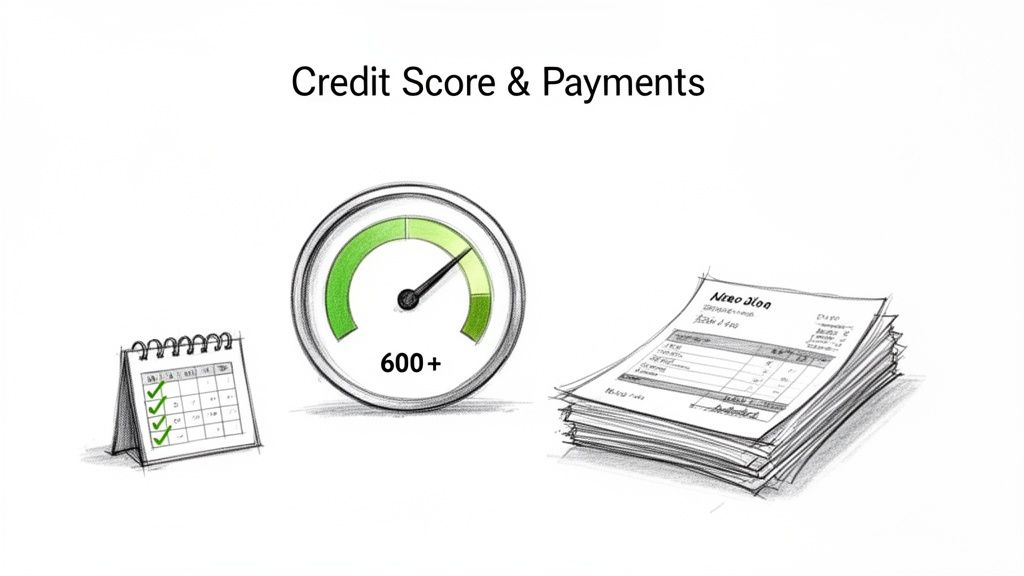
This focus on historical scores can be a hurdle for newer SMEs. In contrast, alternative platforms like Comfi place less emphasis on traditional credit scores for services like invoice discounting. The primary focus shifts to the creditworthiness of your B2B customers and the quality of your invoices, making capital accessible even if your company has a limited credit history.
Practical Tips for a Stronger Payment Profile:
- Monitor Your Credit Report: Regularly obtain your business credit report from local bureaus like AECB to understand your standing and check for errors.
- Prioritize Timely Payments: Ensure all supplier invoices, utility bills, and existing debt obligations are paid on or before their due dates to build a positive payment history.
- Dispute Inaccuracies Promptly: If you find any errors on your credit report, file a dispute with the credit bureau immediately to have them corrected.
- Showcase Payment Consistency: When using platforms like Comfi, prepare documentation showing a consistent record of on-time invoice payments from your customers.
3. Business Registration and Legal Compliance
A fundamental requirement for bank loan eligibility is having a legally registered business entity. Lenders require proof that your company is a formal, compliant operation with valid commercial and trade licenses. In the UAE, this means being registered with the relevant Department of Economic Development (DED) and maintaining good standing. Banks view a valid license as a non-negotiable baseline, confirming your business operates within the legal framework.
This is also a foundational criterion for platforms like Comfi. Proper registration allows for instant eligibility checks by integrating with official government databases, verifying your legal status swiftly. This ensures that any business using their platform is a legitimate, operational entity.
Practical Tips for Legal Compliance:
- Keep Registrations Current: Ensure your business license and all associated registrations are renewed well before their expiration date to avoid any gaps in your eligibility.
- Maintain Digital Records: Keep high-quality digital copies of all your regulatory documents, such as your trade license and Memorandum of Association, in a secure, easily accessible folder.
- Verify Your Status: Periodically use official online portals to check and confirm that your business registration status is active and accurate.
- Address Industry-Specific Needs: Maintain all necessary industry-specific permits, like import/export licenses or regulatory approvals, to demonstrate comprehensive compliance.
4. Bank Account and Financial Transaction History
A crucial part of assessing your bank loan eligibility involves a deep dive into your business's financial transaction history. Lenders typically demand three to six months of official bank statements to verify consistent cash flow, understand spending habits, and confirm your overall financial stability. This analysis reveals the health of your operational liquidity.
This manual verification process can be slow. In contrast, technology-driven platforms like Comfi streamline this step with API integrations. By securely connecting to your bank account via open banking, Comfi can instantly verify your financial data, significantly speeding up the approval process for services like invoice discounting.
Practical Tips for Presenting Your Financial History:
- Separate Business and Personal Funds: Always maintain a dedicated business bank account to provide a clear and professional view of your company’s finances.
- Organize Your Transactions: Use clear invoice numbers or references in payment descriptions to make transactions easily traceable.
- Maintain Consistent Deposits: A steady pattern of deposits demonstrates stable business operations and predictable revenue streams.
- Document Large or Unusual Payments: Prepare explanations for any significant one-off transactions to avoid raising red flags during the review process.
5. Business Age and Operating History
Another critical metric for bank loan eligibility is your company's operational history. Traditional lenders in the UAE and MENA region typically require businesses to be operational for a minimum of one to three years. This track record serves as proof of a viable business model and demonstrates stability, reducing the perceived risk for the bank.
This is a significant hurdle where alternative solutions provide a more accessible path. Platforms like Comfi, for instance, prioritise the quality and creditworthiness of your B2B customers over your business's age for services like invoice discounting. This modern approach enables younger SMEs with strong, reliable client contracts to access capital tied up in their invoices, bypassing the strict operating history requirements of conventional lenders.
Practical Tips for Demonstrating Business Stability:
- Maintain Comprehensive Records: Keep organised business registration documents, trade licences, and lease agreements accessible from the day you started operations.
- Document Continuous Activity: Use utility bills, supplier contracts, and consistent bank statements to prove uninterrupted business activity.
- Showcase Founder Expertise: If your business is young, highlight the founders' years of relevant industry experience to build credibility.
- Leverage Strong Customer Relationships: For newer businesses, presenting signed, long-term contracts with reputable customers can significantly strengthen your application.
6. Debt-to-Income Ratio and Existing Liabilities
Another critical metric for your bank loan eligibility is your business's existing debt load. Lenders analyse your debt-to-income (DTI) ratio to gauge your capacity for taking on new repayments. This ratio, which compares your total monthly debt payments to your gross monthly income, ensures your business will not become over-leveraged. Most banks in the MENA region prefer a DTI ratio below 60-70%.
This is where a fintech partner like Comfi can provide a strategic advantage. Comfi’s platform allows you to convert your unpaid invoices into immediate cash. This improves your working capital without adding to your liabilities, helping you maintain an optimal DTI ratio and strengthening your financial position for future growth.
Practical Tips for Managing Your Debt Ratio:
- Monitor Your DTI: Calculate and track your debt-to-income ratio at least quarterly to stay ahead of potential issues.
- Prioritize High-Interest Debt: Before applying for new capital, focus on paying down expensive, high-interest obligations to improve your ratio.
- Explore Non-Debt Solutions: For immediate cash flow needs, consider SME loan alternatives like invoice discounting to unlock working capital without impacting your debt levels.
7. Industry Type and Business Sector Risk Assessment
Your industry plays a significant role in your bank loan eligibility, as lenders classify businesses by sector-specific risks. Industries like construction or general trading are often deemed high-risk, leading to stricter criteria. In contrast, stable sectors with predictable cash flows, such as retail, manufacturing, or software, typically receive more favourable terms from traditional banks.
This sector-based risk assessment is where fintech platforms like Comfi provide a focused alternative. By concentrating on specific industries, Comfi understands their unique operational cycles. This specialisation allows for a more relevant evaluation, shifting the focus from broad industry risk to your company's actual performance and B2B trade relationships.
Practical Tips for Navigating Sector Risk:
- Understand Your Industry's Profile: Research how lenders typically classify your business sector to anticipate their concerns and prepare your application accordingly.
- Highlight Sector Strengths: Emphasize metrics unique to your industry that demonstrate stability, such as predictable inventory cycles or strong recurring revenue.
- Showcase Credibility: Join reputable industry associations and maintain all relevant certifications to show lenders you are a compliant and established operator within your field.
8. Collateral and Assets Available for Security
A fundamental aspect of bank loan eligibility is the collateral you can pledge to secure the funds. Lenders require valuable assets, such as real estate, equipment, or inventory, to mitigate their risk. The higher the value of your collateral, the larger the loan amount you can typically access. For many SMEs, particularly those in service-based industries, this requirement can be a significant roadblock.
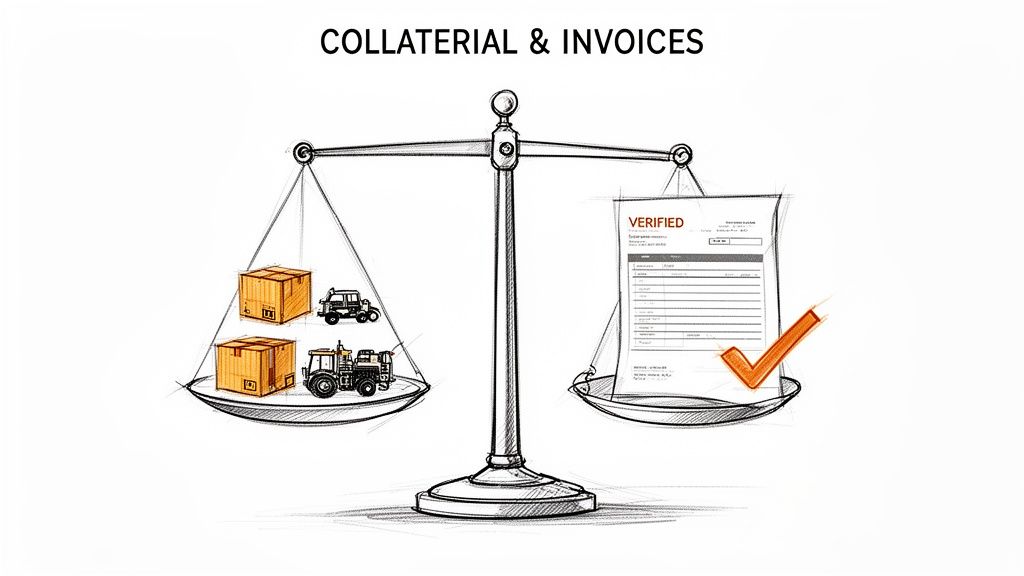
This is where platforms like Comfi offer a more accessible alternative. With services like invoice discounting and BNPL, the focus shifts from physical assets to the quality of your accounts receivable. Your outstanding invoices themselves act as the collateral, allowing asset-light businesses to unlock their working capital without pledging property or equipment.
Practical Tips for Managing Collateral:
- Maintain Accurate Valuations: Keep detailed and up-to-date records of all your business assets and their current market valuations.
- Understand Loan-to-Value (LTV) Ratios: Lenders will only offer funds up to a certain percentage of an asset's value. Research the typical LTV ratios for your asset types to set realistic expectations.
- Prioritize Invoice-Based Solutions: If your business is asset-light but has strong, creditworthy B2B customers, explore invoice discounting or factoring as a primary way to access cash flow based on your sales ledger.
9. Customer Concentration and Quality of Receivables
Lenders carefully scrutinize your customer base to assess risk, a key component of your bank loan eligibility. Over-reliance on a single client is a red flag, as losing that one account could jeopardize your ability to repay a loan. Banks prefer a diverse portfolio of customers, which demonstrates revenue stability. Furthermore, the creditworthiness of your clients matters; invoices to well-established firms are viewed more favourably.
This is where alternative solutions like Comfi’s platform offer a distinct advantage. Rather than focusing on your overall business history, Comfi evaluates the quality of your individual invoices and the payment reliability of your corporate buyers. This allows businesses with strong, creditworthy customers to secure capital quickly, even if their customer base isn't yet broadly diversified.
Practical Tips for Improving Customer Quality:
- Diversify Your Client Portfolio: Actively seek new customers to reduce dependency on any single source of revenue. A diverse base signals a healthier, more resilient business.
- Track Payment Patterns: Monitor your customers' payment histories. This data is crucial for managing your accounts receivable turnover ratio and proves your collection efficiency.
- Prioritize Established Buyers: When possible, pursue contracts with large, creditworthy companies. Highlighting invoices from major corporations or government entities will significantly strengthen your application.
10. Financial Documentation and Record-Keeping Quality
The quality of your financial records is a direct reflection of your management capability and a core component of bank loan eligibility. Lenders require comprehensive and accurate documentation, including audited financial statements, profit and loss statements, and balance sheets. Disorganised or inconsistent records are a major red flag, often leading to delays or rejection.
In contrast, fintech platforms like Comfi leverage technology to simplify this process. By integrating directly with your accounting software and bank accounts, Comfi can verify your financial health without the need for manual document uploads. This digital-first approach allows SMEs with well-maintained digital records to bypass traditional documentation hurdles and receive faster decisions.
Practical Tips for Improving Documentation Quality:
- Implement Cloud Accounting: Use software like Xero or QuickBooks to maintain real-time, organised financial data. Find the best accounting software in the UAE to streamline your operations.
- Reconcile Accounts Monthly: Regularly reconcile your bank statements with your accounting records to catch and correct discrepancies immediately, ensuring accuracy.
- Maintain Digital Files: Keep an organised digital filing system for all key documents, including invoices, receipts, tax returns, and bank statements, for easy access.
- Schedule Professional Reviews: Engage an accountant for periodic reviews of your financial statements to ensure they are compliant and professionally prepared.
Beyond the Bank: A Smarter Path to SME Growth
Navigating the landscape of bank loan eligibility can be a daunting marathon for many SMEs. As we have explored, meeting the strict criteria—from minimum revenue and operating history to collateral requirements—often puts traditional bank capital just out of reach for dynamic, growing businesses. The process is frequently slow, paper-heavy, and unforgiving of the natural fluctuations that come with entrepreneurship.
The key takeaway is not to abandon your growth ambitions but to strategically shift your perspective. Understanding these traditional benchmarks is crucial, as it empowers you to build a stronger financial foundation, whether your goal is to eventually qualify for a bank loan or to find a more suitable alternative. The most important lesson is recognizing that the bank is no longer the only path to securing capital.
Modern fintech solutions have emerged as powerful enablers, designed specifically for the agility and speed required by today's SMEs.
A new approach to eligibility: Solutions like invoice discounting platforms redefine capital access. Their eligibility criteria are often more flexible and relevant, focusing on the strength of your customer invoices and transaction history rather than demanding years of financial records or physical assets.
This shift represents a fundamental change in how SMEs can fuel their growth. Instead of a lengthy, uncertain application process, you can find partners who offer swift, digital experiences. These alternatives allow you to unlock the working capital tied up in receivables, manage cash flow effectively, and seize opportunities without taking on traditional debt. Ultimately, mastering your eligibility is about taking control of your financial narrative and choosing the route that best aligns with your business's unique journey.
Ready to explore a more accessible path to capital? Comfi offers innovative payment solutions like invoice discounting, helping businesses improve cash flow with eligibility criteria built for the modern SME. Learn how Comfi can empower your business growth today.
Related Reading
Looking to improve your cash flow? Explore Comfi's Invoice Discounting solutions. Get started today.