Mastering the Accounts Receivable Turnover Ratio for SME Growth


The accounts receivable turnover ratio is a simple yet powerful metric that shows how well your company collects the money it's owed by customers. Think of it as a speedometer for your cash collections—the higher the number, the faster you're turning credit sales into actual cash in the bank.
Why Your Accounts Receivable Turnover Ratio Matters
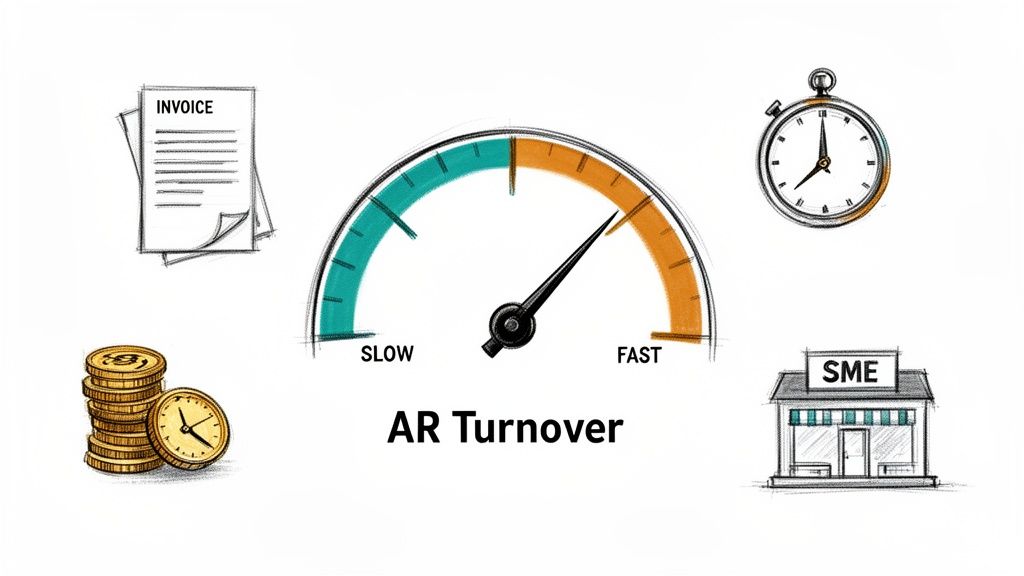
If you're an SME that sells on credit, your accounts receivable (AR) turnover ratio isn’t just some abstract accounting figure. It’s a direct indicator of your company's financial health and should be at the very center of your financial strategy.
This ratio provides a crucial, practical insight into your cash conversion cycle. It answers a fundamental question: "How many times per year do we successfully collect our average accounts receivable?" A high, healthy ratio is great news. It means your collection efforts are working and your customers are paying their invoices on time.
The Impact on Your Business Liquidity
At its core, the AR turnover ratio is all about your company's liquidity. When the ratio is strong, it means you have a reliable stream of cash coming in, which is the lifeblood for any operation. This steady cash flow gives you the power to:
- Pay suppliers and employees promptly: This helps you avoid late fees and keeps your relationships with vendors and your team on solid ground.
- Invest in growth: You can jump on opportunities to buy new inventory, fund a marketing campaign, or expand your business without hesitation.
- Build a financial cushion: A healthy cash buffer makes it much easier to handle unexpected market changes or slow business seasons.
On the flip side, a low ratio is a major red flag. It’s a sign that your cash is getting stuck in unpaid invoices, creating a bottleneck that can choke your business. Even if your sales numbers look fantastic on paper, if customers are taking too long to pay, you could struggle to meet your own bills.
For SMEs in the MENA region, where managing cash flow is everything, a low AR turnover ratio can be especially damaging. It can seriously limit your ability to compete and grow in a fast-moving market.
A Strategic Tool for Financial Health
Keeping a close eye on your AR turnover ratio gives you incredible insight into how efficiently your business is running. It’s the perfect tool for evaluating your credit policies and collection processes. For example, if you notice the ratio dipping over a few quarters, it’s a clear signal to take a closer look. Are your credit terms too generous? Is your follow-up on overdue invoices not aggressive enough?
By tracking this metric, finance leaders can stop guessing and start making data-driven decisions. It’s the first step to spotting potential cash flow issues before they spiral out of control, helping you build a more resilient and successful business.
How to Calculate Your AR Turnover Ratio
Getting a handle on your accounts receivable turnover ratio is simpler than it sounds, and the number you get tells a powerful story about your company's cash flow. It all comes down to a straightforward formula that shows how efficiently you’re turning your invoices into actual cash.
Here's the formula in a nutshell:
AR Turnover Ratio = Net Credit Sales / Average Accounts Receivable
Let’s walk through what each of those terms really means and how to find them in your own books.
Finding Your Net Credit Sales
First up is Net Credit Sales. This isn't just your total revenue. It’s the total of all sales you made on credit during a specific period, but with any returns or allowances subtracted.
It’s absolutely critical to only use credit sales here. Why? Because cash sales are instant. That money is already in your bank, so it never becomes a receivable. If you were to include cash sales, you’d artificially inflate your sales figure and get a ratio that looks much better than reality, potentially hiding serious delays in collecting from your credit customers.
To find this number, you just need to:
- Start with your gross credit sales for the period (e.g., a quarter or the full year).
- Subtract the value of any goods that customers returned.
- Also, deduct any discounts or allowances you gave for early payments or other reasons.
What's left is your Net Credit Sales—the real amount of money you're waiting to collect.
Determining Your Average Accounts Receivable
The other half of the equation is your Average Accounts Receivable. This is the typical amount of money your customers owe you at any given time during that same period.
We use an average because the amount you're owed can swing wildly from one month to the next. A huge sale at the end of the quarter could spike your receivables, while a few large payments coming in at once could make them look unusually low. An average smooths out these peaks and valleys, giving you a much more reliable picture of your situation.
Here’s the simple way to calculate it:
- Find your accounts receivable balance at the start of the period.
- Find the balance at the end of the period.
- Add the two numbers together and divide by two.
This gives you a stable, representative figure to use in the main formula.
A Practical Example in the UAE
Let's make this real. Imagine we’re looking at the books of a mid-sized electronics distributor in Dubai for the last financial year.
Here are their numbers:
- Gross Credit Sales: 4,500,000 AED
- Sales Returns & Allowances: 500,000 AED
- Accounts Receivable (Start of Year): 700,000 AED
- Accounts Receivable (End of Year): 900,000 AED
First, let's nail down their Net Credit Sales:
4,500,000 AED - 500,000 AED = 4,000,000 AED
Next, we calculate their Average Accounts Receivable:
(700,000 AED + 900,000 AED) / 2 = 800,000 AED
Now, we can plug these into the main formula to get the AR Turnover Ratio:
4,000,000 AED / 800,000 AED = 5.0
So, what does a "5.0" actually mean? It means this distributor collected its entire average accounts receivable 5 times over the course of the year.
We can take this one step further to make it even more intuitive. Let's figure out how many days, on average, it takes them to get paid. This is often called Days Sales Outstanding (DSO).
The formula is simple: 365 / AR Turnover Ratio.
For our Dubai distributor: 365 / 5.0 = 73 days.
And there it is. The finance manager now knows it takes their company, on average, 73 days to turn an invoice into cash. That single number is a clear, actionable starting point for measuring and improving the company's financial health.
What's a Good AR Turnover Ratio in the MENA Region?
Trying to find a single “good” accounts receivable turnover ratio is a bit like asking for the perfect temperature—it all depends on the context. What’s fantastic for a fast-moving food distributor could be a serious red flag for a heavy equipment manufacturer. Your ideal ratio is shaped by your industry, your specific business model, and the typical payment terms in your market.
The real power isn't in hitting a universal benchmark, but in understanding what your ratio says about your business. This is especially true for SMEs across the MENA region, where payment cultures and economic cycles can differ dramatically from one country to another. The best move you can make is to track your own ratio over time. Is it getting better? Worse? Staying flat? That trend tells the real story.
The calculation itself is straightforward, combining your sales on credit with the average amount your customers owe you.
High vs. Low Ratios: What They're Really Telling You
The number itself is just the starting point. The important part is digging into the "why" behind it. Any change in your AR turnover ratio is a signal to take a closer look at your credit and collections process.
A high turnover ratio is usually great news. It means you’re collecting payments from customers quickly and efficiently. This translates directly into healthy cash flow, giving you the liquidity to reinvest, cover expenses, and grow. But be careful—an extremely high ratio could mean your payment terms are too tight, potentially scaring off good customers who need a bit more flexibility.
On the flip side, a low turnover ratio is a definite warning sign. It’s a clear indicator of slow-paying customers, an inefficient collections process, or both. Your working capital gets trapped in those unpaid invoices, which can starve your business of cash, even when sales look strong on paper.
The sweet spot is a healthy balance: a ratio that shows you’re getting paid promptly without shutting the door on valuable sales. This equilibrium is what fuels both strong liquidity and sustainable growth.
Industry Benchmarks for MENA Businesses
While your own history is the best guide, it’s still helpful to see how you stack up against others. Here are some typical AR turnover ratio ranges for key sectors in the MENA market:
- Wholesale & Distribution: These businesses live and die by volume and cash flow, so efficient collections are key. You’ll often see ratios between 6 and 9.
- Manufacturing: With longer production cycles and often bigger clients, payment terms tend to be a bit more stretched. Ratios typically fall in the 4 to 7 range.
- Retail (B2B Supply): Suppliers for retailers usually have shorter payment cycles to match the fast pace of consumer sales. Their ratios are often higher, commonly between 8 and 12.
- Construction & Contracting: This sector is known for project-based milestone payments and long timelines, resulting in the lowest ratios, typically from 3 to 5.
Remember, these are just general guidelines. Local economic conditions and standard payment practices in your specific country matter a lot. For example, in the UAE, a major hub for regional SMEs, the average AR turnover ratio was around 6.2 times in 2023 for small businesses in trade and fintech. That means they were collecting their receivables, on average, every 59 days. You can find more insights on how modern payment solutions impact these metrics from analysts at J.P. Morgan.
At the end of the day, the most important comparison is with yourself. A stable or improving trend over time is the clearest sign that your collections process is healthy and working.
What’s Really Driving Your AR Turnover?
If your accounts receivable turnover ratio is looking a little sluggish, it’s time to look under the hood. This number isn’t just a random metric; it’s a direct reflection of your company's policies, your day-to-day processes, and even what’s happening in the market.
Getting to the root cause is the first step. Think of it like a health check for your cash flow. By digging into a few key areas, you can quickly spot what’s holding you back and figure out exactly where to focus your efforts.
Your Internal Credit Policies
This is ground zero. The rules you set for offering credit to customers are the foundation of your entire collections cycle. If that foundation is shaky, everything else will be too.
Are you being too generous? Offering Net 60 or even Net 90 terms might feel like a good way to close a deal, but it automatically stretches out how long it takes to get paid, dragging your turnover ratio down. On the flip side, having policies that aren't enforced is just as bad. If you’re not running proper credit checks or you let due dates slide without a follow-up, you’re sending a clear message that getting paid on time isn't a priority.
To get a better handle on this, it helps to understand the fundamentals of what trade credit is and how it works.
The Invoicing Process
An invoice isn’t just a bill—it's a critical piece of communication that can either speed up or slow down your payment. Any hiccup here creates a delay. It’s that simple.
Ask yourself a few honest questions about your process:
- Are invoices going out the door immediately? If your team takes a week to send an invoice after a job is done, you’ve just added seven days to your collection time before you’ve even started.
- Are they 100% accurate and easy to understand? A simple mistake in a price or quantity can kick off a dispute that takes weeks to sort out. Even a confusing layout can cause headaches for your customer's accounts payable team.
- Do they have everything needed to get paid? A missing purchase order number or a vague due date is often all it takes to push your invoice to the bottom of the pile.
A clean, efficient invoicing system is one of the quickest wins you can get for improving your AR turnover.
Your Collections Efforts
How you follow up (or don’t) on what you’re owed makes a world of difference. Passively waiting for money to come in, only chasing invoices that are months overdue, is a guaranteed way to end up with a low turnover ratio.
A proactive collections process, however, can completely change the game. This means having a system for sending reminders before an invoice is even due. It’s about professional, consistent communication that makes it easy for customers to pay while keeping the relationship positive. When you don’t have a clear follow-up process, your invoices simply won't be a priority for your customers.
Your collections process should be a well-oiled machine, not an afterthought. Consistent, respectful follow-ups reinforce payment expectations and keep your cash flow moving.
External Economic Factors
Finally, it’s important to remember that some things are outside your direct control. The financial health of your customers is a big one. If they're struggling with their own cash flow, you can bet their payment delays will start affecting your numbers.
The wider economy also plays a huge part, especially here in the MENA region. When things get tight, businesses tend to hold onto their cash by paying their suppliers more slowly. For example, in oil-importing economies like Egypt and Jordan, the average AR turnover ratio for SMEs dropped to 4.7 times in 2020 during the pandemic. As the economy bounced back and new fintech tools became available, that number climbed to 5.9 times by 2023. These shifts show just how much external pressures can influence your ability to collect.
Practical Strategies to Boost Your AR Turnover
Knowing your accounts receivable turnover ratio is the first step, but improving it is where you start creating real value for your business. A better ratio means you’re getting paid faster, which directly fuels your ability to pay suppliers, manage inventory, and jump on growth opportunities when they appear.
The good news is you don’t need a massive overhaul to see results. Meaningful improvements are often within reach through a mix of smarter internal processes and modern financial tools. By focusing on making things clear, consistent, and convenient for your customers, you can systematically shrink the time it takes to turn your invoices into cash.
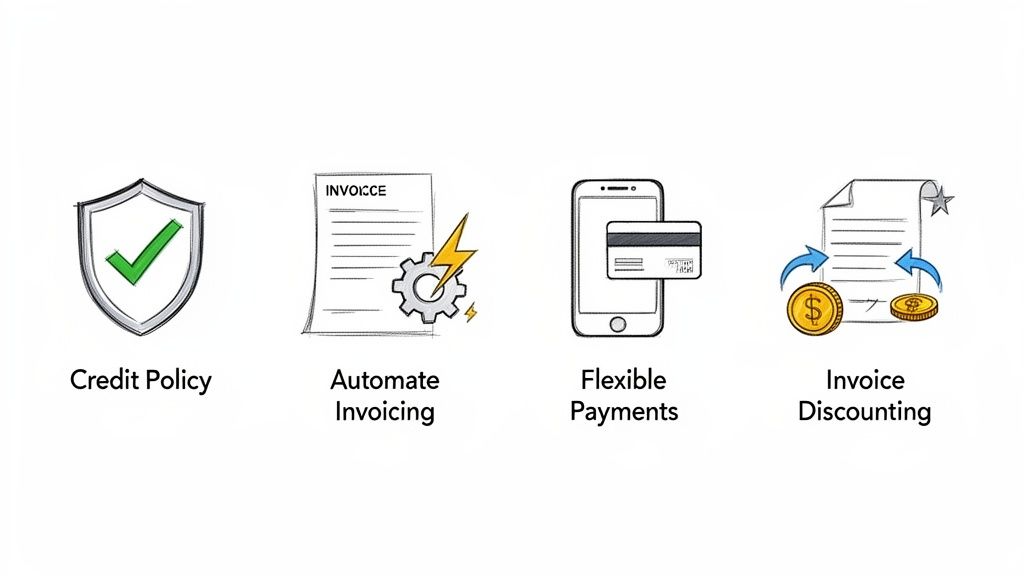
Let’s walk through four key areas where you can make an immediate impact.
Refine Your Credit Policies
A healthy AR turnover ratio starts with a smart, well-defined credit policy. Think of it as your first line of defense against late payments. If your policy is vague or too generous, you’re setting yourself up for collection headaches from day one. The goal here is to be clear, fair, and firm.
Start by getting your terms in writing. Don't leave payment expectations to handshake agreements. A solid policy should clearly spell out:
- Payment Deadlines: Be specific. Use terms like "Net 30" or "Net 45" on every single invoice.
- Credit Limits: Set maximum credit amounts for different customers based on their payment history and financial health.
- Consequences for Late Payments: Clearly state any late fees or interest that will kick in on overdue accounts.
A tiered approach often works best. For instance, new customers or those with a shaky payment history might get stricter terms, like Net 15 or even partial payment upfront. Meanwhile, your long-standing, reliable clients can enjoy more flexibility. This risk-based model protects your cash flow without penalizing your best customers.
Automate Your Invoicing and Reminders
Doing all your invoicing by hand is a recipe for delays. Simple errors, inconsistent sending times, and forgotten follow-ups can easily add weeks to your collection cycle. This is where automation becomes a game-changer for your AR turnover.
Automation ensures accurate, professional invoices go out the door the moment a job is done or a product ships. There’s no delay and far less room for human error. Even better, it puts your follow-up process on autopilot. An automated system can send polite reminders a few days before the due date, on the due date, and at set intervals after. This consistency keeps your invoice top of mind without draining your team’s time.
Automation transforms your collections from a reactive, manual chore into a proactive, systematic process. It ensures every customer gets the right reminder at the right time, every time.
We have a guide that digs deeper into how to set up an automated invoice system effectively. This isn’t just a nice-to-have anymore; it's becoming standard practice. The accounts receivable automation market in the MEA region hit USD 574.1 million in 2023 and is expected to reach USD 1,345 million by 2030. Wholesalers using this tech see their AR turnover average 7.4 times a year (getting paid every 49 days), a big leap from the 5.2 times seen in their non-automated peers.
Offer Flexible and Convenient Payment Options
Simply put, the easier you make it for customers to pay you, the faster you’ll get paid. If someone has to jump through hoops to send you money, they're more likely to put it off. Your job is to remove every bit of friction between their intention to pay and the cash hitting your account.
Think about offering a menu of payment methods to suit different preferences. This could include:
- Online payment portals
- Credit and debit card payments
- Direct bank transfers
- Digital wallets
When you give your customers multiple, convenient ways to pay, they can often settle up in just a few clicks. This one change can dramatically shorten your payment cycle and give your AR turnover a healthy boost.
Structure Your Collections Process
A formal, structured collections process ensures that overdue accounts are handled professionally and efficiently. This isn't about being aggressive; it's about persistent, respectful communication. A great starting point is to segment your receivables by how old they are (e.g., 1-30 days, 31-60 days past due) and create a clear action plan for each bucket.
Your follow-up should be a mix of automated reminders for early-stage delinquencies and personal outreach for older ones. A real phone call from your finance team can often resolve an issue that an email just can’t. To sharpen your approach, it’s worth looking into proven effective debt recovery strategies that help you get paid while keeping customer relationships positive.
For SMEs in the MENA region, solutions like Comfi's invoice discounting platform can completely reshape this process. Instead of waiting weeks or months for a customer to pay, you can get an invoice paid almost immediately. This has a direct and powerful positive effect on your accounts receivable turnover ratio by drastically shortening the cash conversion cycle. It lets you unlock the working capital tied up in your receivables, giving you the liquidity to reinvest in your business while the platform handles the collection from your buyer.
Master Your Receivables to Unlock Sustainable Growth
The accounts receivable turnover ratio is much more than a number you glance at in a financial report. Think of it as a vital lever you can pull to steer your SME's future. Shifting from just tracking this metric to actively managing it can completely transform your cash flow and build a much more resilient business.
You now have everything you need to calculate the ratio, see how you stack up against others in the MENA region, and start making real changes. The main takeaway is simple: getting on top of your receivables is non-negotiable for long-term growth. Whether you do this by tweaking your internal systems or tapping into modern financial tools, the mission is the same—free up the cash that’s just sitting in your unpaid invoices.
From Metric to Momentum
At the end of the day, a healthy accounts receivable turnover ratio creates momentum. The cash you unlock is the fuel your business needs to jump on new opportunities, handle unexpected market changes, and build a solid financial footing for whatever lies ahead. This is what separates the businesses that truly thrive from those just getting by.
The real power of the accounts receivable turnover ratio isn't just in knowing the number, but in using it to ask the right questions and drive strategic action. It turns a historical figure into a forward-looking tool for growth.
Improving this ratio is a crucial piece of the puzzle for your company's financial health. To see how it fits into the bigger picture of operational efficiency, take a look at our guide on the cash conversion cycle.
Common Questions Answered
When you start digging into the accounts receivable turnover ratio, a few questions almost always pop up. Getting a handle on these is key to moving from just calculating the number to actually using it to make smarter decisions for your business.
Let’s tackle some of the most common questions we hear from finance leaders across the MENA region.
How Often Should I Be Running This Calculation?
For most SMEs, looking at your AR turnover ratio monthly or quarterly is the sweet spot. A monthly check-in gives you a real-time pulse on your collections. You can spot a negative trend almost as soon as it starts and react quickly.
A quarterly review, on the other hand, smooths out the monthly bumps and gives you a clearer view of the bigger picture. This rhythm helps you catch developing problems before a small delay spirals into a serious cash flow crunch.
Is It Possible for a High AR Turnover Ratio to Be a Bad Thing?
Surprisingly, yes. While a high number is usually a great sign of an efficient collections process, an exceptionally high ratio might mean your credit policies are too restrictive. It can be a red flag that you're playing it a little too safe.
Think about it: if your payment terms are far stricter than your competitors', you might be collecting cash lightning-fast, but you could also be alienating good, creditworthy customers who just need standard market terms. The real goal is to strike a balance—getting paid promptly without choking off your sales growth.
How Does Something Like Invoice Discounting Affect This Ratio?
Invoice discounting gives your AR turnover ratio a direct and immediate boost. Remember the formula: Net Credit Sales ÷ Average Accounts Receivable. When you use a service to get paid on an invoice right away, that receivable is converted to cash, which dramatically lowers your average accounts receivable balance.
Since the bottom number in the formula (your average AR) gets much smaller, the ratio itself gets much bigger. It’s a direct mathematical reflection of a healthier cash conversion cycle and better liquidity.
I Have a Low Ratio. Where Do I Even Start to Fix It?
The best first move is to walk through your entire process, from start to finish. Map out every single step, from the moment a customer places an order to the second the cash is in your bank and reconciled.
Pinpoint the biggest bottleneck in that chain.
- Are your invoices slow to go out the door?
- Are your payment terms confusing or applied inconsistently?
- Is your follow-up on overdue payments a bit chaotic or just not happening often enough?
By finding and fixing the biggest delay first, you'll get the most significant improvement for your effort. It’s about getting a quick win that builds momentum for fine-tuning the rest of your collections strategy.
Ready to turn your receivables into immediate cash flow and boost your turnover ratio? With Comfi, you can get your invoices paid in as little as 24 hours. See how our seamless invoice discounting platform can help you unlock your working capital and accelerate your growth at https://comfi.ai.
Related Reading
- A Practical Guide to Invoice Discounting in the UAE
- 8 Best Accounts Receivable Software for SMEs in 2026
- Inventory Financing vs Invoice Discounting for UAE SMEs
- What Is Accounts Receivable: Your 2026 Guide for UAE SMEs
Looking to improve your cash flow? Explore Comfi's Invoice Discounting solutions. Get started today.