What Is Trade Finance and How Does It Work for SMEs

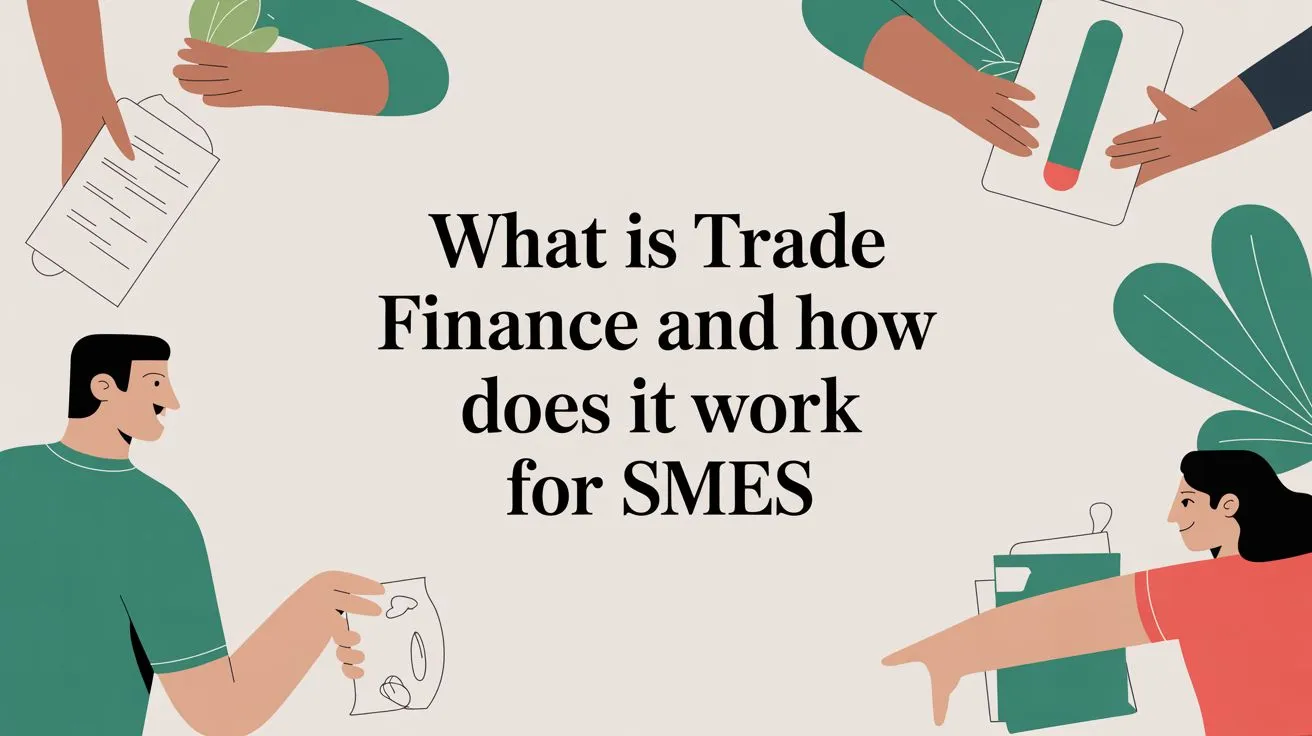
At its core, trade finance is a collection of financial tools that make it safer and easier for businesses to buy and sell goods—especially across borders. Think of it as a financial bridge. It makes sure sellers get paid on time while giving buyers the room they need to manage their own payments, taking a huge amount of risk and friction out of the entire process.
What Is Trade Finance in Simple Terms?
Let’s get practical. Imagine you run a business that sells electronics. A major retailer wants to place a huge order, but their terms are strict: they'll pay you 60 days after you deliver the goods. This is a massive opportunity, but it creates an immediate cash flow crisis. You have to pay your own suppliers for all the components right now. Waiting two months for that payment could grind your entire operation to a halt.
This exact scenario is where trade finance steps in. It’s designed to close the gap between a seller who needs to be paid immediately and a buyer who needs payment terms. It isn't a simple business loan; it's a whole set of mechanisms built specifically to make a trade transaction happen smoothly. These tools help manage risk, unlock cash flow, and build a foundation of trust between trading partners who might be continents apart and have never met.
The Core Purpose of Trade Finance
At its heart, trade finance exists to solve the fundamental problems of trust and cash flow that are inherent in commerce. For SMEs, this isn't just helpful—it's often the difference between seizing a growth opportunity and having to pass on it. Without these tools, a promising business might have to turn down a game-changing order just because all its working capital is locked up in unpaid invoices.
Trade finance gives businesses the power to:
- Mitigate Payment Risk: It drastically reduces the seller's fear of not getting paid and, at the same time, protects the buyer from the risk of not receiving the goods they ordered.
- Improve Cash Flow: It lets sellers get their money faster. This allows them to reinvest in the business, pay suppliers, and fund operations without having to wait weeks or months for customers to settle up.
- Enable Larger Deals: When the financial risk is under control, businesses can confidently accept bigger orders and expand into new markets that would have otherwise seemed too risky.
The role of these financial tools is exploding. The Middle East and Africa (MEA) trade finance market hit a revenue of $7,843.1 million, proving just how vital it is to regional commerce. With projections showing it will climb to $10,315.1 million by 2030, its importance for SMEs can't be overstated. You can dive into more data on the MEA trade finance market.
How a Typical Trade Finance Deal Works
Let's ground this in a real-world business scenario. Imagine you run a growing electronics supply company in the UAE. You've just landed a massive purchase order from a major retailer in Saudi Arabia, a deal that could really move the needle for your business.
There's just one catch: the retailer's payment terms are 90 days after they receive the goods.
You, on the other hand, need to pay your own manufacturers right now to get the electronics produced. Waiting three months for that big payment would completely jam your operations and tie up every bit of cash you have. This is the exact kind of friction that a modern trade finance arrangement is built to eliminate, making sure the deal goes through without creating a cash flow crisis.
This simple flow shows how the seller, a financial platform, and the buyer all connect to make the transaction work.
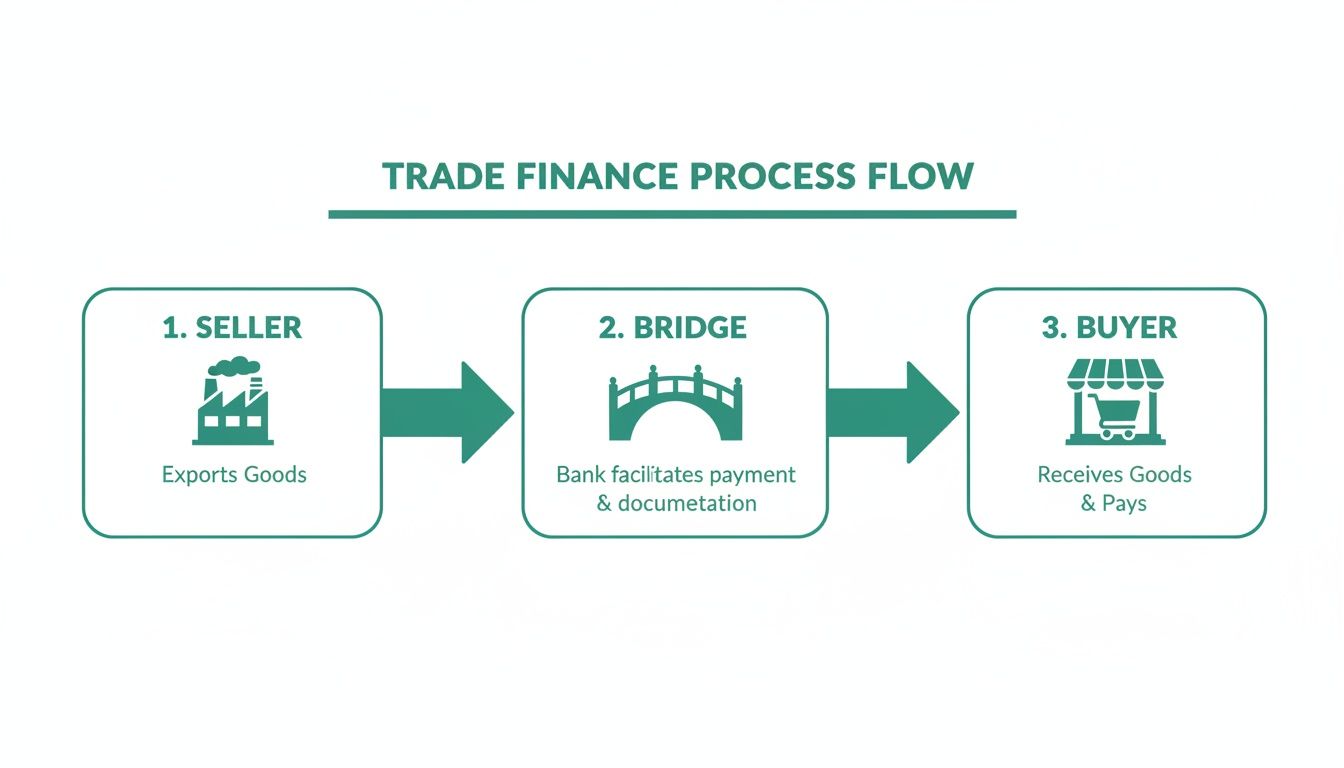
As you can see, the financial platform is the bridge. It makes sure the supplier gets paid almost immediately, while the buyer still gets to hang onto their favorable payment terms.
The Step-by-Step Transaction Journey
So, how does this actually unfold, from the initial order to the final handshake? Each step is designed to minimize risk and keep things moving for both the buyer and the seller. To really get a grip on the mechanics, it’s important to see the role played by key financial lenders and platforms that make these deals possible.
Here’s how it typically breaks down:
- Step 1: The Purchase Order: The Saudi retailer sends a formal purchase order to the electronics supplier in the UAE. This document is the official kickoff for the whole deal.
- Step 2: The Invoice Is Issued: After manufacturing and shipping the goods, the supplier issues an invoice to the retailer. This invoice details what's owed and confirms that 90-day payment term.
- Step 3: Engaging a Financial Platform: Now, instead of staring at the calendar for 90 days, the supplier takes that invoice to a platform like Comfi. The platform quickly verifies the invoice and the credibility of the transaction.
- Step 4: Immediate Payment: Once approved (often in as little as 24 hours), the platform advances a huge chunk of the invoice’s value straight to the supplier. This instantly unlocks their working capital, letting them pay their own bills and even take on new orders.
- Step 5: The Buyer Pays on Schedule: For the Saudi retailer, nothing changes. They go about their business as usual. When the 90-day term is up, they simply pay the full invoice amount directly to the financial platform.
- Step 6: Final Settlement: After getting the full payment from the buyer, the platform deducts its small, pre-agreed fee and sends the remaining balance to the supplier. The transaction is now complete.
This entire cycle ensures the supplier avoids a painful cash flow crunch, the buyer gets the payment terms they need, and the deal gets done without a hitch. For a more detailed look, check out our complete guide to the trade finance process flow.
What Kinds of Trade Finance Are Out There?
Trade finance isn't some single, off-the-shelf product. It’s more like a specialist’s toolbox, filled with different instruments designed to solve very specific problems in commerce. For years, the tools were clunky and slow, but a new wave of modern solutions is giving small and medium-sized businesses the kind of speed and flexibility we’ve never seen before.
Getting this right is all about matching the right tool to the right problem. Let's break down the most common types of trade finance, looking at them through a simple problem-and-solution lens that makes sense for today's fast-moving businesses.
A Quick Look at the Traditional Tools
For decades, a few core instruments have been the bedrock of global trade. The most famous of these is the Letter of Credit (LC).
At its core, an LC is a promise from a bank that a seller will get paid, as long as they meet all the terms of the deal. It’s a powerful way to build trust between a buyer and a seller on opposite sides of the world, especially for large, high-stakes transactions. The problem? For most SMEs, LCs are notoriously slow, complicated, and drowning in paperwork. We go into a lot more detail on how they operate in our deep dive on the letter of credit.
While these old-school methods are great for managing risk, their complexity just doesn’t fit the speed of modern business. This created a huge opening for smarter, more agile solutions.
Modern Solutions for Today's SME Headaches
The new generation of digital platforms offers dynamic tools that go straight to the heart of the cash flow problems SMEs face every single day. They’re faster, easier to access, and cut out the mountain of administrative work.
Here’s how they solve real-world business problems:
- Problem: All your cash is locked up in unpaid customer invoices. You’ve done the work, but you’re stuck waiting 30, 60, or even 90 days to get paid.
- Solution: Invoice Discounting. This is beautifully simple. You submit your approved invoices to a platform and get a huge chunk of their value paid out almost instantly—often within 24 hours. This one move turns your accounts receivable from a waiting game into immediate working capital you can use to pay suppliers, cover payroll, or jump on the next big order.
- Problem: Your business customers are demanding flexible payment terms, but offering credit yourself would crush your cash flow.
- Solution: B2B Buy Now, Pay Later (BNPL). This modern instrument lets you give your buyers the payment flexibility they crave while you still get paid upfront. The financial platform takes on the job of collecting from the buyer down the line, which removes both the cash flow gap and the credit risk from your shoulders. It's an incredible tool for boosting sales and winning over new customers.
These modern tools aren’t just about making funds available; they're about solving tangible cash flow problems. They give SMEs the financial agility to actually compete and grow, shifting the focus from navigating complex bank procedures to simply enabling better business.
These aren't just theories on a page; they are practical, powerful tools that help businesses unlock their true potential. Instead of passively waiting for money to come in, you can actively command your cash flow, take on bigger orders, and build much stronger relationships with your suppliers and customers. This is the modern answer to the question of what trade finance is.
Why Trade Finance Is a Real Game-Changer for SME Growth
Knowing what the tools of trade finance are is one thing. Understanding why they actually matter for your business is something else entirely. For small and medium-sized businesses, these instruments aren't just a nice-to-have; they are a direct line to stability and, more importantly, to real, tangible expansion.
They essentially transform the crippling uncertainty of waiting for payments into genuine opportunity, letting you operate with the kind of confidence usually reserved for huge corporations.
The most immediate and powerful benefit is the dramatic improvement in your cash flow. When your working capital is locked up in unpaid invoices, your business is effectively on pause. Trade finance breaks this frustrating cycle, allowing businesses to unlock that trapped cash almost instantly. That means you have the funds on hand to pay your own suppliers, cover payroll, and jump on growth opportunities without a second thought.
Unlocking Doors to Bigger Business
Beyond just smoothing out the day-to-day bumps, trade finance empowers SMEs to start thinking bigger. It demolishes the financial walls that so often stop you from chasing those lucrative—but scary—deals. Instead of having to turn down a massive order because you don’t have the cash to fulfill it, you can accept it with total confidence.
This opens up a few key advantages:
- Handling Larger Orders: You can comfortably take on those bigger contracts from your best customers, knowing your cash flow is completely secure.
- Breaking into New Markets: Expanding internationally or selling to a new customer segment becomes far less of a gamble when payment is guaranteed.
- Building Stronger Supplier Relationships: When you can pay your suppliers on time, every time, you strengthen those partnerships. This often leads to better terms, priority service, and a more reliable supply chain for you.
This single shift moves a business from a reactive state—constantly chasing money—to a proactive one, where strategic growth becomes the main event.
Cutting Down Risk and Building Trust
One of the biggest headaches in any trade deal is the risk of not getting paid, especially when you're dealing with a new or overseas buyer. Trade finance instruments act as a critical safety net, drastically reducing the financial exposure for you, the seller.
By shifting the risk of a buyer defaulting over to a financial platform, SMEs can trade with far more freedom and security. This structure builds a foundation of trust that encourages smoother, more dependable commercial relationships—the bedrock of any long-term success.
Ultimately, trade finance levels the playing field. It gives SMEs the financial agility to compete head-on with the big players, chase ambitious goals, and build a much more resilient business. It’s not just about managing transactions; it's about fundamentally changing what’s possible for your company.
The Digital Shift in Modern Trade Finance
For decades, the world of trade finance was stuck in the past. It ran on mountains of paperwork, painstakingly slow manual verifications, and long, frustrating waits. This old-school approach created huge barriers for SMEs, who simply didn't have the time or resources to navigate the maze of complex processes.
Today, that old model is being completely overhauled by a faster, simpler, and far more accessible digital experience.
Technology is the real engine behind this change, finally dragging a clunky, paper-based system into the modern era. Fintech platforms have stepped in to solve the exact pain points that held small and medium-sized businesses back for so long—the endless bank queues, the confusing paperwork, and the high rejection rates. This shift isn't just about convenience; it's about fundamentally changing who gets to use these powerful business tools.
The Advantages of a Digital-First Approach
The digital revolution in trade finance has brought a level of speed and efficiency that was once unimaginable. Instead of waiting weeks for a decision from a traditional institution, businesses can now get answers in minutes and receive funds in as little as 24 hours.
This digital-first model brings several game-changing advantages to the table:
- Instant Eligibility Checks: Modern platforms use smart technology to assess applications almost instantly, giving you immediate feedback on whether you qualify. No more waiting around in the dark.
- Simple, Paperless Applications: The entire application process now lives online. You can upload all your documents digitally from anywhere, completely eliminating the need for physical paperwork.
- Rapid Access to Funds: Once you're approved, funds are often sent out within a day. This allows you to unlock your working capital and jump on opportunities without missing a beat.
- Greater Transparency: Digital dashboards give you a clear, real-time view of your applications, approved funds, and payment schedules. It takes all the guesswork out of the process.
The core benefit is control. Digital platforms put SMEs back in the driver's seat, giving them the financial agility they need to operate with confidence and precision.
Why This Matters for Modern Business
This technological shift has finally leveled the playing field, democratizing access to trade finance. What was once a tool reserved almost exclusively for large corporations is now readily available to any growing SME. The impact of this is enormous.
In fact, a huge portion of the estimated $2.5 trillion global trade finance gap—the difference between the funding businesses need and what they can actually get—is now being addressed by these new technologies.
To get the bigger picture of this transformation, it's helpful to explore the general trends in digital innovation in the banking sector, which offers great insight into how technology is reshaping finance as a whole. By stripping out the friction and building a more inclusive system, modern platforms are doing more than just offering a service; they're becoming essential partners for any SME serious about growth.
A Practical Guide to Accessing Trade Finance
Knowing that trade finance exists is one thing; putting it to work for your business is another. For a long time, this meant wrestling with slow, paper-heavy applications at a traditional bank. Thankfully, things have changed. Modern digital platforms have made these tools fast, straightforward, and actually designed for a growing SME.
Getting started is far simpler than you might think. The journey doesn't begin with stacks of paperwork, but with a clear-eyed look at what your business actually needs.
Pinpoint Your Specific Business Need
Before you start comparing providers, you need to identify the exact problem you're trying to solve. Are you constantly waiting on customer payments, creating a painful cash flow crunch? That’s a classic challenge where working capital is tied up. Or maybe you need to offer better payment terms to land a huge new contract, but you can't afford to put your own operations on the line.
Knowing your core objective is key to choosing the right tool for the job. For instance:
- Need to unlock cash tied up in unpaid invoices? Invoice discounting is a perfect fit.
- Want to offer flexible payment terms to your buyers? B2B Buy Now, Pay Later (BNPL) is what you're looking for.
Find the Right Digital Platform
Once your goal is crystal clear, the next step is finding a provider that gets what you're trying to do. Look for platforms that are built around speed, simplicity, and transparency. A great sign of a good partner is a fast, paperless application and a fee structure you can actually understand, with no hidden surprises.
Platforms designed for SMEs know that your time is money, which is why many can give you an eligibility check and funding approval in as little as 24 hours. For a deeper look into your options, our guide on how to get finance for your business is a great resource.
When you're comparing platforms, pay close attention to the user experience. A good provider will have a simple digital dashboard where you can easily upload documents, check the status of your funding, and see all your transactions in one place.
Prepare and Apply
The final step is the application itself, and modern providers have made this incredibly simple. Usually, all you'll need is some basic business information and the relevant documents for your transaction, like purchase orders or invoices. The whole process is done online, saving you a massive amount of time and effort.
With this new focus on accessibility, the right platform can get your business the tools it needs to grow, without all the traditional headaches.
Got Questions About Trade Finance? We've Got Answers.
Jumping into the world of trade finance can feel a bit complex, and it’s natural to have questions, especially if you’re new to it all. Let’s clear up a few of the most common queries we hear from business owners.
Is Trade Finance Just for Big Corporations?
Not anymore. That’s a common misconception left over from the old days. While trade finance was once the exclusive playground of multinational giants, modern fintech platforms have completely changed the game, making these tools accessible and affordable for small and medium-sized businesses.
Solutions like invoice discounting are built specifically to solve the everyday cash flow headaches that SMEs face, whether they're trading locally or shipping goods across the globe.
How Is This Different from a Business Loan?
This is a great question because the difference is fundamental. A standard business loan provides you with a lump sum of cash for general use—like buying equipment or funding an expansion—which you then pay back over time with interest.
Trade finance, on the other hand, is tied directly to a specific commercial transaction, like a single customer invoice. It’s not about general borrowing; it's about making a particular sale happen without a hitch.
When you use invoice discounting, for example, you aren't really taking on debt. You’re just getting paid for a sale you’ve already made, much, much sooner. The entire process is built around your sales cycle, helping you unlock your own working capital without getting locked into long-term debt.
How Quickly Can I Actually Get the Money?
Speed is where modern trade finance really shines. Traditional bank processes could drag on for weeks, bogged down by mountains of paperwork and slow, bureaucratic approvals. Today, digital platforms have turned that entire experience on its head.
With simple online applications and quick verification, many businesses can get set up and have funds from their approved invoices in their account in as little as 24 hours. This kind of speed is a massive advantage for SMEs that need to be nimble and grab new growth opportunities as they appear.
This rapid access transforms your accounts receivable from a frustrating waiting game into a powerful source of on-demand cash whenever you need it.
Ready to stop waiting for payments and start growing your business? Comfi provides fast, simple, and transparent tools that allow you to unlock your working capital. Find out how you can get paid in as little as 24 hours at https://comfi.ai/get-started.
Related Reading
- A Guide to Trade Credit for Modern MENA Businesses
- Trade Finance Fund
- Boost Resilience: Supply Chain Disruption Financing UAE
Looking to improve your cash flow? Explore Comfi's Invoice Discounting solutions.