7 Top Small Business Lender Options in the UAE for 2026

Finding the right small business lender is critical for growth, but the UAE's financial landscape can be complex. From traditional banks and state-backed institutions to agile fintech platforms, each offers a different path to securing capital. This guide provides a clear, educational breakdown of the main providers and the payment solutions they offer, such as invoice discounting and dealer financing. Our roundup of the leading invoice discounting providers in the UAE compares them side by side. We’ll explore the pros and cons for SMEs in the MENA region, helping you understand which partner aligns with your business goals, whether you need to improve cash flow or fund expansion.
For a broader overview before diving into specific platforms, this comprehensive guide on business loan comparison and application offers valuable context. Our list focuses specifically on the UAE market, detailing seven top options with direct links and practical insights. This will help you make an informed decision and find the best fit for your company’s unique needs. Let’s dive into the top providers available to your business.
1. Comfi (Not a Lender)
Comfi is not a lender and does not provide loans or credit. For small and medium-sized enterprises (SMEs) in the MENA region, Comfi presents a powerful and well-rounded solution for optimising cash flow. This UAE-based fintech platform is specifically engineered for suppliers, wholesalers, and B2B marketplaces to convert their accounts receivable into immediate, usable funds. Instead of waiting 30, 60, or 90 days for customer payments, businesses can get their invoices paid upfront through Comfi. Across Comfi's portfolio, more than 1,000 UAE SMEs have unlocked cash on AED 600M+ of invoices, with an average limit of AED 650K (Comfi data, October 2026). This allows SMEs to stock more inventory, win larger contracts, and accelerate their expansion plans without the typical cash flow constraints.
Key Strengths and Use Cases
Comfi stands out as more than just a payment facilitator; it acts as a strategic partner for growth. Its model addresses the core challenge of B2B commerce: suppliers need immediate payment, while buyers require flexible payment terms. Comfi bridges this gap by paying the supplier within hours of invoice approval and managing the collections process from the buyer. This approach effectively removes the credit risk and administrative burden from the supplier. For an in-depth look at this process, you can explore the mechanics of invoice discounting in the UAE on Comfi.ai.
The results are measurable. The median time from an approved invoice to funds in the bank is about 20 hours, and across Comfi's customers, buyers pay on average terms of 90 days, which is exactly the gap Comfi closes (Comfi data). Its largest customer groups are wholesale trading, professional services, and F&B manufacturing and trading. One example: Capitex, a professional services firm that pays work permits and salary deposits long before it can invoice a client, now uploads its month-end invoices and receives funds the same day. Its founder estimates the business can take on up to 200% more capacity than before.
Practical Application and Integration
Comfi is designed for seamless integration into existing business operations, offering a level of flexibility that sets it apart. Businesses can choose the method that best fits their technical capabilities and workflow:
- Digital Dashboard: A straightforward, user-friendly portal for uploading invoices and managing transactions with no technical setup required.
- Low-Code Plugins: Easily add a "Buy Now, Pay Later" payment option directly into your e-commerce checkout or invoicing system.
- Developer-Friendly API: For complete customisation, embed Comfi’s payment term offerings directly into proprietary platforms, ERPs, or B2B marketplace workflows.
This adaptability makes Comfi a practical choice for businesses across various sectors, including automotive, electronics, and F&B, who need a reliable way to manage their receivables and improve liquidity.
Website: https://comfi.ai
Best For: B2B suppliers, wholesalers, and marketplaces in the MENA region seeking to unlock working capital, remove credit risk, and accelerate sales cycles.
Key Features:
- Fast Payments: Eligibility checks in minutes and approved invoices paid within hours (a median of about 20 hours across Comfi's portfolio).
- Risk Removal: Comfi manages collections from the buyer, so suppliers get paid upfront without risk.
- Flexible Solutions: Offers Invoice Discounting, B2B Buy Now, Pay Later (BNPL), and Dealer Financing.
- Seamless Integration: Multiple options from a simple dashboard to a full API for embedded payment terms.
Pricing: Pricing is tailored to each business. You must contact Comfi or use the "Check Limit" feature on their website to receive a customised proposal.
2. Emirates Development Bank (EDB)
As the UAE’s state-backed development bank, Emirates Development Bank (EDB) is a unique small business lender focused on empowering companies within strategic national sectors. It offers direct lending and partners with commercial banks to enhance finance access for small and medium-sized enterprises (SMEs) contributing to the nation’s economic diversification.
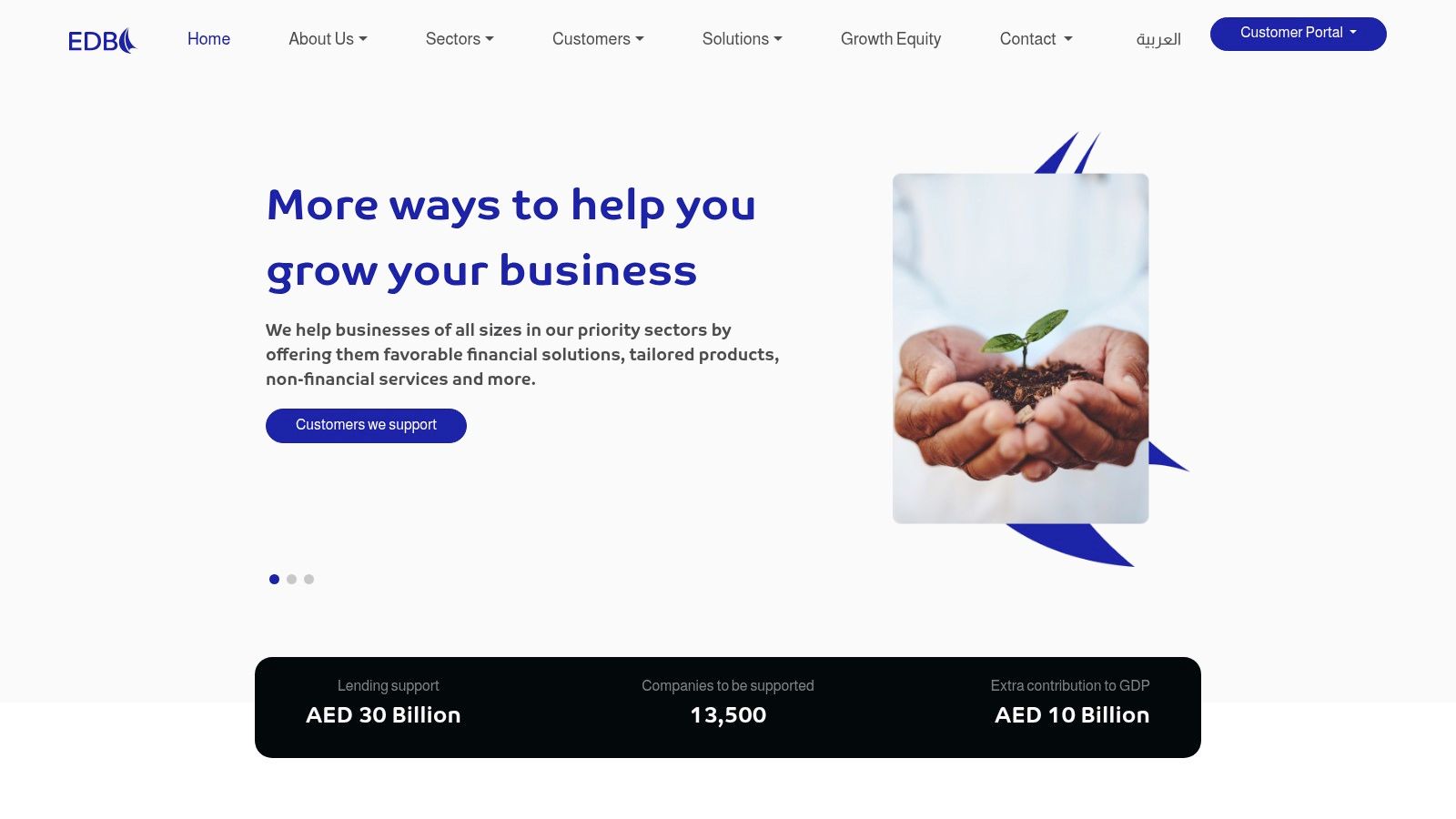
What makes EDB stand out is its dual approach and developmental mandate. Businesses can apply directly through the EDB 360 digital app, which provides a streamlined, modern onboarding experience. The bank also runs credit-guarantee and co-lending programmes with other UAE banks, creating more pathways to funding. This structure allows it to offer favourable, developmentally priced terms that might not be available from purely commercial institutions.
Key Offerings and User Experience
EDB’s digital-first strategy is clear. Its fast-track digital lending programme aims to provide feedback on eligible loan applications up to AED 5 million within just five working days. This speed is a significant advantage for SMEs needing to move quickly.
- Priority Sectors: Financing is targeted at manufacturing, healthcare, food security, advanced technology, and infrastructure.
- Digital Onboarding: The EDB 360 app facilitates a fully digital application process and business bank account opening, often with no minimum balance required.
- Partnership Model: The co-lending and guarantee schemes help de-risk lending for partner banks, making them more likely to approve SME applications.
Practical Tip: Before applying, thoroughly review EDB’s priority sector criteria. If your business operates in one of these areas, explicitly detail how your operations align with the UAE’s strategic goals in your application to strengthen your case.
Website: https://www.edb.gov.ae
3. Beehive
Beehive is a DFSA-regulated peer-to-peer funding platform that connects small and medium-sized enterprises (SMEs) directly with investors. As a well-established small business lender in the UAE, it offers a marketplace for businesses seeking fast, flexible working-capital solutions, making it a key player in the regional fintech landscape.
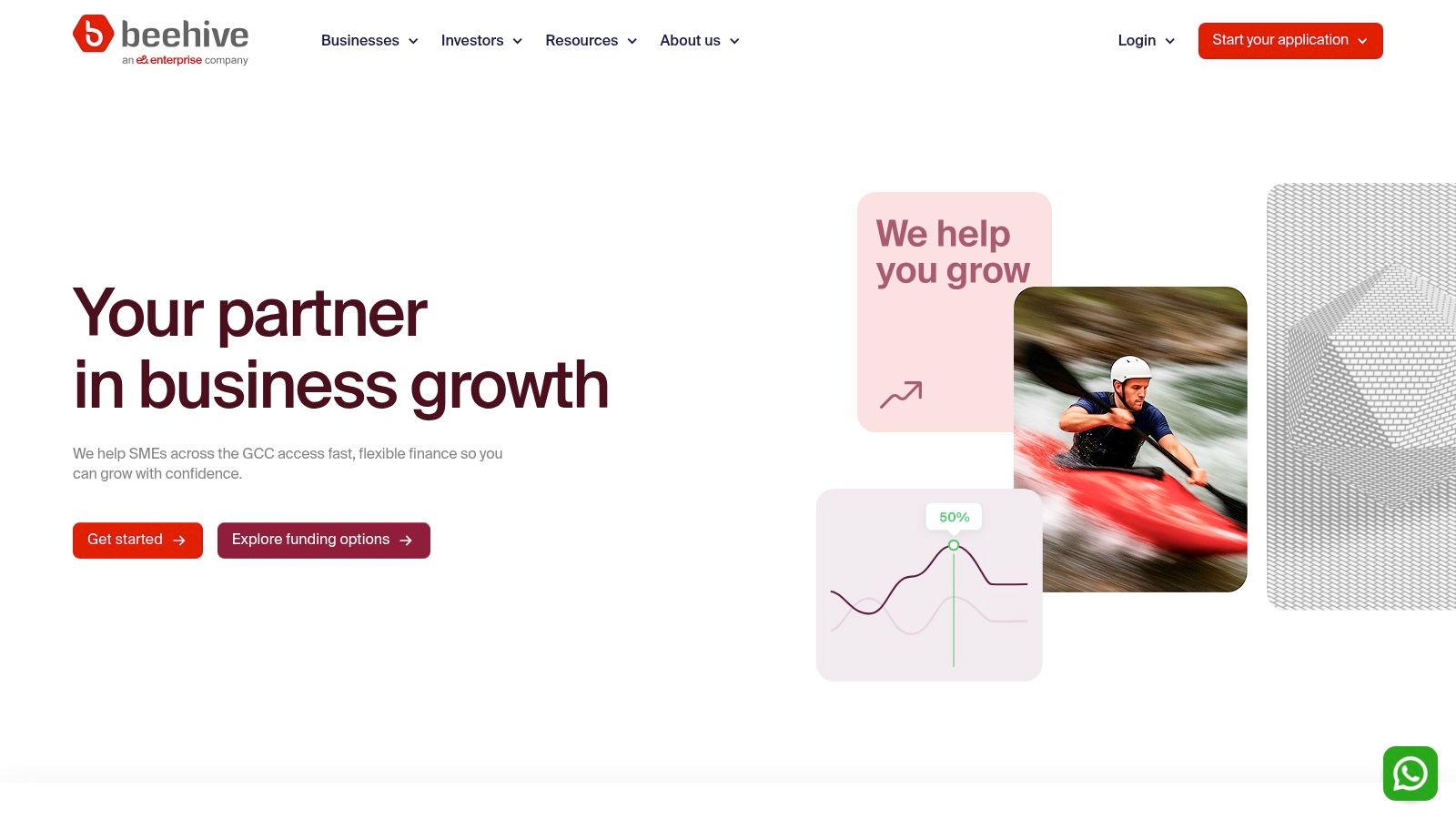
What makes Beehive stand out is its innovative marketplace model, which provides a direct alternative to traditional bank financing. The entire process is managed through a fully digital, paperless system, emphasising speed and simplicity. Businesses apply online in minutes, and if approved, their funding request is listed on the marketplace for investors to fund, often completing within days.
Key Offerings and User Experience
Beehive’s digital-first approach is designed to minimise friction for busy SMEs. The platform focuses on providing a streamlined experience from application to repayment tracking, all handled online.
- Fast Funding: The platform’s core value proposition is speed, with decisions and funding often delivered within days rather than weeks.
- Digital Process: Applicants benefit from a completely paperless onboarding and management experience, allowing them to track their funding status and repayments online.
- Regulated Marketplace: As a DFSA-regulated platform with Sharia review processes, Beehive offers a credible and transparent environment for both businesses and investors.
Practical Tip: Since funding and rates on a marketplace can vary based on investor demand, ensure your business profile and funding request are as clear and compelling as possible. Highlighting strong financials and a clear use of funds can attract investors more quickly and potentially secure more favourable terms.
Website: https://www.beehive.ae
4. Funding Souq
Funding Souq is a DFSA-regulated peer-to-peer lending platform offering Sharia-compliant quick business funding in the UAE. As a prominent small business lender in the fintech space, it connects SMEs seeking capital directly with investors. Its model is designed for businesses needing rapid, transparent, and ethically structured working capital or growth funding.

What makes Funding Souq stand out is its combination of regulatory oversight, Sharia compliance, and speed. The platform’s digital-first approach allows for an entirely online borrowing journey, with approvals often granted in around 72 hours. This efficiency is crucial for SMEs that cannot afford the lengthy processes of traditional banks. The emphasis on fee transparency and its status as a DFSA-regulated entity in the DIFC provides an added layer of trust for borrowers.
Key Offerings and User Experience
Funding Souq provides clear loan-size bands and term options, making it easy for SMEs to understand what they can apply for. The user experience is streamlined through its digital platform and an investor mobile app, simplifying both the application and management processes.
- Sharia-Compliant Financing: All funding structures adhere to Islamic finance principles, which is a key requirement for many businesses in the region.
- Rapid Approvals: The platform is built for speed, aiming to provide funding decisions within three days to help businesses seize opportunities quickly.
- Clear Loan Parameters: It offers financing from AED 50,000 to AED 500,000, with typical repayment tenors ranging from 3 to 24 months.
- Digital Application: The entire process is managed online, from initial application to receiving funds, minimising paperwork and delays.
Practical Tip: To improve your chances of approval, ensure your financial records are well-organised and clearly demonstrate consistent revenue. Since the platform assesses risk for its investors, a strong credit history and a clear business plan are essential.
Website: https://fundingsouq.com/ae/en/borrow/
5. RAKBANK Business Loans
As one of the UAE’s leading traditional banks, RAKBANK offers a comprehensive suite of SME finance solutions, making it a reliable small business lender for established companies. It provides everything from unsecured business loans up to AED 3 million to working capital and asset-based finance, blending conventional banking services with modern digital enhancements.

What makes RAKBANK stand out is its hybrid approach, combining the security of a large, well-established institution with the convenience of digital onboarding. The bank’s ‘Quick Apply’ feature is designed to deliver in-principle approvals within days, streamlining the initial stages of the application process. This allows businesses to get a faster sense of their eligibility before committing to the full documentation process.
Key Offerings and User Experience
RAKBANK balances its extensive branch network and relationship management with an increasingly digital-first user experience. This provides SMEs with multiple channels for support while leveraging technology for speed.
- Diverse Product Range: The bank offers term loans, working capital solutions, and asset-based finance, including Islamic financing options.
- Digital Onboarding: The ‘Quick Apply’ portal simplifies the initial application, reducing paperwork and speeding up preliminary approvals.
- Established Reputation: As a major local bank, RAKBANK offers the benefit of a broad range of other business banking services and dedicated relationship managers.
Practical Tip: Use the ‘Quick Apply’ feature to gauge your eligibility quickly. Even if you prefer a face-to-face meeting, completing this step online first can significantly accelerate your application timeline when you engage with a relationship manager.
Website: https://www.rakbank.ae/en/business/business-finance/business-finance/business-loan
6. Mashreq Business Banking (NEOBiz / Mashreq Biz)
As a tier-one UAE bank, Mashreq offers a comprehensive suite of lending products for small and medium-sized enterprises through its digital-first platform, Mashreq Biz. It blends the stability and product breadth of a traditional institution with modern, digital application channels, making it a reliable small business lender for established companies seeking diverse financing solutions.

What makes Mashreq stand out is its hybrid approach. While many traditional banks rely heavily on in-person processes, Mashreq provides digital loan applications with in-principle offers for certain products. This gives SMEs a quick indication of eligibility before committing to a full application. The bank publicly states loan caps for some products, such as business loans up to AED 4 million, providing transparency for business owners assessing their options.
Key Offerings and User Experience
Mashreq Biz serves as the central digital hub for SMEs, offering access to a wide array of financial tools beyond just lending. The platform is designed to streamline business banking, though some complex financing products may require offline follow-up with a relationship manager after the initial online steps.
- Wide Product Range: Offers term loans, merchant lending, trade and working capital facilities, and mortgage-backed finance.
- Digital Applications: Provides online application journeys with quick indicative decisions for select loan products, saving time for busy entrepreneurs.
- Established Credibility: As a leading UAE bank, it gives SMEs access to larger secured facilities and deep expertise in trade finance.
- Eligibility: Generally requires a minimum operating history of two or more years, which can be a barrier for early-stage start-ups.
Practical Tip: Use Mashreq’s online application for an initial in-principle decision to quickly gauge your eligibility. For more complex needs like trade finance, have your financial documents organised and ready for a more detailed discussion with a relationship manager.
Website: https://www.mashreq.com/uae/neobiz/banking-solution/loans/business-loan/
7. Wio Business (Wio Bank PJSC)
As a fully digital bank regulated by the UAE Central Bank, Wio Business is engineered for the modern SME and startup landscape. It acts as a comprehensive small business lender by integrating banking services with accessible, app-based credit options. This platform-first approach empowers business owners to manage their finances and apply for funding directly from their smartphones, removing traditional banking friction.
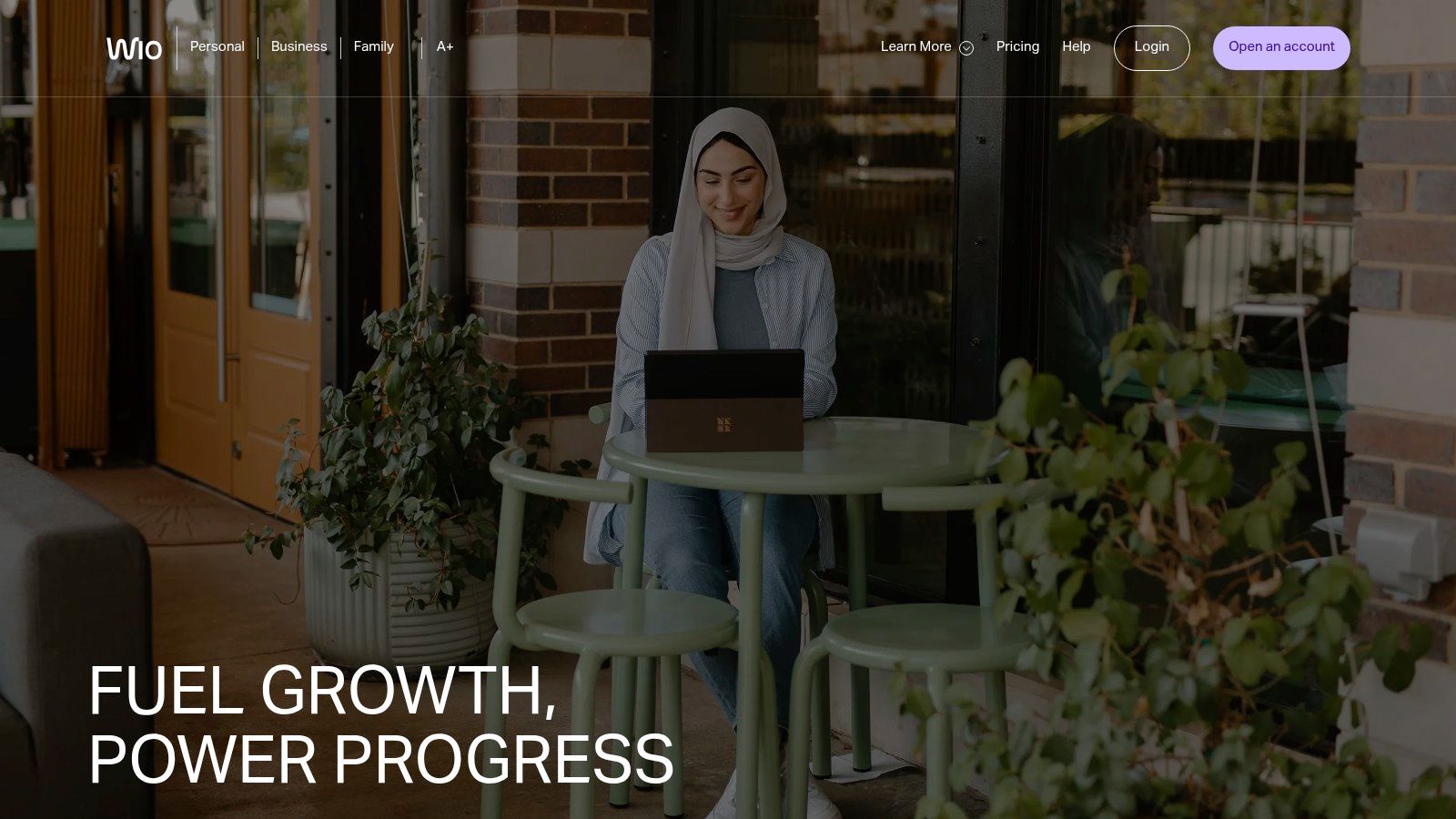
What makes Wio Business stand out is its commitment to a seamless digital user experience and transparent pricing. Unlike conventional banks, Wio’s entire journey, from opening an account to applying for a business loan or credit card, happens within its app. The bank is also expanding its reach by partnering with merchant-lending marketplaces, making its financing solutions available to a wider network of UAE businesses.
Key Offerings and User Experience
Wio’s strength lies in its app-centric model, which offers speed and convenience. The platform provides a suite of tools designed to support growing businesses, with clear, publicly listed pricing for its different business account plans.
- Diverse Financing Options: Wio offers various credit solutions, including business loans, lines of credit, and supply-chain finance, all accessible through the app.
- Digital Onboarding: Businesses can open an account and manage all their banking needs entirely online, with different tiers available to suit various company sizes.
- Marketplace Integration: By distributing its lending products through third-party marketplaces, Wio makes it easier for SMEs to find and access funding where they already do business.
Practical Tip: To improve your chances of qualifying for Wio’s in-app financing, connect your business’s data sources and maintain a healthy transaction history through your Wio account. The platform’s eligibility assessments often rely on this real-time data.
Website: https://wio.io/financing-options
Understanding the SME Credit Gap in the MENA Region
Small and medium-sized enterprises are the engine room of the MENA economy. They're the businesses creating jobs, sparking competition, and pushing national growth strategies forward. But for all their importance, countless SMEs run into a silent, persistent obstacle that stunts their growth: the SME credit gap.
This isn't some minor hiccup; it's a massive structural problem. The "credit gap" is the chasm between the capital SMEs need to run and grow their operations and what traditional banks are actually prepared to lend them. It’s a roadblock that forces good businesses to turn down big orders, pause expansion plans, or even scramble to cover day-to-day costs.
The numbers really bring the issue to life. The World Bank reports that SMEs in the MENA region get a mere 8% of total bank lending. Compare that to the 22% in high-income economies, and you start to see the problem. This gap is so large that in the GCC alone, it's estimated to be a staggering $250 billion shortfall. The demand for capital is simply overwhelming the traditional supply.
Why Traditional Banks Fall Short
So, where does this disconnect come from? It boils down to the fact that traditional banks are built for big, established corporations. Their approval processes are often slow and rigid, demanding long credit histories, significant physical assets for collateral, and mountains of paperwork. These are hurdles that many dynamic, fast-moving SMEs just can't clear.
For a small business owner, this mismatch creates some very real frustrations:
- Painfully Slow Decisions: A bank application can drag on for weeks, sometimes months. That’s no help when you need to buy inventory for a surprise order today.
- High Rejection Rates: Banks often label SMEs as "high-risk," which leads to a frustrating number of rejections, even for profitable and perfectly healthy companies.
- One-Size-Fits-All Requirements: Don't have enough property to use as collateral? Haven't been in business for a decade? You might be automatically disqualified, regardless of how strong your sales are.
The SME credit gap isn't just a financial statistic; it's the root cause of the constant cash-flow anxiety that keeps business owners up at night. It traps them in a cycle of short-term survival instead of allowing them to focus on long-term, strategic growth.
A New Approach That Fits the Economic Vision
The stubbornness of this credit gap is exactly what opened the door for new financial technology solutions. These platforms were designed from the ground up to solve the specific problems that banks have long ignored. By using technology to get a smarter, faster read on a business's real-time health, they can facilitate access to capital in days, not months.
This isn't just a win for individual businesses; it lines up perfectly with the big-picture economic goals across the region. Take Saudi Arabia’s Vision 2030, for example. A core part of that strategy is building a vibrant SME sector to diversify the economy. But for that to happen, those businesses need access to capital so they can innovate, hire, and scale.
Modern alternatives to bank borrowing are stepping up to fill this crucial void. They offer a lifeline to companies that are successful and growing but are held back by the old way of doing things. By closing the credit gap, these alternatives are helping SMEs finally reach their potential and become the powerful economic drivers they're meant to be.
For a closer look at the unique challenges and solutions right here in the local market, check out our guide on SME trade finance solutions in the UAE.
A Practical Checklist to Prepare Your Business
Applying for access to capital can feel daunting, but a little organization goes a long way. Getting your ducks in a row beforehand not only speeds everything up but also shows potential partners that you run a tight, credible ship. Think of it as crafting a clear, compelling story about your company’s health and reliability.
When you gather your documents ahead of time, you can move fast when a great opportunity pops up. It turns a potentially stressful process into a simple, straightforward step toward growing your business.
Your Essential Documentation Toolkit
Before you even start an application, it’s smart to pull together the key documents that tell your business’s story. Each document serves a purpose, helping partners get a clear picture of your financial stability and how you operate.
Here’s a simple checklist of what you’ll almost always need:
- Valid Trade License and Business Registration: This is the non-negotiable proof that your business is legal and has the right to operate. It’s the first thing anyone will ask for to confirm you’re a legitimate entity.
- Bank Statements (3-6 Months): This is where the rubber meets the road. Your recent bank statements give a real-time view of your cash flow, proving you have consistent revenue coming in and that you’re responsible with your day-to-day funds.
- Outstanding Customer Invoices: If you’re looking into something like invoice discounting, you’ll need the specific invoices you want to use. This means having copies ready with all the key details: your customer's name, the invoice amount, and the payment due date.
Honestly, having these items organized and ready to go is the single best thing you can do for a fast, hassle-free process.
Choosing the Right Partner to Unlock Your Business Growth
Navigating the landscape of financial solutions in the MENA region can feel complex, but the right partnership can transform your business's trajectory. We have explored a range of options, from the established structures of traditional banks like EDB and RAKBANK to the agile, technology-driven platforms of fintechs such as Beehive and Funding Souq. Each serves a distinct purpose, offering different products, approval processes, and levels of flexibility. The key takeaway is that today’s SMEs have more choices than ever before.
Your decision should be a strategic one, moving beyond a simple search for cash. It is about finding a partner that aligns with your operational rhythm and growth ambitions. For a modern SME, the ideal solution often involves more than just a lump sum; it requires seamless integration and speed. Ask yourself critical questions:
- How quickly do we need to convert our receivables to cash?
- Does this solution fit into our existing invoicing and accounting software?
- What is the real impact on our team’s time and resources?
Platforms built on API and low-code integration, like Comfi, directly address these modern challenges. They empower you to unlock the value tied up in your invoices almost instantly, without the lengthy paperwork and delays associated with traditional routes. This agility allows you to seize opportunities, manage supplier relationships effectively, and maintain a healthy cash flow cycle. Efficient financial management is just one piece of the puzzle; streamlining your operations with the best inventory management tools for small businesses can further enhance your capital efficiency and prepare your company for sustainable scaling.
Ultimately, choosing the right small business lender or financial technology partner is about empowering your future. By carefully evaluating your unique needs against the specialized offerings available, you can secure a solution that does not just fund your business but actively accelerates its growth.
Ready to modernize your B2B payments and unlock cash from your invoices instantly? Explore how Comfi provides a seamless, embedded solution that gives your business buyers flexible payment terms without impacting your cash flow. Get started with Comfi today to see how our platform can integrate directly into your existing workflow and help you grow faster.
Common Questions About Capital Solutions
Stepping into the world of modern business solutions can definitely spark a few questions. Let's tackle some of the most common ones we hear from business owners who are looking for smarter alternatives to old-school banking.
How Is Invoice Discounting Different From a Business Loan?
This is a big one, and the difference is fundamental. An invoice discounting facility isn't a loan at all: nothing is borrowed.
Think of it this way: instead of borrowing new money, you’re simply getting early access to cash that is already yours. It’s locked up in unpaid customer invoices, and this service just unlocks it. You've already earned it, you're just getting paid faster. This means you can get a handle on your cash flow without the long-term commitments, ongoing interest payments, and balance sheet headaches that come with a traditional loan.
What Are the Main Advantages of Using a Tech Platform Instead of a Bank?
It really boils down to three things: speed, simplicity, and a much smarter way of looking at your business. Digital platforms are built for the way you work today.
- Decisions in Hours, Not Weeks: The entire application is online. You can often get approved in just a few hours, which is a world away from the weeks or even months of waiting you get with a bank.
- No Hidden Surprises: The process is transparent from start to finish. You’ll see clear, straightforward fees and requirements without having to read pages of fine print.
- A Fairer Look at Your Business: Modern platforms look at your real-time operational data. They see the health of your business now, which is a much fairer way to assess a growing company that might not tick all of a bank’s rigid, historical boxes.
This tech-first approach means the strength of your business today and the quality of your customer relationships often matters more than how long you've been around or what assets you own.
Is My Business Too Small to Qualify?
Probably not. In fact, many of these modern capital solutions were created specifically with small and medium-sized businesses in mind.
Eligibility is less about your company's sheer size and more about its operational health. Platforms are more interested in seeing a solid customer base, consistent revenue, and quality invoices. For Comfi specifically, the bar is clear: a UAE-registered B2B business, operating for at least 12 months, with AED 300,000 or more in monthly revenue.
Ready to take control of your cash flow? Comfi helps businesses across the region unlock their earned revenue within hours. Discover how our simple, digital solutions can fuel your growth.