The Future of B2B Payments in the UAE and SME Growth


For many SMEs in the UAE, dealing with traditional B2B payments feels like being stuck in Sheikh Zayed Road traffic during rush hour. It’s painfully slow, unpredictable, and full of frustrating hold-ups. But the real-world headaches go far beyond a late payment; they create serious operational friction that actively stunts growth.
The Hidden Costs of Traditional B2B Payments
Old-school payment cycles are a mess of endless paperwork and the soul-crushing manual effort of chasing invoices. It's a broken system that forces businesses into a constant state of limbo, waiting 30, 60, or even 90 days for payments to finally land. These delays have a direct, crippling effect on a company's ability to just get things done.
This long wait creates a domino effect across the entire business. It gets harder to pay your own suppliers on time, impossible to manage inventory effectively, and you have to watch as growth opportunities that require quick capital just pass you by. The whole system is inefficient by design, creating bottlenecks where there should be smooth, predictable transactions.
The Leaky Pipeline of Working Capital
Think of your company’s cash flow like a pipeline. In a healthy business, cash flows smoothly from customer payments straight back into your operations, funding the next cycle of growth. But traditional B2B payment methods punch holes in that pipeline at every turn.
A huge chunk of an SME's working capital is constantly out of reach, trapped in outstanding invoices. This locked-up cash is pure lost potential—money that could be used for expansion, marketing, or just navigating the unexpected.
This constant drain on resources forces many business owners to play it safe, turning down bigger orders or putting strategic investments on the back burner. The hidden costs here aren't just financial; they're measured in missed opportunities and unrealized potential.
Why Modernization Is No Longer Optional
Moving away from these clunky, outdated methods isn't just an "upgrade" anymore; it's a strategic necessity for survival. The friction caused by slow collections and manual reconciliation puts businesses at a massive competitive disadvantage. Modern solutions are designed to patch these leaks, ensuring working capital is actually working for you when you need it most.
By finally embracing a smarter approach to B2B payments, businesses can:
- Fix Their Cash Flow: Get paid faster and kill the long, anxious waiting periods tied to traditional invoices.
- Boost Operational Efficiency: Free up your team from the grind of manual tracking, chasing, and follow-ups.
- Unlock Real Growth: Businesses have been able to unlock their working capital to invest in more inventory, bigger marketing campaigns, and other activities that actually move the needle.
A Guide to Modern B2B Payment Methods
If your business is still relying on slow, old-school bank transfers, you’re leaving money and time on the table. The world of B2B payments is now packed with different tools, each with its own quirks. Getting a handle on these options is the first step to building a more resilient and efficient business.
Think of it this way: each payment method offers a different mix of speed, cost, and convenience. It’s critical for business owners and finance teams to figure out which ones actually fit their day-to-day needs. This knowledge isn't just nice to have; it’s essential for finding the bottlenecks that are holding you back.
Common Payment Solutions for SMEs
To make a smart decision, you need to understand the good, the bad, and the ugly of the most common options out there today.
- Automated Clearing House (ACH) Transfers: These are your standard electronic bank-to-bank payments. They’re cheap and reliable for payments within the country, but they’re not fast. It can take several business days for the money to actually land, which can be a real headache if you’re trying to manage your cash flow tightly.
- Corporate Cards: Using a company credit or debit card is quick and easy. Many even come with perks like rewards or spending controls. The catch? Those transaction fees can really start to sting, especially if you’re processing a lot of payments or dealing with large amounts.
- Digital Wallets: Platforms like PayPal or Stripe are making a big push into the B2B world. They offer lightning-fast, sometimes instant, payments and are simple to use. Just keep an eye on the fees, as they can be a factor.
This infographic breaks down the typical flow of a traditional payment and shows exactly where the delays creep in.
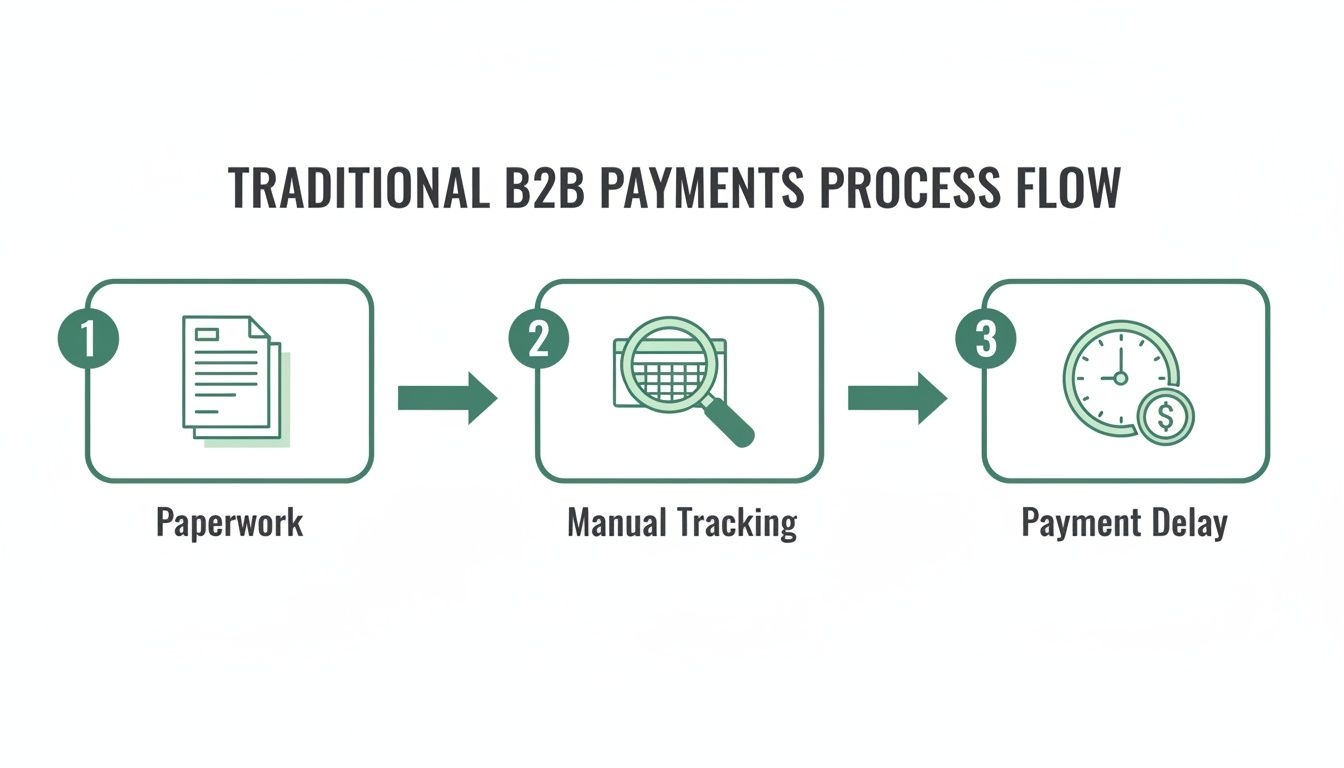
You can see right away how all the manual steps create friction, dragging out the whole process from the moment an invoice is sent to when the cash is finally reconciled. As businesses look for a better way, it’s worth keeping an eye on emerging technologies. For example, it’s interesting to explore the growing adoption of crypto payments to see how new ideas are shaping the conversation.
For more practical insights on setting up your systems, our guide on best payment gateways in the UAE is a great place to start.
The Future of B2B Payments in the UAE
The future of B2B payments has finally arrived in the UAE, and it's being driven by smart, practical solutions built for the realities of running an SME. That endless, frustrating cycle of chasing invoices is being replaced by something far more dynamic, giving businesses the tools they need to break free from crippling cash flow gaps. This isn't just about a new app or a bit of tech; it's a fundamental shift in how companies here can operate and grow.
At the heart of this change are two incredibly powerful ideas: B2B Buy Now, Pay Later (BNPL) and invoice discounting. These aren't just buzzwords; they're tools designed to directly attack the payment delays that cause so much friction for businesses.
Unlocking Cash That’s Already Yours
We’ve all seen this scenario play out. A buyer needs goods but wants to pay in 60 days. The supplier, meanwhile, needs that cash now to pay their own bills and keep the lights on.
B2B BNPL cuts right through this knot. The buyer gets the goods they need immediately with flexible terms, and the supplier gets paid upfront—often within 24 hours.
This simple but elegant solution ends the painful waiting game. In a similar vein, invoice discounting lets a business unlock the value trapped in its outstanding invoices without delay. Instead of sitting around waiting for customers to pay, SMEs can get their hands on that money right away, turning their accounts receivable from a liability into a reliable source of early liquidity.
Seamless Integration and New SME Capital Options
What makes these modern solutions so effective is how neatly they slot into the way businesses already work. Using simple Application Programming Interfaces (APIs), they can plug directly into e-commerce platforms and ERP systems you're already using. This means you don't have to rip out your existing workflows and start from scratch. A B2B marketplace, for example, can embed payment terms right at the checkout, making the entire process invisible and frictionless for both parties.
This evolution is giving rise to new SME capital options. Platforms like Comfi are engineered specifically to solve these pain points by facilitating early payments on invoices, empowering businesses to operate without being held hostage by outdated payment cycles.
The need for this couldn't be clearer. In the UAE, a staggering 55% of B2B deals are plagued by overdue payments, with businesses waiting nearly two extra weeks on top of the standard 50-day terms. This creates enormous liquidity headaches for wholesalers and suppliers. This fintech revolution is handing SMEs the tools they need to build more resilient, growth-focused operations. For more context, check out the latest analysis on the regional payment gateways market.
How SMEs Can Jump on the New Payment Landscape
Picking a modern B2B payments partner isn't just about cutting transaction fees; it's a strategic move that can completely reshape your business. For any SME in the UAE, the right choice directly fuels growth. It means you can improve your cash flow, confidently chase bigger deals, and win over new customers with payment terms they'll love. But to get there, you need to look past the marketing hype and evaluate what a provider actually delivers.
You have to dig into the metrics that make a real-world difference to your day-to-day operations. A provider's true value isn't just in their fancy tech, but in the results they can generate for your bottom line.
What to Look for in a Potential Partner
When you're sizing up a provider, zero in on three factors that will determine how effective they'll be for your business:
- Approval Rates: How often do your customers or invoices actually get approved for early payment or extended terms? A high approval rate means more of your deals close without a hitch, which translates directly into more consistent revenue. Simple as that.
- Fund Disbursement Speed: Once approved, how fast does the money hit your bank account? The gap between getting paid in 24 hours versus waiting a week is massive, especially when you've got suppliers breathing down your neck or inventory to stock.
- Ease of Integration: How much of a headache is it to get this solution working with your current setup? A system that demands a complete operational overhaul is creating more problems than it solves. You should be looking for simple, low-code, or even no-code options.
Solutions like Comfi were built with these exact pain points in mind, offering a high approval rate of over 85% and getting funds into your account within 24 hours. This relentless focus on speed and accessibility helps clients unlock their working capital and operate with far more agility. When you remove payment delays from the equation, you can start saying yes to those bigger opportunities. Find out how modern options like invoice discounting can transform your cash flow.
The results speak for themselves. Businesses that have made the switch to these modern payment tools are reporting a 30% increase in sales and a 20% jump in new customer acquisition. That’s a clear return on investment.
This isn't happening in a vacuum; it's part of a massive market shift. The UAE's digital payments scene already commands 24.05% of the entire MENA region's USD 248.35 billion market. And with government initiatives pushing cashless adoption to a staggering 88%, the SME segment is absolutely surging at a 21.85% CAGR—the fastest in the region. You can get more details on these regional digital payment trends. Choosing the right partner isn't just a good idea; it's how you grab your piece of that growth.
Key Metrics for Measuring Payment Success
If you can't measure it, you can't improve it. To really get a handle on the health of your B2B payments, you need to stop relying on gut feelings and start tracking the right metrics. This is how you prove the value of new tools, spot problems before they escalate, and make the kind of smart financial decisions that actually fuel growth.
Think of these key performance indicators (KPIs) as the vital signs for your company's cash flow. They give you a clear, honest snapshot of your payment health and show you exactly where the friction is.
Core KPIs for Your Dashboard
There are three essential numbers that give you a powerful view into your payment efficiency and its direct impact on your bottom line.
- Days Sales Outstanding (DSO): In simple terms, this is how long it takes you to get paid after you’ve made a sale. A high DSO is a huge red flag—it means your cash is stuck in accounts receivable instead of being put to work. Modern fintech solutions can slash your DSO from a painful 60+ days down to just one, instantly freeing up that working capital.
- Customer Approval Rate: This one’s straightforward. It's the percentage of your buyers who are successfully approved for your payment terms. A low rate is a deal-killer; it creates friction right at the checkout and leads to lost sales. High approval rates mean more deals close without a hitch, giving your revenue a healthy boost.
- Funding Speed: This metric tracks how quickly the money from an approved invoice actually lands in your bank account. The difference between waiting a week versus just 24 hours is massive when you need to manage inventory or pay your own suppliers on time.
By focusing on these concrete numbers, you move from just managing payments to strategically optimising them. The goal is to build a payment cycle that actively supports—not strangles—your business growth.
Improving these metrics has a ripple effect across your entire operation. A lower DSO, for example, directly improves your liquidity. If you want to dig deeper, it’s worth exploring how this connects to the accounts receivable turnover ratio, which is another crucial measure of your financial fitness.
How to Future-Proof Your Business Payments
The future of B2B payments in the UAE isn't some abstract idea on the horizon; it’s happening right now, giving SMEs the power to finally solve those age-old cash flow headaches. Stepping into this new era is how your business gains a serious competitive edge and builds a much stronger financial foundation. The key is to shift from passively waiting for payments to proactively managing your entire cash cycle.
Modernizing your payment systems is about so much more than just convenience. It’s a strategic move that directly impacts your ability to operate and expand. By leaving slow, manual processes in the past, you can get ahead of cash flow gaps before they even start, freeing up precious capital and mental energy to focus on growth.
Your Action Plan for Growth
Getting started is actually a lot simpler than you might think. It all begins with taking an honest look at your current payment workflow and putting a finger on your biggest operational headaches.
- Pinpoint Your Pain Points: Are you constantly being held back by long payment terms? Is your team sinking valuable time into chasing down invoices?
- Explore Modern Solutions: Start investigating how platforms like Comfi can directly address these problems. Solutions like Invoice Discounting get you paid on day one, while B2B BNPL helps you close bigger deals by offering buyers the flexible terms they really want.
- Automate and Integrate: A truly future-proof system is one where manual work is kept to an absolute minimum. For a more holistic approach to automation, you might consider implementing comprehensive systems like purchase-to-pay (P2P) software.
Taking these practical steps is what will allow you to accelerate growth and stay agile in today’s dynamic market.
Got Questions About B2B Payments?
Making a shift in how you handle payments is a big move, so it's natural to have a few questions. We’ve pulled together the most common ones we hear from UAE business owners to give you the straightforward answers you need.
What’s the biggest win for me as a supplier if I offer ‘Buy Now, Pay Later’?
It boils down to two things: getting paid instantly and wiping out credit risk. While you’re giving your buyer the flexibility of 30, 60, or even 90-day payment terms, you aren’t the one waiting for the cash. You get paid upfront, usually within 24 hours.
This completely changes the game. No more chasing late payments or worrying if a customer will pay at all. That cash is in your bank, ready to be put back into your business for stock, payroll, or new growth plans. A platform like Comfi handles the collections, so you can get back to what you do best.
Is this kind of payment solution going to be a technical nightmare to set up?
Not at all. The last thing modern fintech platforms want is to create more work for you. They’re built to be incredibly simple and fast to get started with. For instance, with Comfi, you can begin without any technical work by just using a digital dashboard to upload your invoices. It’s that easy.
For businesses doing more volume, like wholesalers or e-commerce platforms, there are simple plugins and a developer-friendly API that slot right into your existing systems. The whole process is digital, quick, and painless.
Modern payment platforms are designed to remove friction, not add to it. The goal is a quick, paperless setup so you can start seeing the cash flow benefits almost immediately, without getting bogged down in a complicated implementation project.
How do I even know if my business can get approved for these options?
Fintech providers are a world away from traditional banks. Their eligibility criteria are much more flexible and data-driven. With platforms like Comfi, the focus is less on your company's age and more on the quality of your invoices and the creditworthiness of your B2B customers.
The system uses smart models to assess eligibility in real-time. With high approval rates designed specifically for SMEs, businesses across all sorts of industries—from automotive parts and electronics to F&B—can often get qualified and running in no time.
Ready to finally take control of your cash flow? With Comfi, you can get your invoices paid in 24 hours and give your customers the flexible terms they need to buy more from you.
Discover how Comfi can accelerate your business growth today.
Related Reading
- B2B Payments
- Solve Creative Agency Late Payment UAE Issues
- How Payment Default Dents Small Business Growth and Survival
- A Guide to B2B Payment Solutions for MENA Businesses
Looking to improve your cash flow? Explore Comfi's Buy Now Pay Later solutions. Get started today.